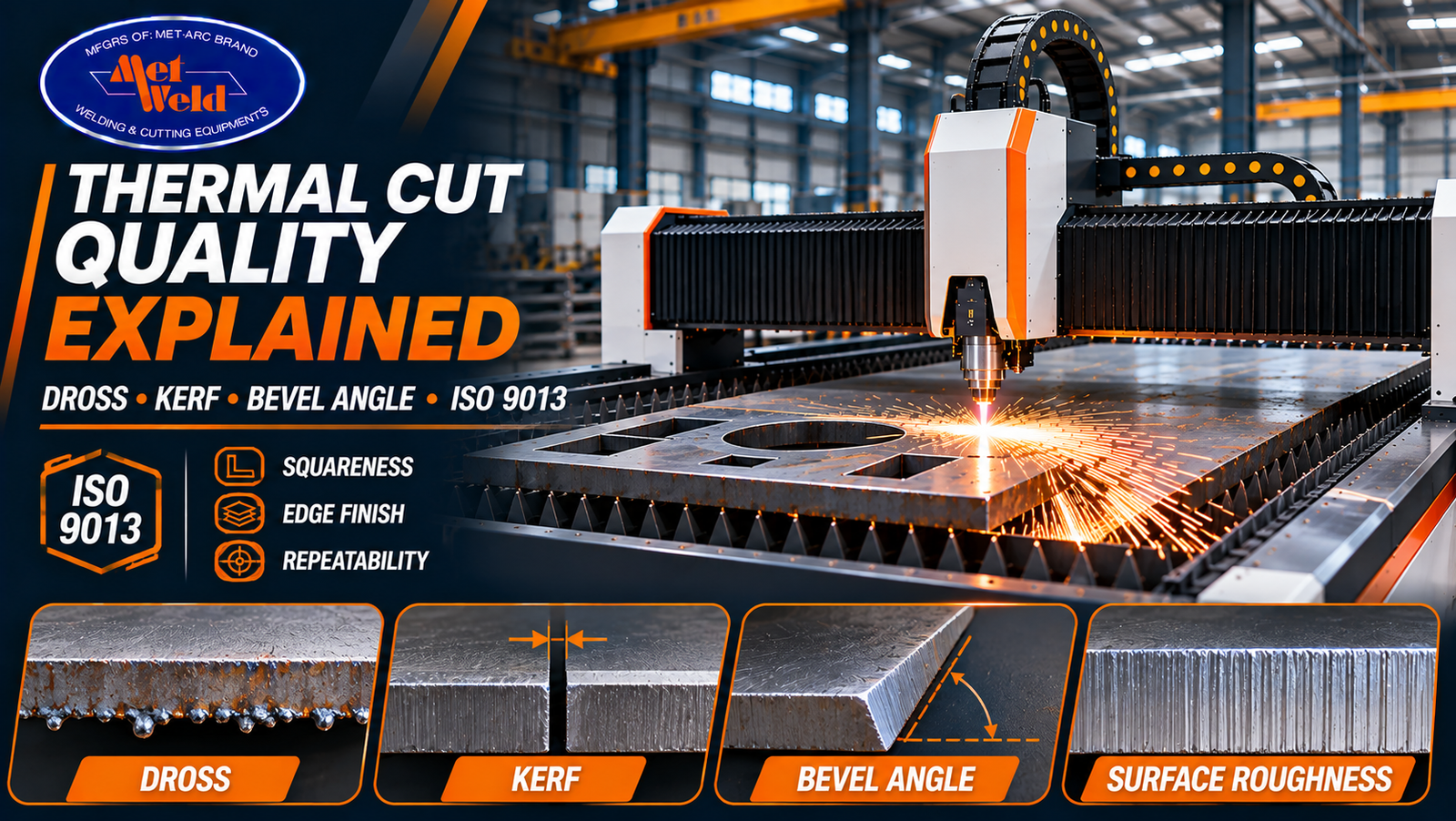
“Good cut quality” means different things to different people. A structural fabricator may be satisfied with a square edge that needs only light grinding, while a precision component maker expects a smooth, dross-free edge that fits directly into an assembly. Without a shared language, buyers, operators and customers can easily disagree about whether a cut is acceptable.
That shared language exists. The international standard ISO 9013 classifies thermal cuts made by oxy-fuel, plasma and laser processes. Understanding its main measures, and the shop-floor factors behind them, helps fabricators specify the right process, set realistic expectations and fix quality problems faster.
This describes how far the cut face deviates from a perfect right angle to the plate surface. Plasma cuts naturally have a small bevel because the arc is wider at the top than at the bottom. Laser cuts are usually closer to square. Excessive angularity means parts will not fit squarely during welding or assembly.
The cut face has fine vertical striations, called drag lines. Their depth defines surface roughness. A smoother face reduces finishing work and improves appearance on visible parts.
Drag lines curve backward from the direction of travel. The amount of lag indicates whether cutting speed is balanced with energy input. Large lag often means the cut is running too fast.
A rounded or melted top edge suggests excessive heat input, the wrong standoff or too slow a speed.
Dross is resolidified molten metal clinging to the bottom edge. Low-speed dross forms as large globules when cutting too slowly. High-speed dross forms as a fine, hard bead when cutting too fast. Dross must usually be removed by chipping or grinding.
Kerf is the width of material removed by the cut. Consistent kerf is essential for dimensional accuracy, because the CNC applies kerf compensation to place the cut correctly around each part.
ISO 9013 defines ranges for perpendicularity or angularity tolerance and for mean height of profile. Each range is assigned a number, and the combination of these numbers describes the quality of the cut face. The standard also sets dimensional tolerance classes for thermally cut parts.
For practical purposes, this allows a drawing or purchase order to specify a required cut quality instead of vague terms such as “clean edge”. It also helps fabricators decide which process is appropriate for a part before quoting.
| Process | Typical strengths | Typical limitations |
| Fiber laser | Narrow kerf, near-square edge, smooth surface on thin and medium sheet | Cost per hour rises on very thick plate |
| Plasma | Fast on medium plate, good productivity | Small bevel, wider kerf than laser |
| Oxy-fuel | Excellent on very thick carbon steel, low equipment cost | Slower, wider heat-affected zone, carbon steel only |
Our article comparing CNC fiber laser and CNC plasma cutting explores process choice in more depth.
Most cut quality problems trace back to a small set of variables. Changing one at a time, and observing the result, is the fastest way to find the cause.
Speed has the biggest single influence. Too slow produces heavy low-speed dross, wider kerf and top-edge rounding. Too fast produces high-speed dross, excessive drag line lag and incomplete cuts at the bottom of the plate.
For plasma, arc voltage control keeps the torch at a set height. A torch running too high increases bevel and kerf. Running too low risks contact and nozzle damage. For laser, focal position relative to the plate surface affects kerf, edge roughness and dross.
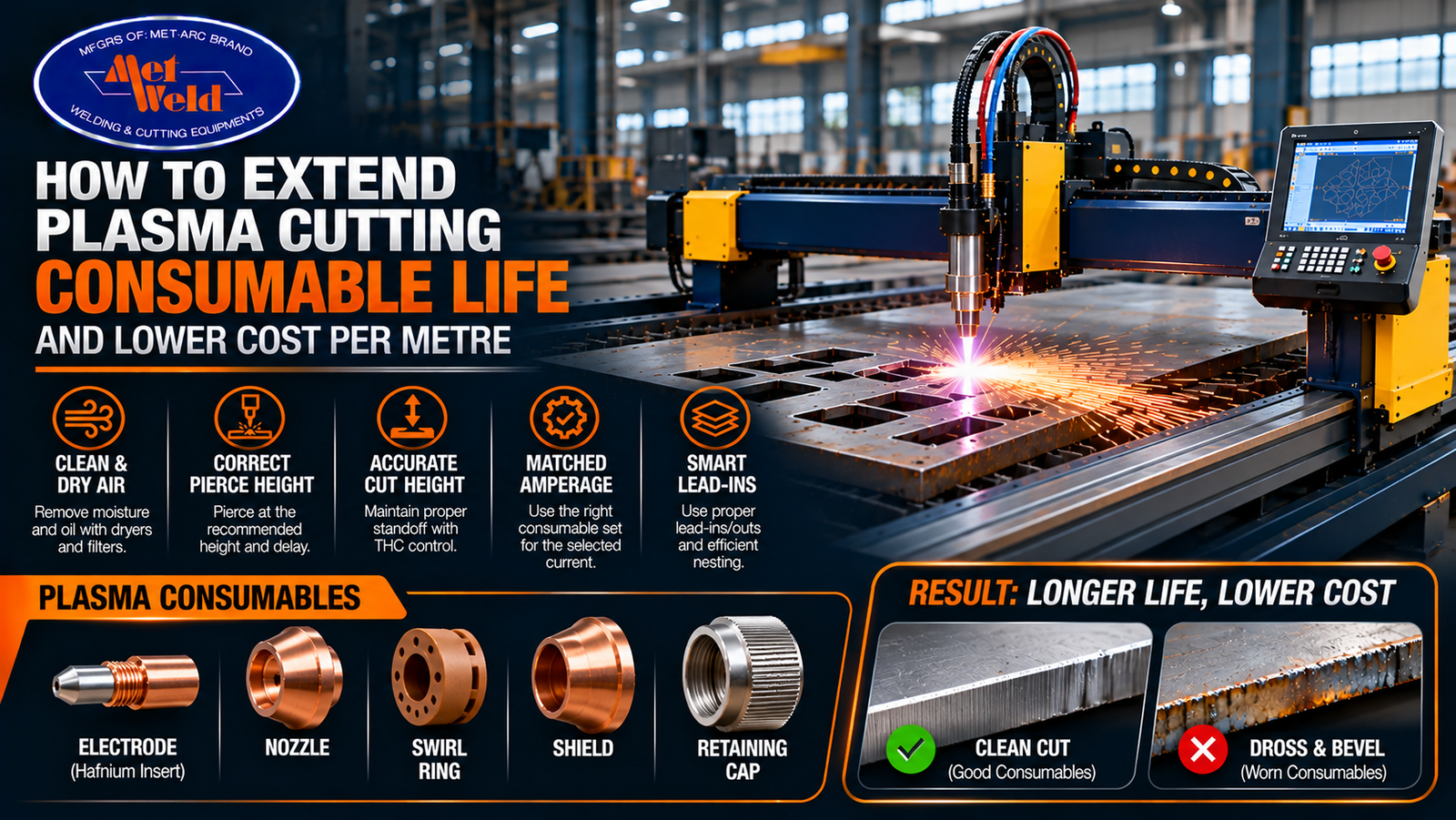
A worn plasma nozzle or a damaged laser nozzle disturbs the gas flow and widens the cut. Many apparently random quality issues disappear when consumables are replaced. Our article on the features and maintenance of CNC plasma cutting machines explains inspection routines. Keeping a log of consumable changes alongside quality checks makes it easy to see when edge quality begins to slip and to act before parts are rejected.
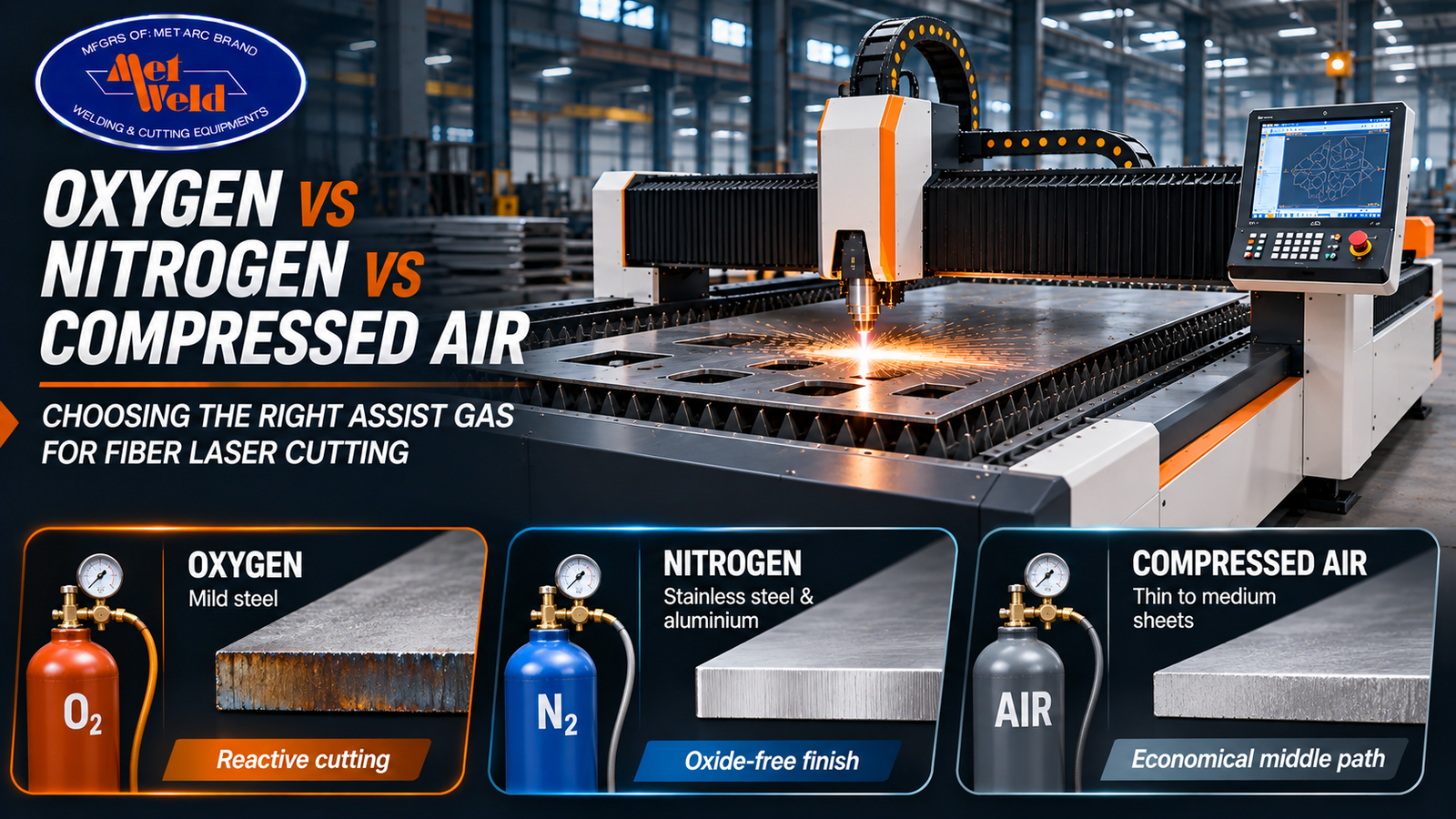
For laser cutting, oxygen purity and nitrogen pressure directly affect dross and edge colour. For plasma, air must be clean and dry. Pressure drops during long cuts are a common hidden cause of uneven quality.
Rust, heavy mill scale, paint and plate flatness all influence the cut. Warped plates change standoff along the cut, and heavy scale can cause unstable piercing.
Backlash in drives, worn rails or loose gantry components show up as wavy edges and dimensional errors, especially on small holes and sharp corners. Regular inspection of the motion system is essential.
Efficient programming also matters. Our guide on nesting in sheet metal fabrication covers cut sequencing that limits heat build-up and part movement.
Not every part needs the highest grade. Over-specifying quality slows cutting and raises cost without adding value.
A realistic quality target, agreed with the customer before production, avoids disputes and keeps costs under control.
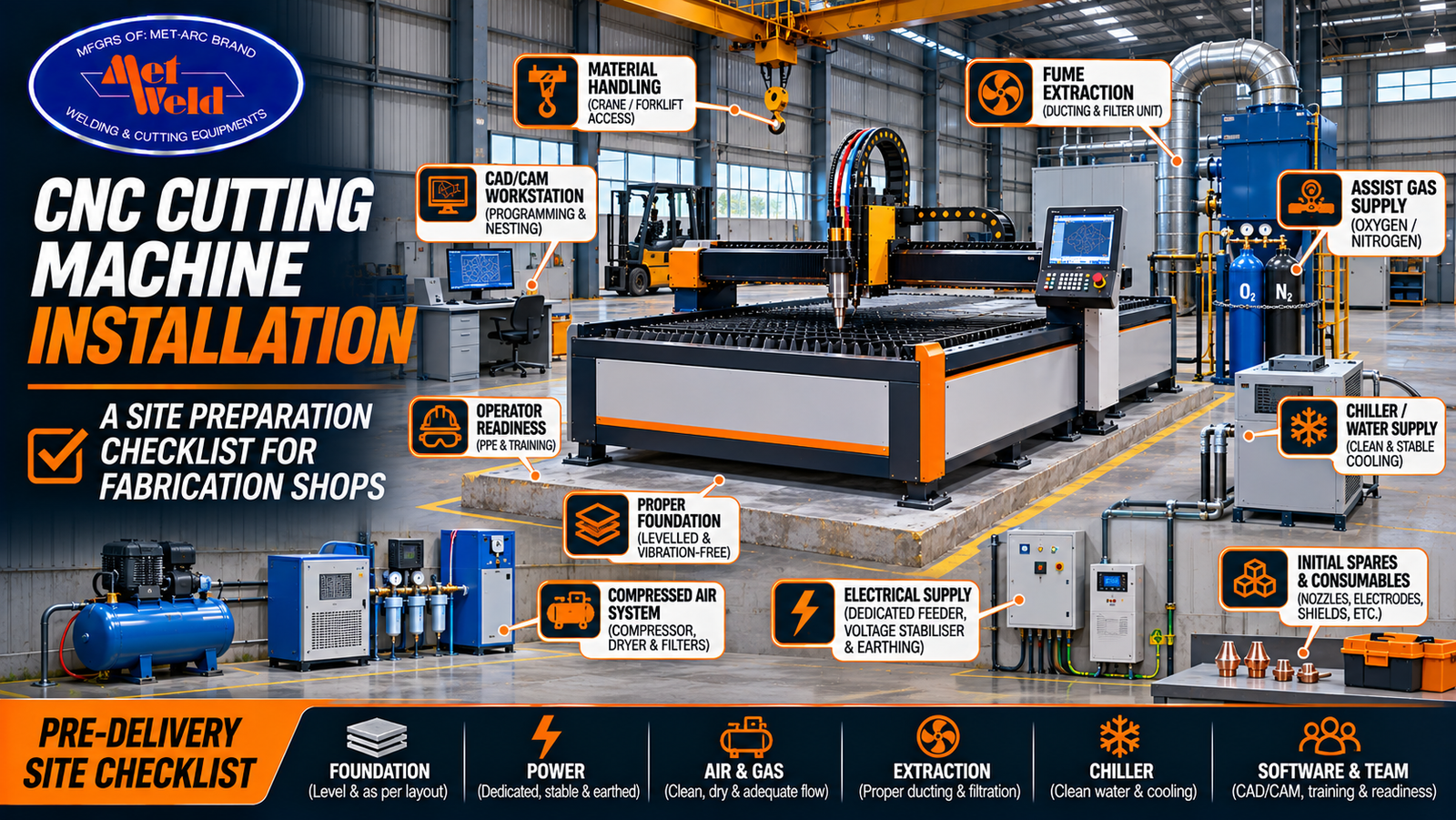
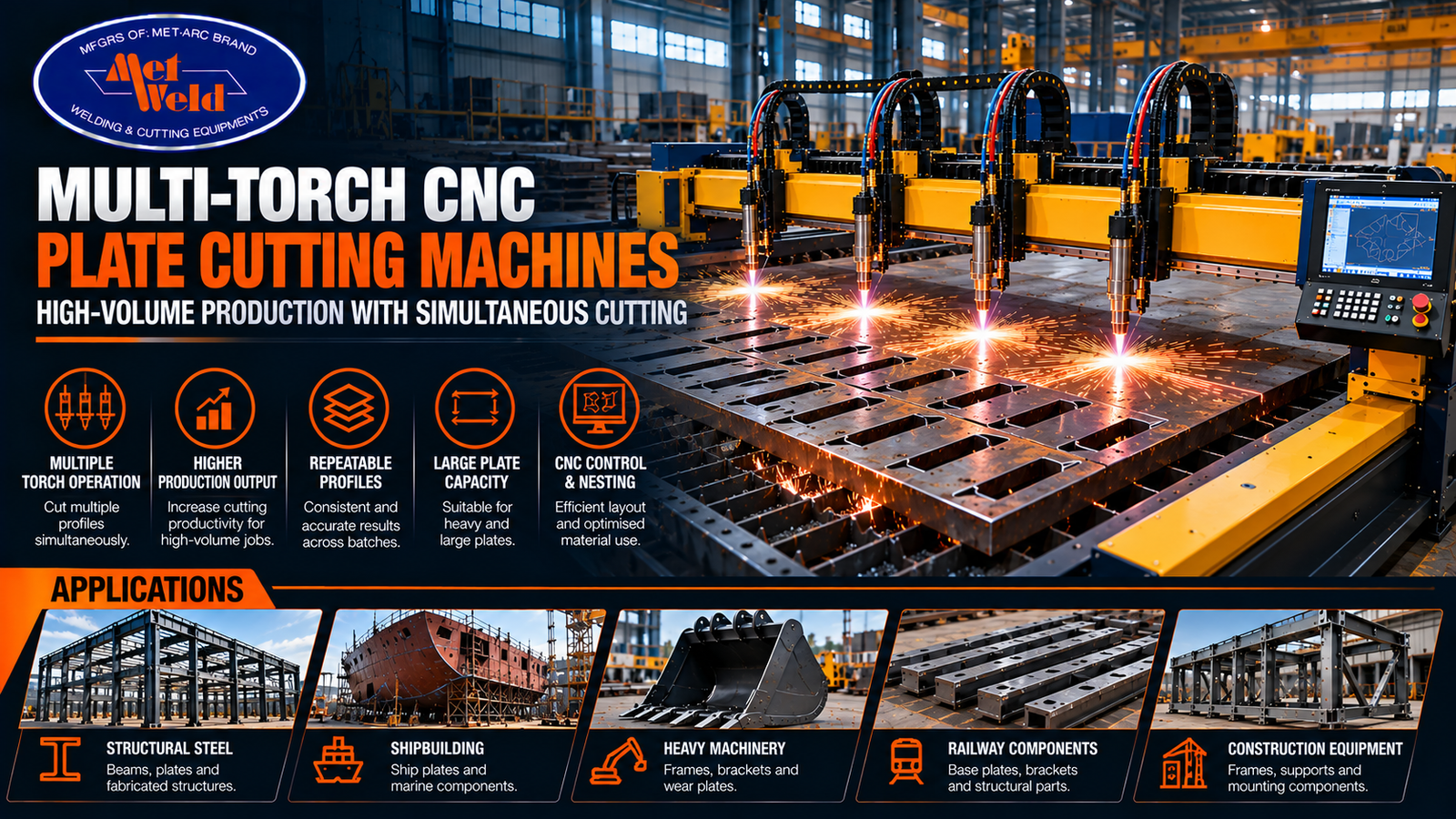
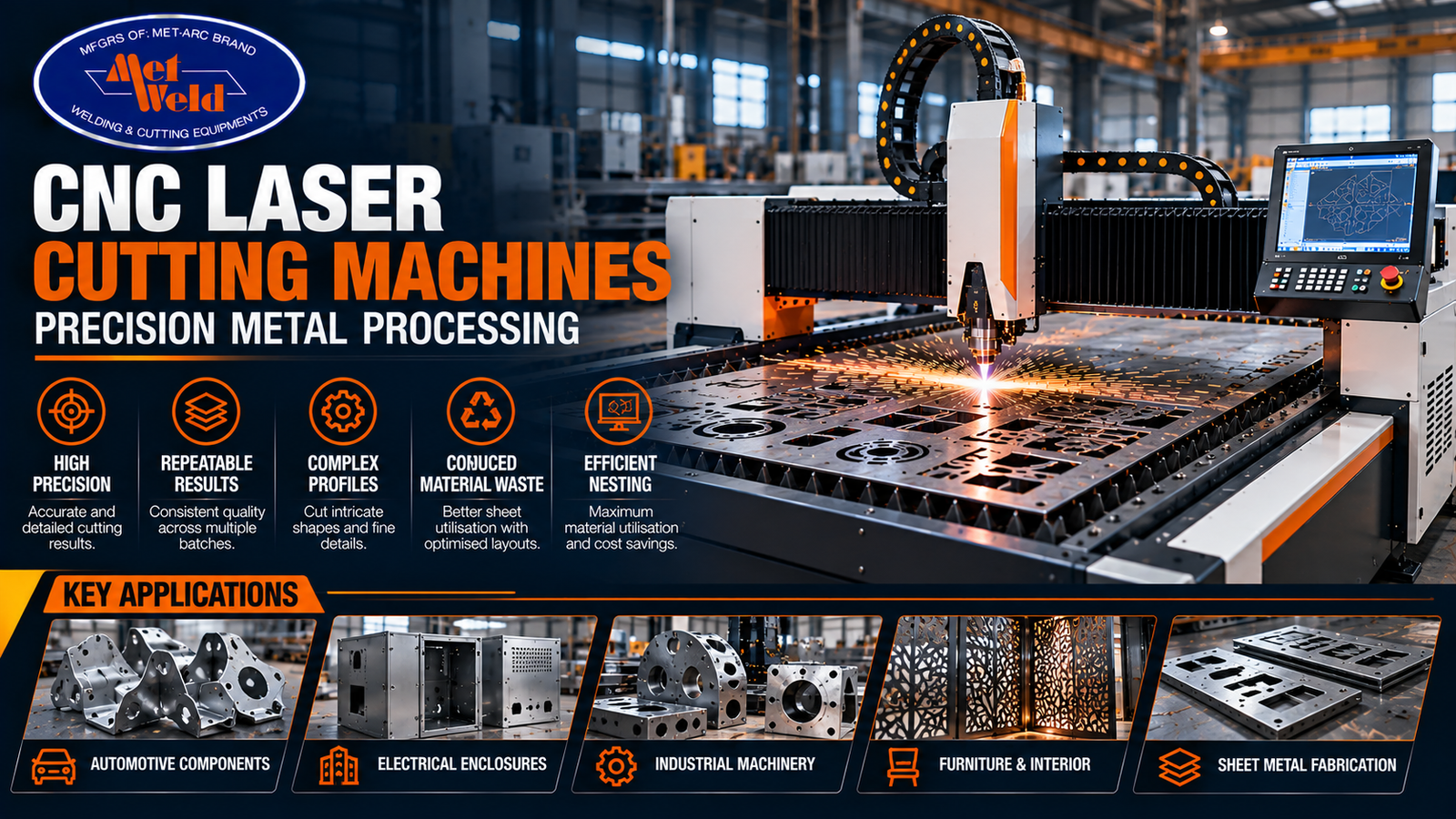
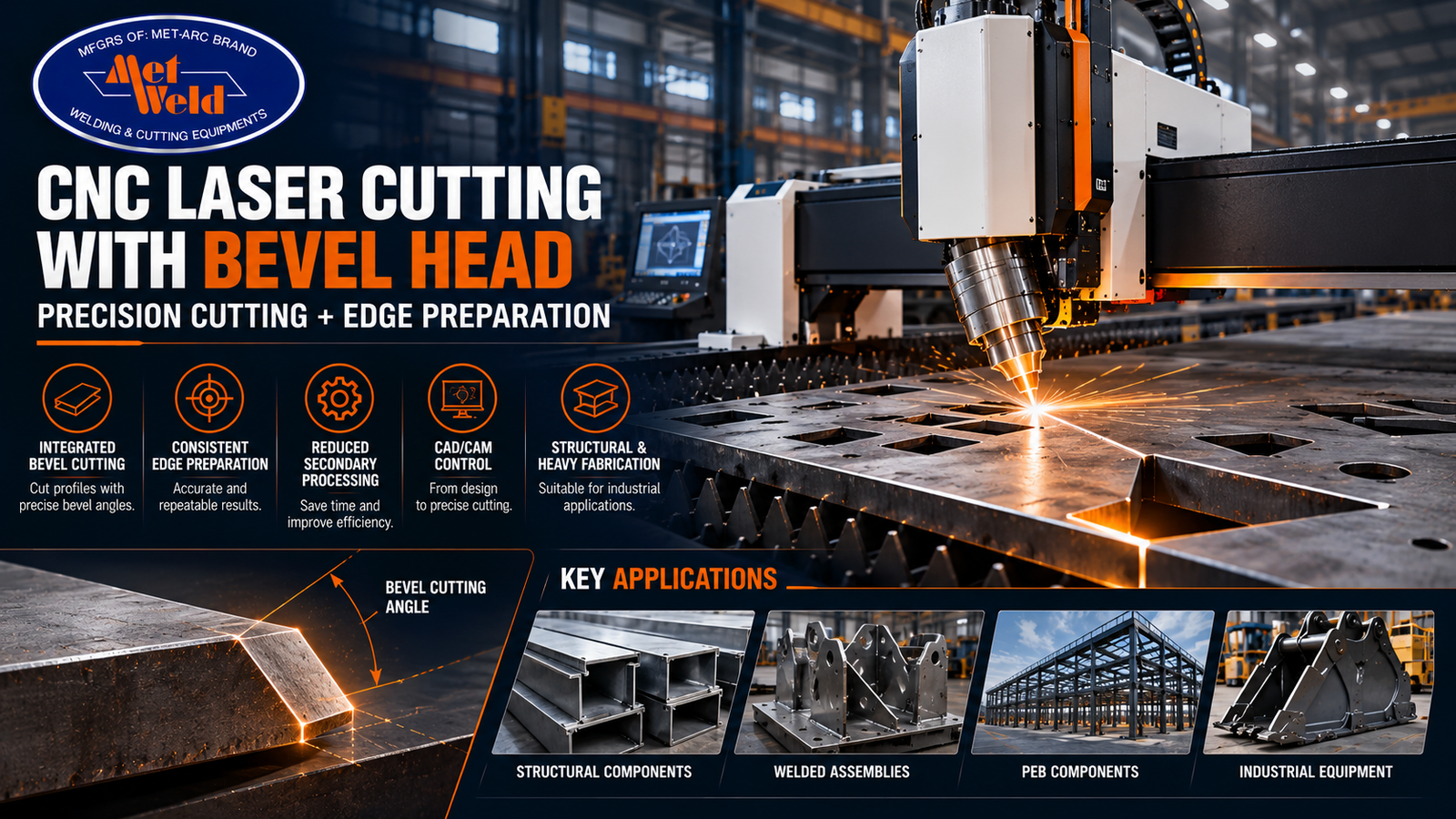
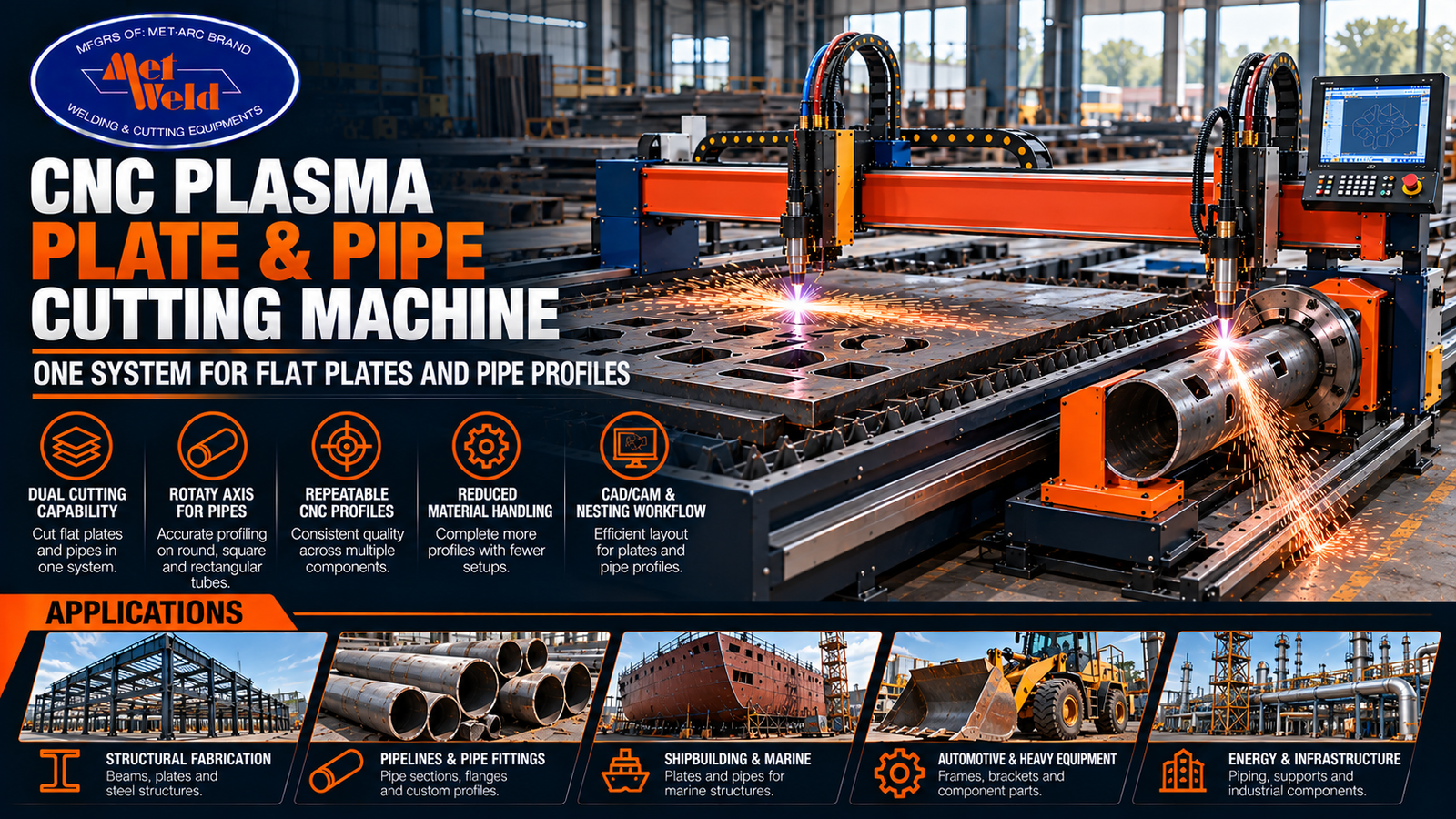
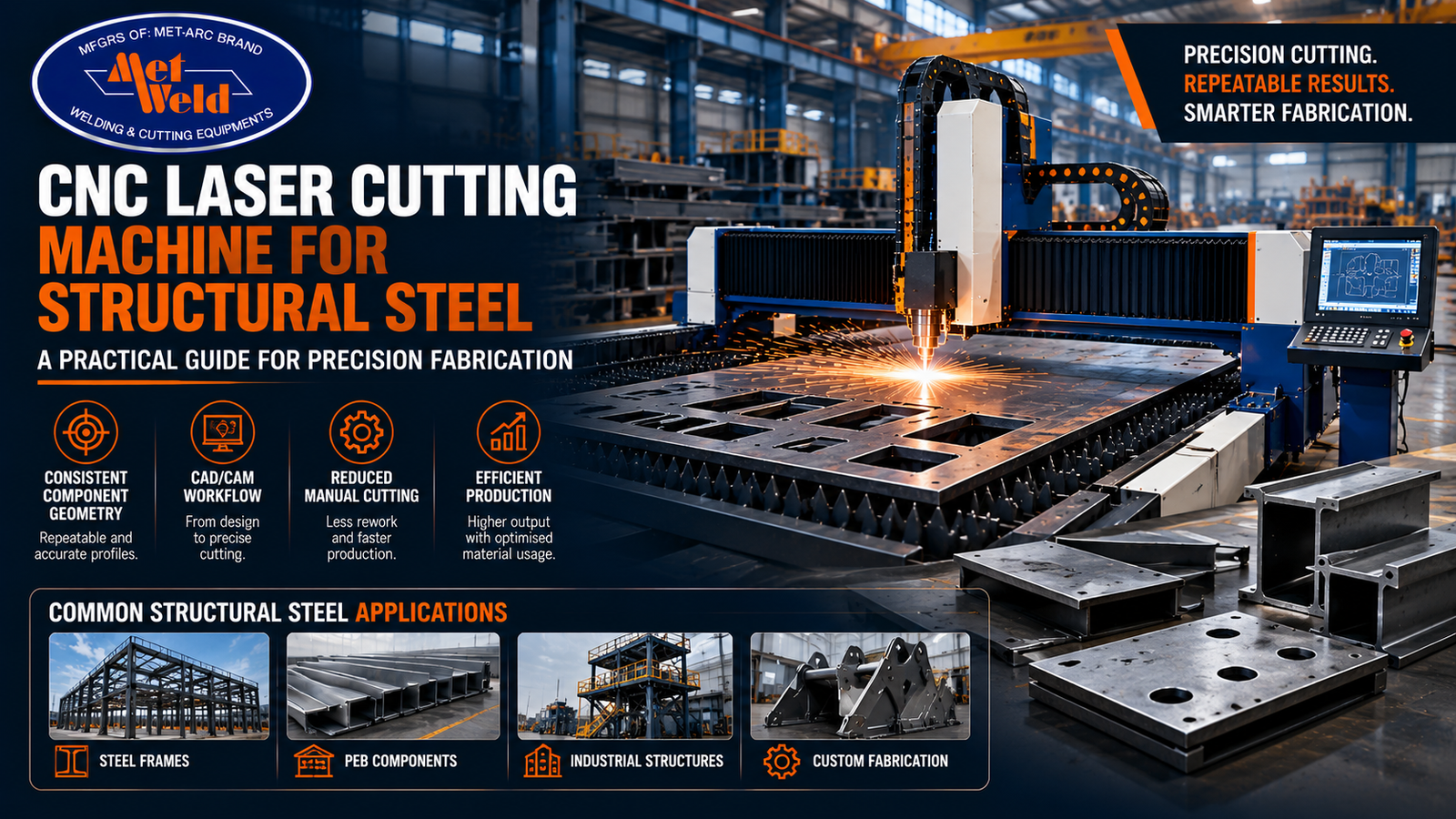
Metweld supplies CNC plasma cutting machines, gantry type CNC laser cutting machines and multi-torch CNC plate cutting machines with rigid frames, accurate motion systems and proven cutting parameters. During commissioning, our engineers run test cuts on your materials and train operators to read cut faces and correct parameters. We also supply genuine CNC machine spares to keep quality consistent.
To discuss cut quality requirements for your parts, contact Metweld.
What is the difference between low-speed and high-speed dross?
Low-speed dross forms large, easily removed globules when cutting too slowly. High-speed dross forms a small, hard bead when cutting too fast and is harder to remove.
Why are plasma-cut edges slightly bevelled?
The plasma arc is wider at the top of the cut than at the bottom. Modern high-definition plasma and correct parameters reduce this bevel significantly.
Does ISO 9013 apply to laser cutting?
Yes. ISO 9013 covers thermal cutting processes including oxy-fuel, plasma and laser.