Industrial manufacturing often involves processing different types of metal components, from flat steel plates to cylindrical pipes and tubes. These materials are used in structural frameworks, industrial machinery, construction equipment, infrastructure projects, and various metal-processing applications.
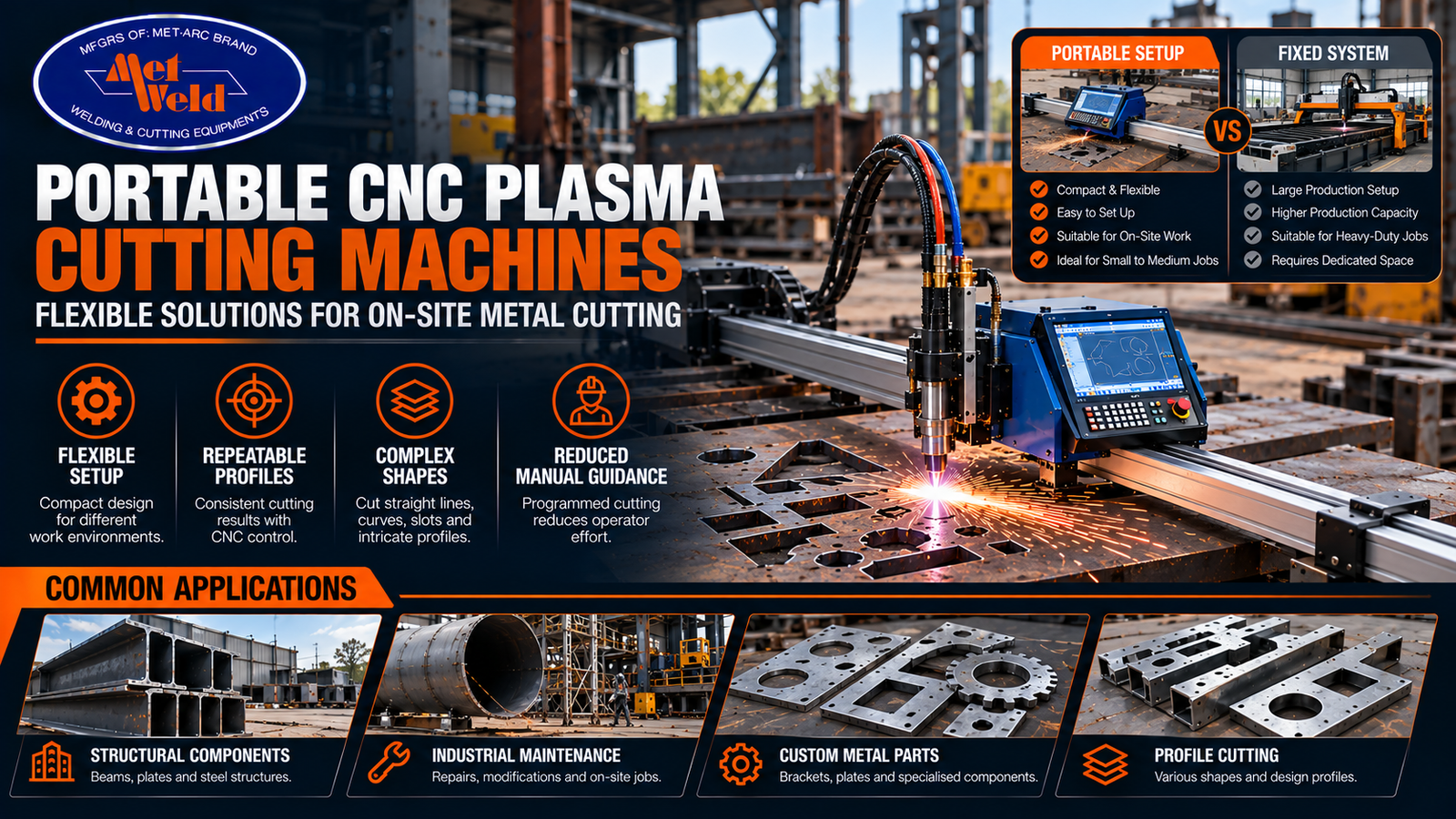
When a manufacturing process requires both plate cutting and pipe profile preparation, businesses need to evaluate equipment that can accommodate their different component geometries. CNC plasma plate and pipe cutting machines are designed for applications involving programmed cutting of suitable metal plates and pipe sections, depending on the machine configuration.
By combining CNC-controlled movement with plasma cutting technology, these machines can help manufacturers produce specified profiles, openings, and cut shapes while maintaining a more consistent workflow.
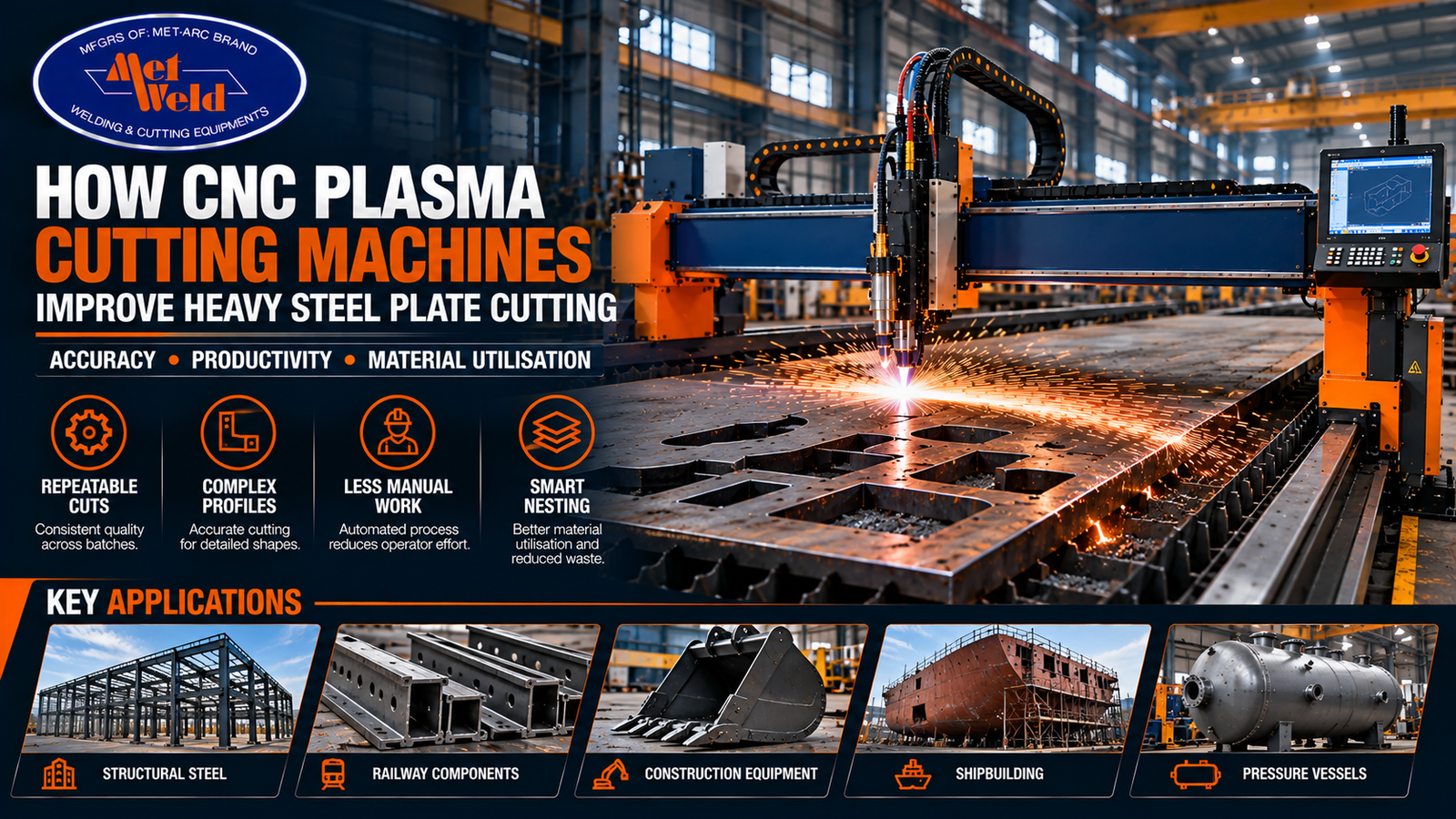
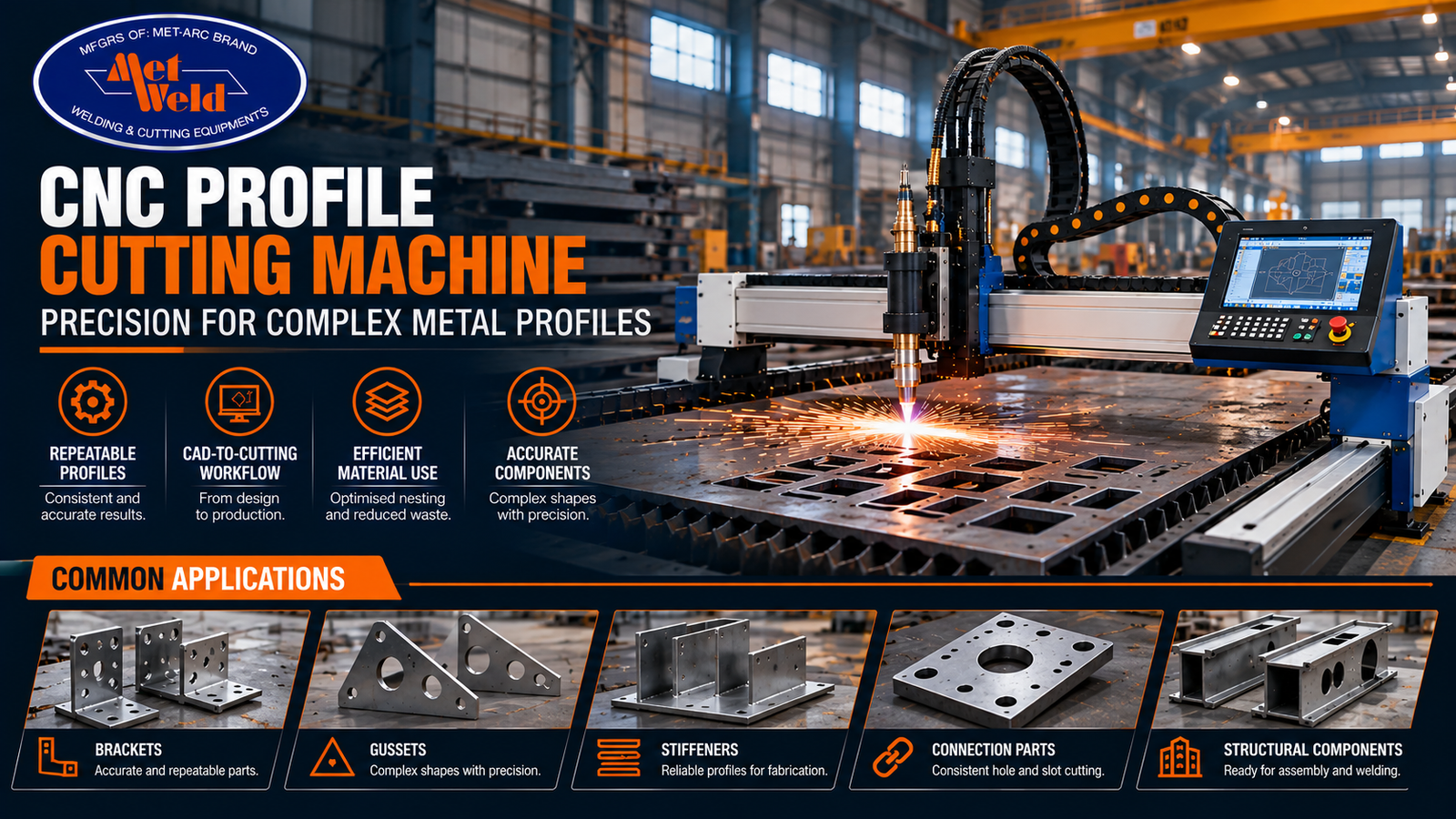
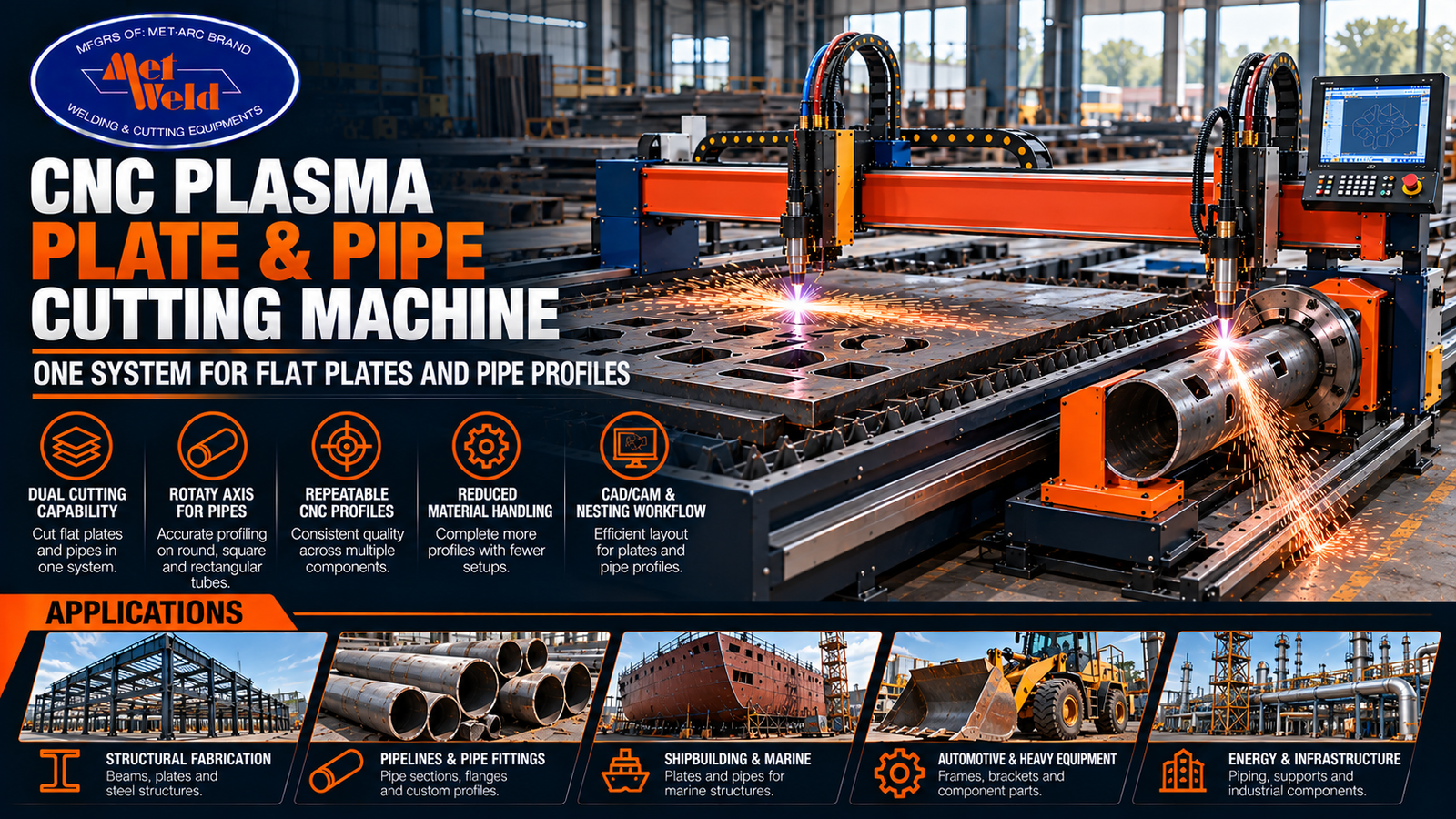
A CNC plasma plate and pipe cutting machine is an industrial cutting system designed to process flat metal plates and, where supported by the configuration, cylindrical pipe or tube materials.
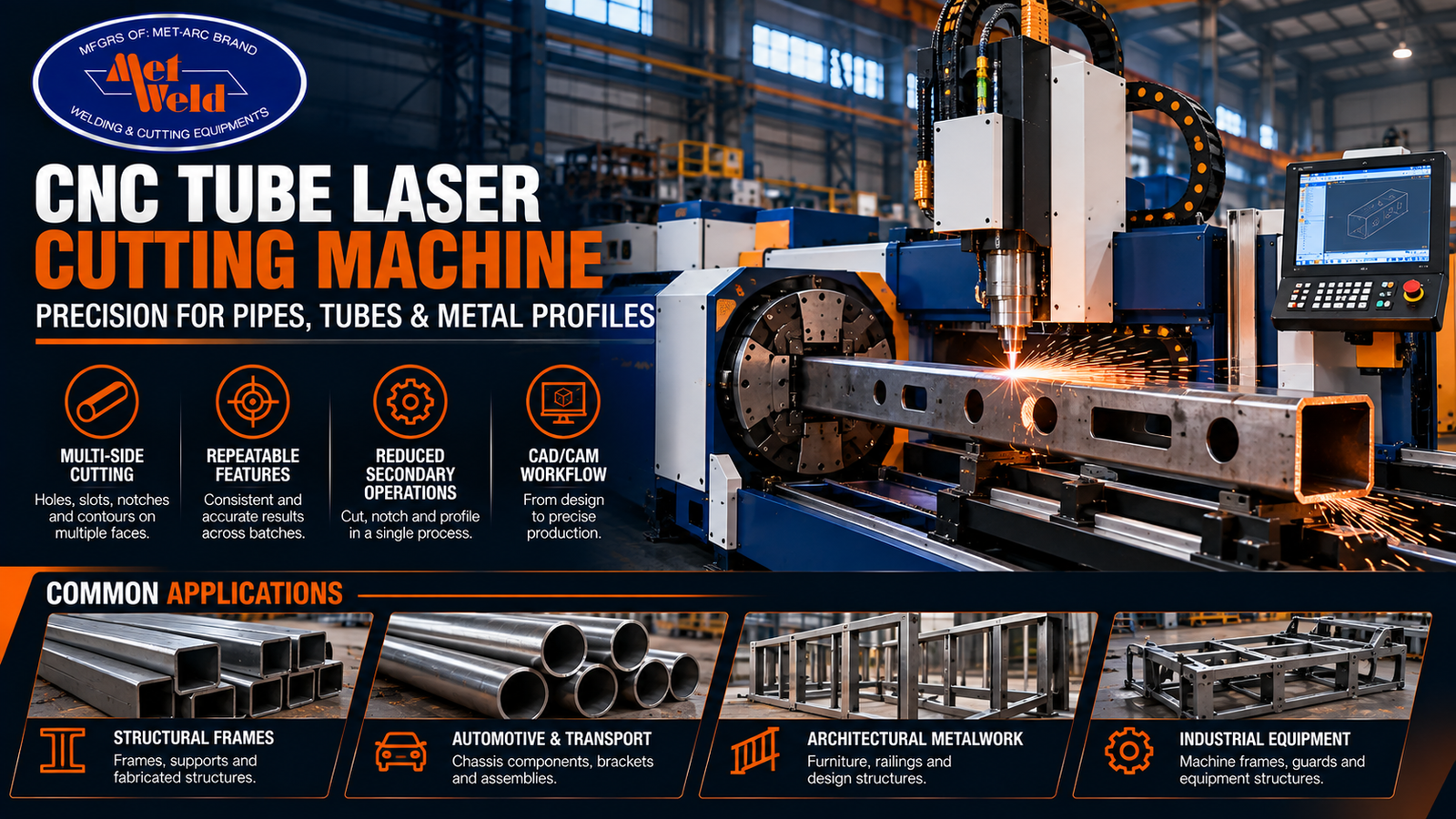
The CNC controller guides the cutting torch along programmed paths. For flat plates, the machine follows two-dimensional cutting profiles. For pipe cutting, a compatible rotary or pipe-handling mechanism may rotate the workpiece while coordinating torch movement to create the required profile.
Plasma cutting uses a high-temperature plasma arc to melt electrically conductive metal. A gas stream then removes molten material from the cut.
The exact capabilities vary by machine model. Manufacturers should confirm whether the selected equipment supports plate cutting, pipe cutting, or both, along with the relevant material dimensions and thickness ranges.
Many industrial projects require components with different shapes and dimensions. Flat plates may be used for brackets, base sections, and structural parts, while pipes and tubes may be used for frames, supports, and other assemblies.
Using an appropriate CNC cutting system can help manufacturers prepare these components according to engineering drawings.
Manual cutting can be challenging when components include detailed outlines, slots, openings, or repeated profiles.
CNC technology follows programmed cutting paths, helping manufacturers reproduce the specified geometry more consistently. The achievable accuracy depends on machine specifications, material properties, cutting parameters, and the design of the component.
This is useful when components must fit correctly during subsequent manufacturing or assembly.
Plate cutting and pipe cutting involve different workpiece shapes and handling requirements.
Flat plates require suitable material support and a cutting bed, whereas pipe cutting may require a rotary axis, workpiece supports, or a dedicated pipe-handling arrangement.
A machine designed for both applications can support a broader range of component requirements when its configuration provides the necessary capabilities.
Manufacturers frequently produce components in batches. Once a cutting program has been verified, CNC control allows the same design to be reused for subsequent production runs.
This can help reduce variations between parts and simplify repeat-job preparation.
Operators must still check the program, material placement, and cutting parameters before production begins.
Programmed cutting operations make it easier to organise jobs around component dimensions, required quantities, and delivery schedules.
When supported by appropriate software, nesting and cutting-layout planning can help improve material utilisation and reduce avoidable waste.
For manufacturers working with multiple component types, a well-planned CNC workflow can improve coordination between cutting, inspection, and downstream operations.
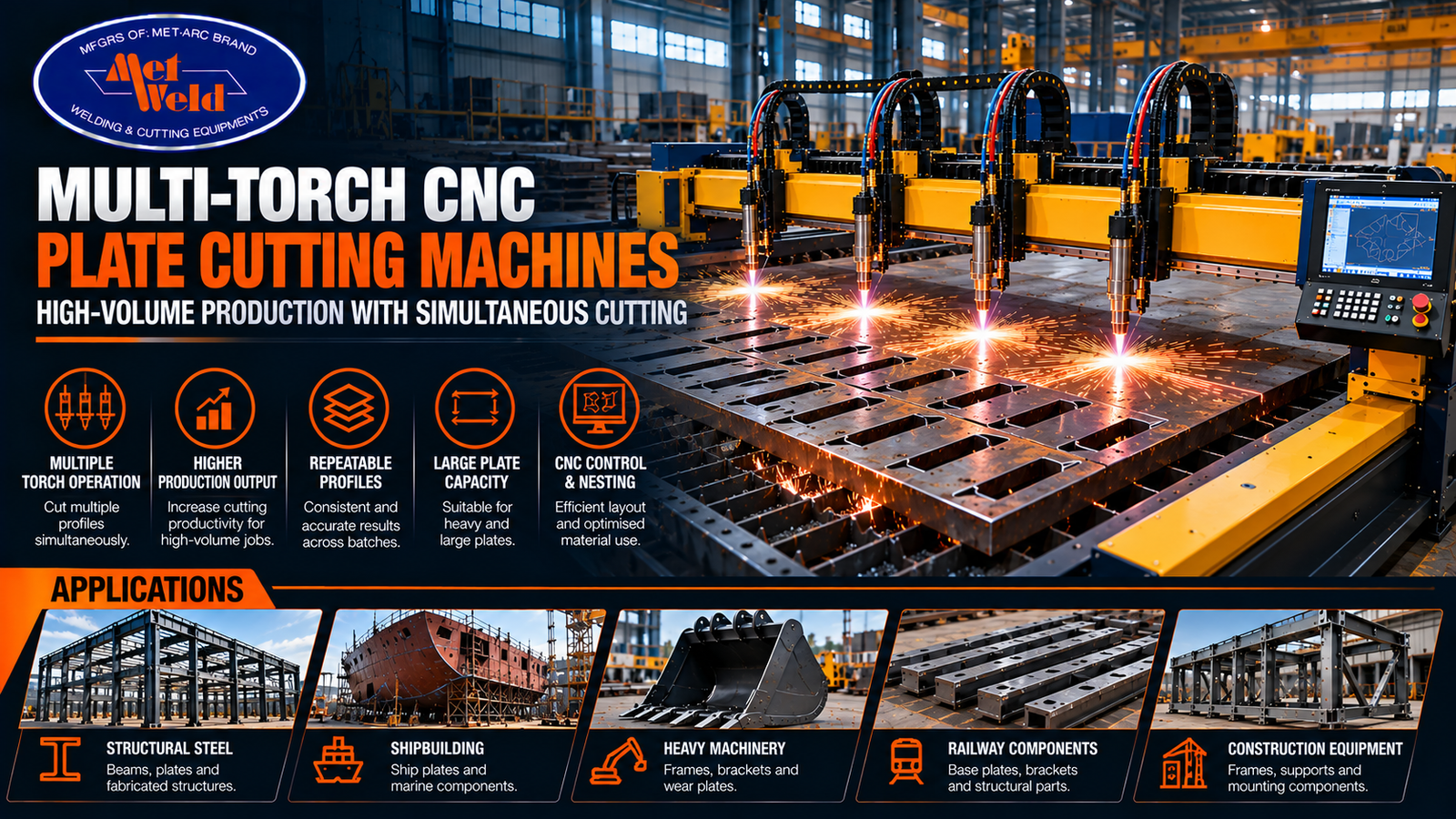
CNC plasma plate cutting is used in many industries that process conductive metal plates. Its suitability depends on the required material thickness, profile complexity, and edge-quality specifications.
Structural steel manufacturers process plates for supports, brackets, base sections, and other structural components.
CNC plasma cutting can help produce these profiles according to approved engineering drawings, particularly where repeatability and efficient plate processing are important.
Construction machinery often contains plate-based components that require specific dimensions and outlines.
Suitable CNC plate cutting equipment can support the preparation of these components before they move to subsequent manufacturing stages.
Machinery manufacturers may require a variety of flat metal parts, including mounting plates, support sections, and equipment frames.
Programmed plate cutting helps produce these components consistently when the material and geometry fall within the machine’s operating range.
Pipes and tubes are used in a wide range of industrial structures and equipment. CNC pipe cutting can help produce the profiles and openings needed for selected component designs.
Structural frameworks may require pipe ends to be shaped to suit specific joints and assembly arrangements. A suitable CNC pipe cutting system can create programmed profiles according to the component design.
Pipes and tubes may form supports, frames, and other structural elements. Accurate cutting helps prepare these components for subsequent fitting and assembly operations.
Some projects require openings, angled cuts, or shaped ends in cylindrical workpieces. CNC-controlled pipe cutting can support these profiles when the machine has the required rotary and motion-control capabilities.
Before selecting equipment, manufacturers should confirm the supported pipe diameter, length, wall thickness, and profile complexity.
Selecting a suitable machine requires an understanding of the actual production workload. Not every system offers the same plate dimensions, pipe capacity, or cutting functions.
Confirm that the machine and plasma power source support the required material grades and thicknesses.
For plate processing, review the working area and the maximum dimensions of the sheets or plates used in production.
For pipe cutting, check the supported diameter range, workpiece length, wall thickness, loading arrangements, and rotary-axis capabilities.
Identify the profiles, openings, tolerances, and edge-quality requirements of the components being manufactured.
Estimate the number of components required per shift or production cycle. The expected workload can help determine the appropriate machine size and configuration.
Review the available software, design-file compatibility, pipe-profile programming functions, and nesting capabilities.
Check the availability of training, technical assistance, maintenance guidance, and suitable CNC machine spares.
A clear understanding of these factors helps businesses choose equipment that matches their production requirements.
Efficient cutting depends on proper workpiece handling as well as machine performance.
Flat plates must be positioned securely on the cutting bed. Pipes and tubes require suitable supports and, where applicable, a correctly configured rotary mechanism to prevent unsafe movement during cutting.
Operators should follow the manufacturer’s procedures for loading, securing, and unloading materials. Suitable ventilation, fire prevention measures, protective equipment, and electrical safety practices are also essential when operating plasma cutting equipment.
Regular inspection of the torch, consumables, motion system, and other relevant components can help maintain reliable operation.
Metweld lists CNC plasma plate and pipe cutting machines among its industrial cutting equipment offerings.
Businesses evaluating this type of system should define whether they need plate cutting, pipe cutting, or an integrated solution for both applications. They should also identify their material grades, plate dimensions, pipe sizes, maximum thicknesses, and expected production volume.
Confirm the selected machine’s exact configuration, cutting capacity, CNC features, installation requirements, and service arrangements directly with the manufacturer before making a purchasing decision.
Explore Metweld’s CNC plate and pipe cutting machine range to learn more about its available industrial cutting solutions.
CNC plasma plate and pipe cutting machines can help manufacturers prepare flat plates and suitable pipe components using programmed cutting operations. Depending on the machine configuration, they can support repeatable profiles, improve workflow organisation, and provide flexibility for different industrial cutting requirements.
The right machine depends on material specifications, plate dimensions, pipe capacity, cutting complexity, and production volume. Careful evaluation of these requirements helps manufacturers choose equipment that supports their actual applications.
For businesses planning to improve their metal-processing operations, selecting suitable CNC cutting equipment is an important step towards more consistent and organised production.