For businesses exploring advanced CNC laser cutting solutions, the key is to match the machine configuration with the actual tube dimensions, material types, wall thicknesses, component designs and production volumes.
the key is to match the machine configuration with the actual tube dimensions, material types, wall thicknesses, component designs and production volumes.
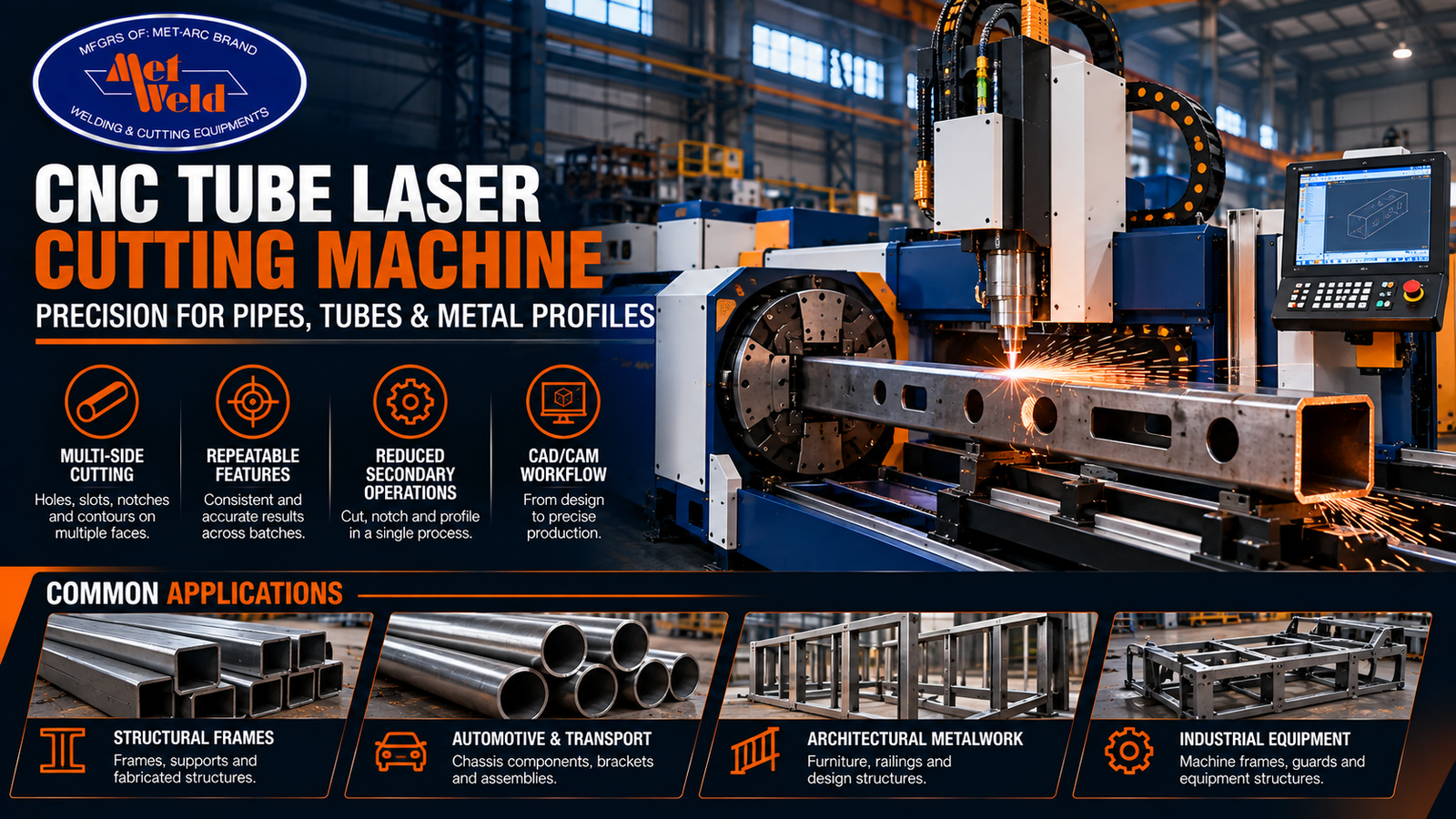
A CNC tube laser cutting machine is designed to cut cylindrical tubes, pipes, square and rectangular hollow sections, and other compatible metal profiles using a focused laser beam. Unlike a conventional flat-sheet laser system, a tube-cutting setup must coordinate the movement and rotation of the workpiece so the cutting head can access different sides of the profile.
The CNC controller uses programmed geometry to guide the cutting process. This makes it possible to produce features such as holes, slots, notches, contours and cut-outs at defined positions. The exact capabilities depend on the machine design, rotary or chuck arrangement, laser source, cutting head, software and material-handling configuration.
For manufacturers that process repeated tube assemblies, this controlled approach can provide a more consistent production method than relying on manual marking and multiple standalone operations.
The process begins with a digital drawing or CAD model that defines the required component geometry. The cutting program translates that design into machine movements and laser parameters. The tube or profile is secured by the machine’s workholding system, while controlled motion positions the material relative to the cutting head.
As the laser travels along the programmed path, it concentrates energy into a small area to melt or vaporize the material. Assist gas helps remove molten material from the cut zone. Because the tube can be rotated during processing, the machine can access multiple faces without requiring the operator to manually reposition the workpiece.
This is particularly useful when a single component contains features on several sides. Instead of cutting a profile first and manually drilling or notching it later, suitable designs can be processed within a coordinated CNC workflow.
Square and rectangular hollow sections are widely used for frames, supports, machine structures and fabricated assemblies. Tube laser cutting can produce connection features, slots and shaped ends that help components fit together during fabrication.
Vehicle and transportation structures often contain tubular or formed profiles with repeated holes and connection points. CNC processing can support consistent production of these features when the machine is correctly configured for the required material and dimensions.
Metal furniture, railings, partitions and architectural structures may use tubes and profiles with visible joints and precisely positioned openings. CNC tube cutting can help manufacturers create repeatable decorative and functional geometries.
Machine frames, guards, supports and equipment structures frequently use pipes or hollow sections. A tube laser cutting process can combine profiling and feature cutting, reducing the need for separate drilling or contouring operations in suitable applications.
One of the biggest advantages is the ability to produce several types of features on a single component. Depending on the machine and software, holes, slots, notches, contours and end cuts can be programmed into the same production sequence. This can simplify workflow and reduce movement between workstations.
CNC control allows the same program to be executed repeatedly, helping maintain consistent feature locations and component geometry across production batches. This is valuable when assemblies contain multiple matching parts that must align during welding or installation.
When tube components are designed for laser processing, certain drilling, marking, sawing or manual notching operations may be reduced. Fewer secondary operations can mean less handling and a more streamlined production flow.
Tube laser technology can support complex profiles that would be difficult to produce economically through manual cutting. Designers can incorporate connection features and shaped ends into the component geometry, provided the machine’s working range and software support those requirements.
The suitable material range depends on the laser source, machine configuration, cutting head, thickness and process parameters. Industrial laser systems can be configured for materials such as mild steel and stainless steel, while some systems can also process aluminium and other compatible metals.
Material thickness is equally important. A machine should be selected according to the actual production range rather than a single maximum specification. Tube diameter, profile dimensions, wall thickness, material reflectivity and required edge quality all influence the appropriate cutting configuration.
Start with the parts you actually manufacture. Identify the tube shapes, outside dimensions, wall thicknesses, material grades and maximum component lengths that the machine will need to process. It is also important to consider the smallest and largest profiles rather than evaluating only the average job.
Workholding and material handling deserve attention because long tubes and profiles require stable positioning throughout the cutting cycle. The chuck or rotary system should be appropriate for the required size range and production method.
Software is another important consideration. CAD/CAM compatibility, tube nesting, feature recognition and programming capabilities can influence how efficiently designs move from engineering to production.
Service support should be considered alongside machine specifications. Installation, training, maintenance guidance, spare parts and technical assistance can influence long-term machine availability.
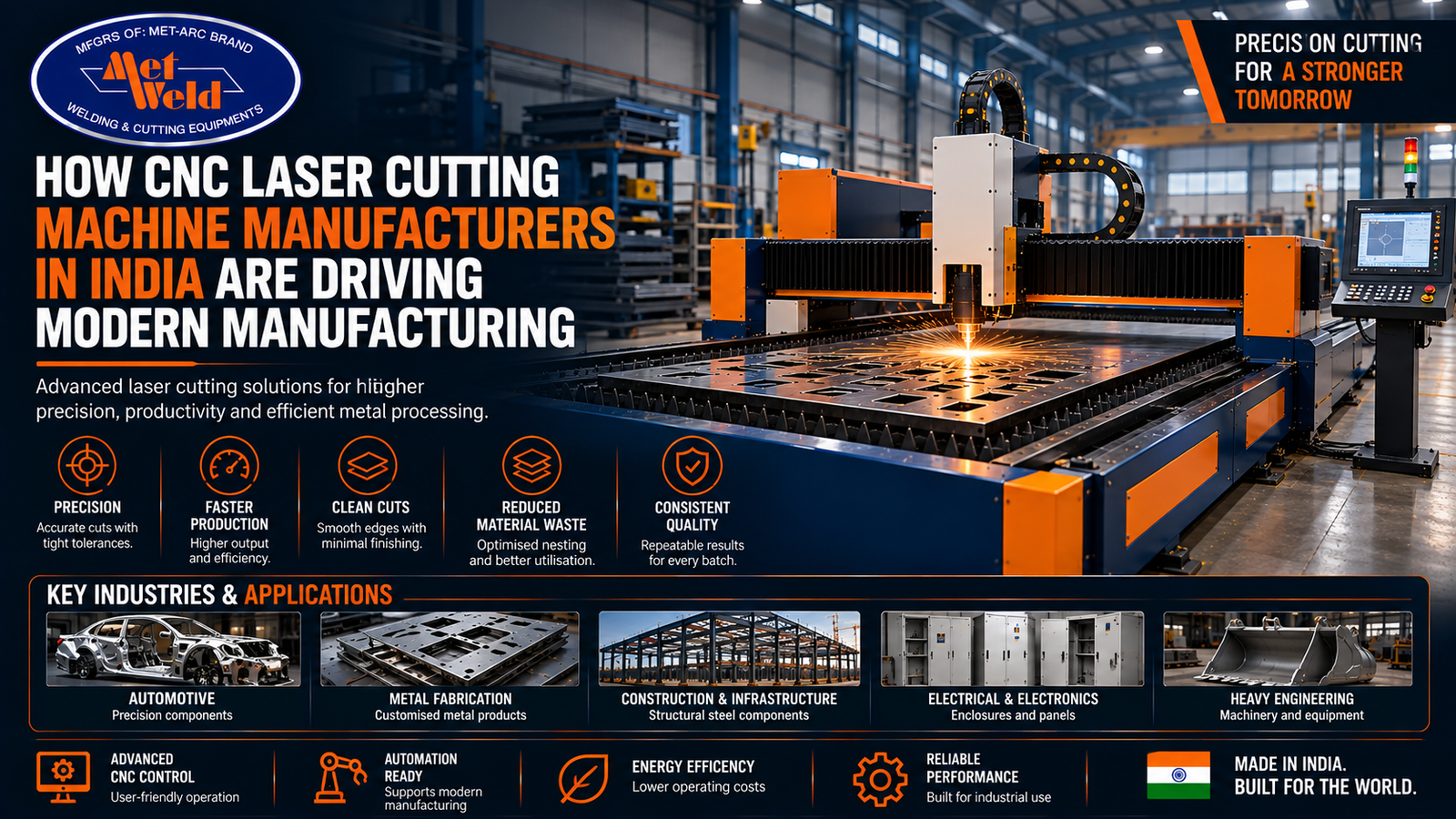
MetWeld is an Indian manufacturer of CNC plasma cutting machines, laser cutting machines and welding automation equipment. Its CNC laser cutting machine range includes table-type and gantry-type systems, supported by a broader portfolio of industrial cutting and automation solutions.
MetWeld’s broader CNC laser cutting machine range can be considered as part of that evaluation, while the specific tube-processing configuration should be discussed according to the intended application.
can be considered as part of that evaluation, while the specific tube-processing configuration should be discussed according to the intended application.
A CNC tube laser cutting machine can change how manufacturers approach pipes, hollow sections and metal profiles by bringing multiple cutting features into a controlled CNC workflow. Instead of treating drilling, notching and profiling as entirely separate operations, suitable components can be prepared through a coordinated laser process.
Tube dimensions, material, wall thickness, feature complexity, handling requirements, software and production volume should all be assessed before investment. When these factors are matched correctly, tube laser cutting can support repeatable component quality, efficient processing and a more streamlined fabrication workflow.
For manufacturers planning to adopt industrial tube laser cutting technology, the most useful starting point is a detailed review of the parts they produce and the production sequence they want to improve.
the most useful starting point is a detailed review of the parts they produce and the production sequence they want to improve. That approach helps ensure the selected CNC system is aligned with both current requirements and future manufacturing needs.