Material is one of the most important resources in sheet metal fabrication, and the way a sheet is planned before cutting can have a direct effect on production costs. When several components are produced from the same sheet, unused spaces between profiles can become scrap.
This is where sheet metal nesting becomes important. Nesting involves arranging multiple component profiles on a sheet in an efficient layout before the cutting process begins. The objective is to use as much of the available material as possible while maintaining suitable cutting paths and part dimensions.
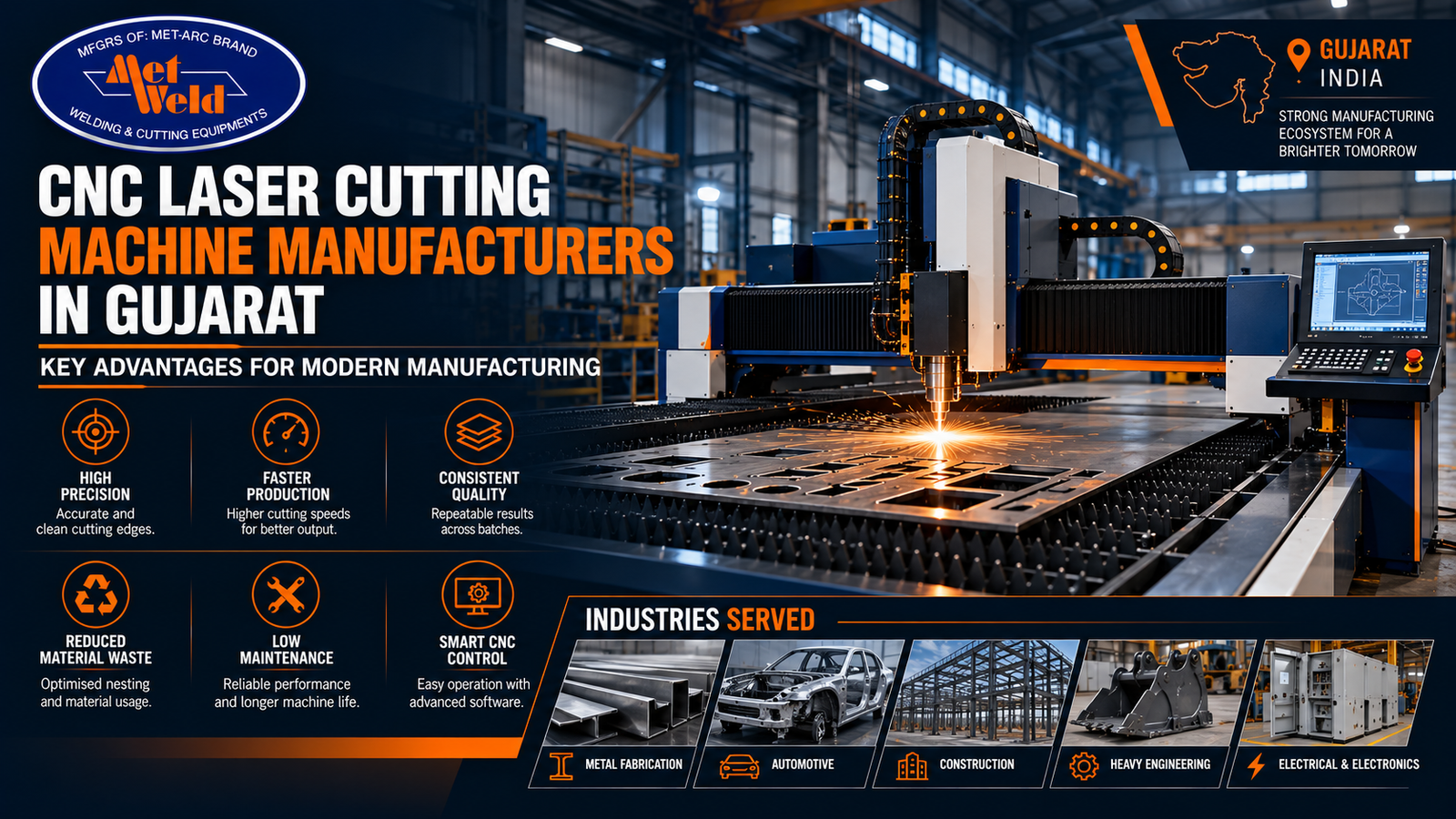
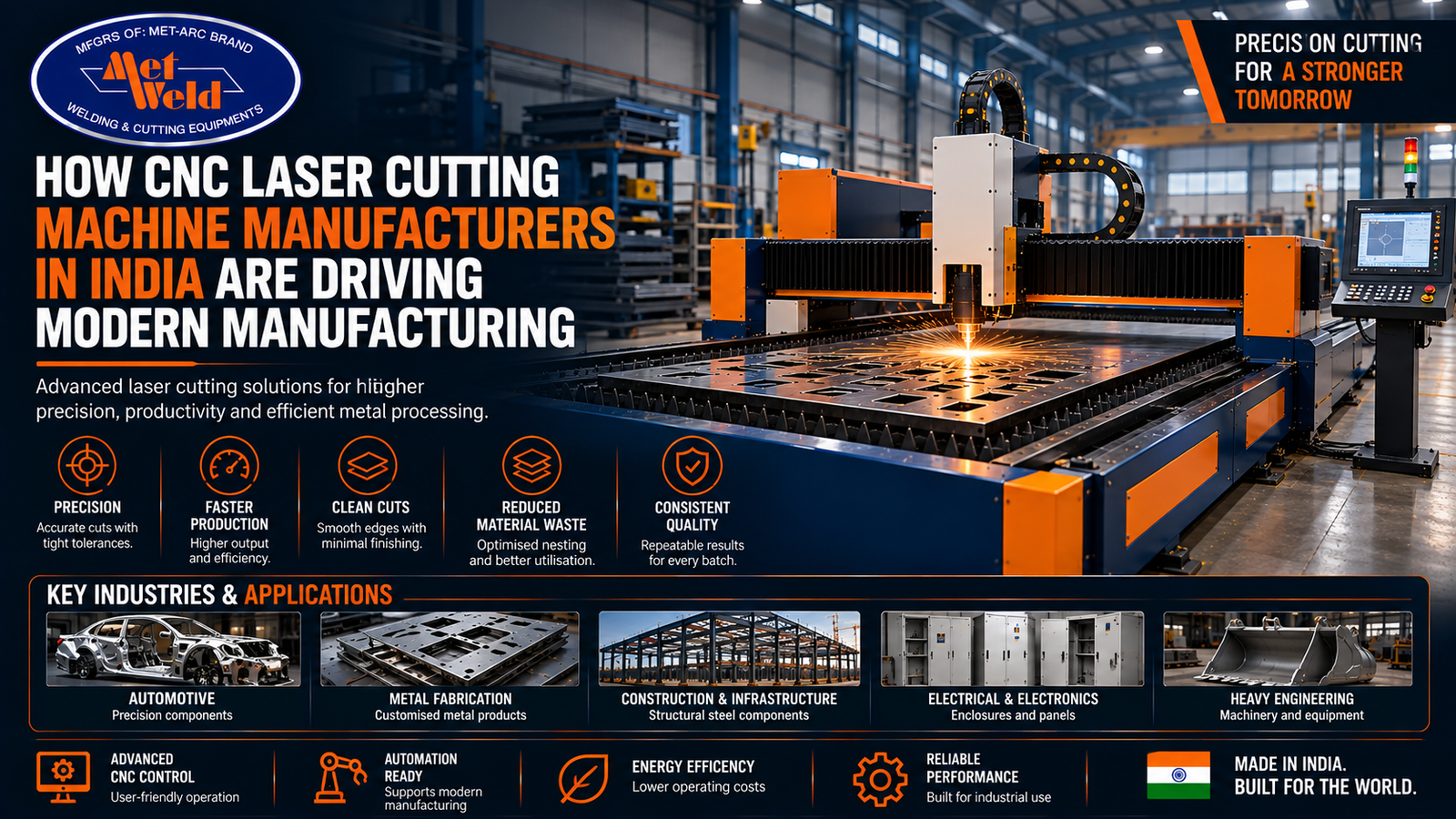
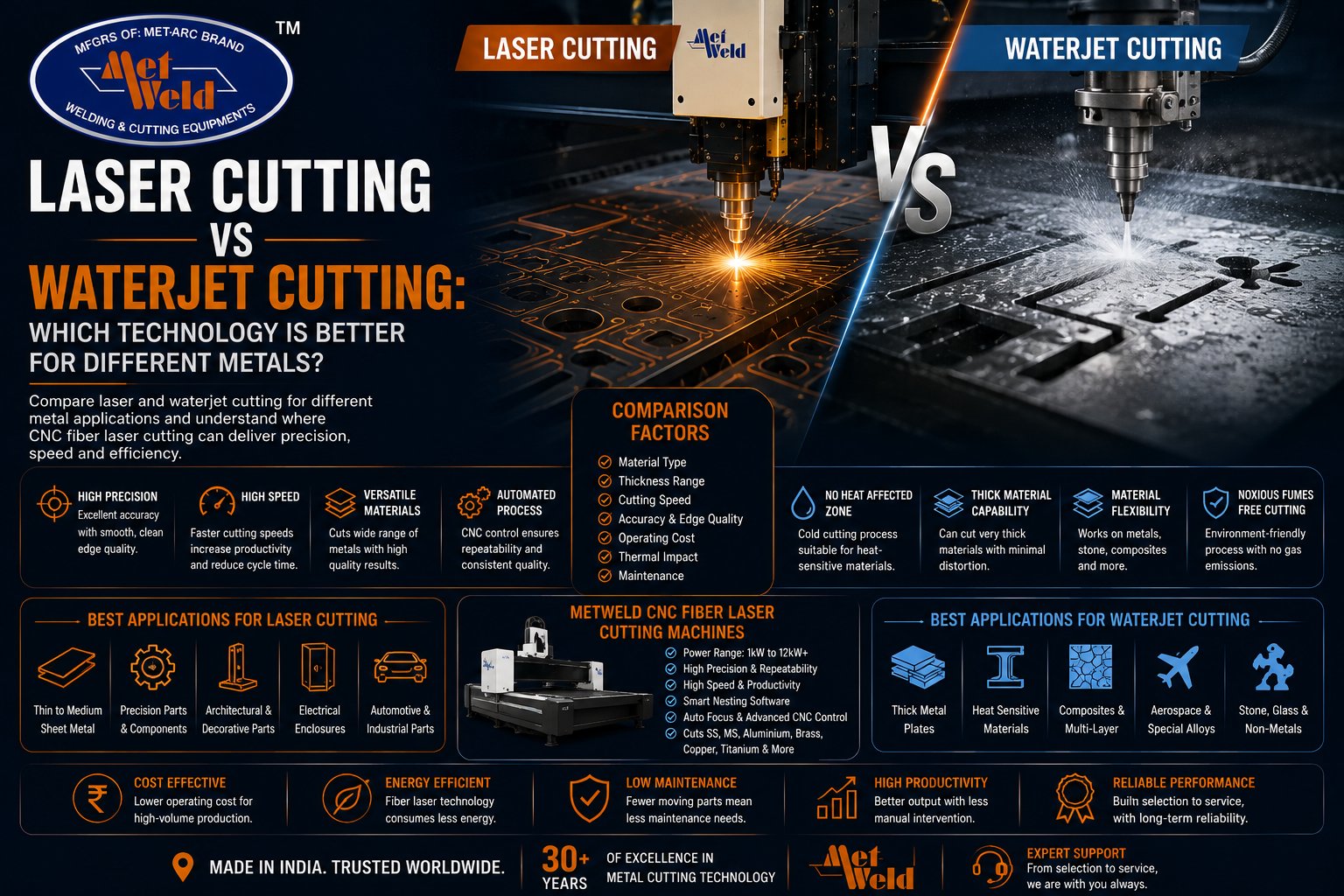
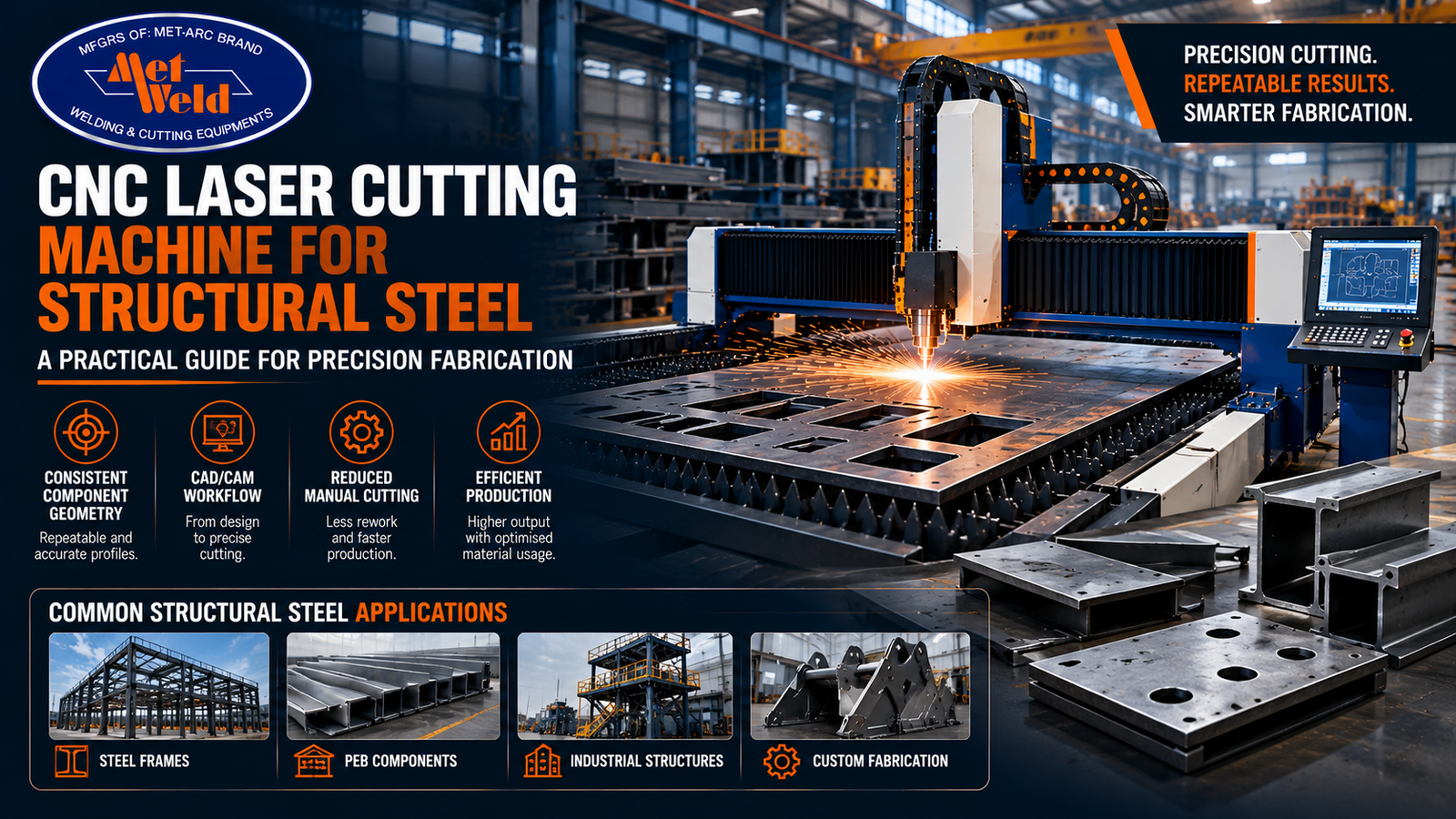
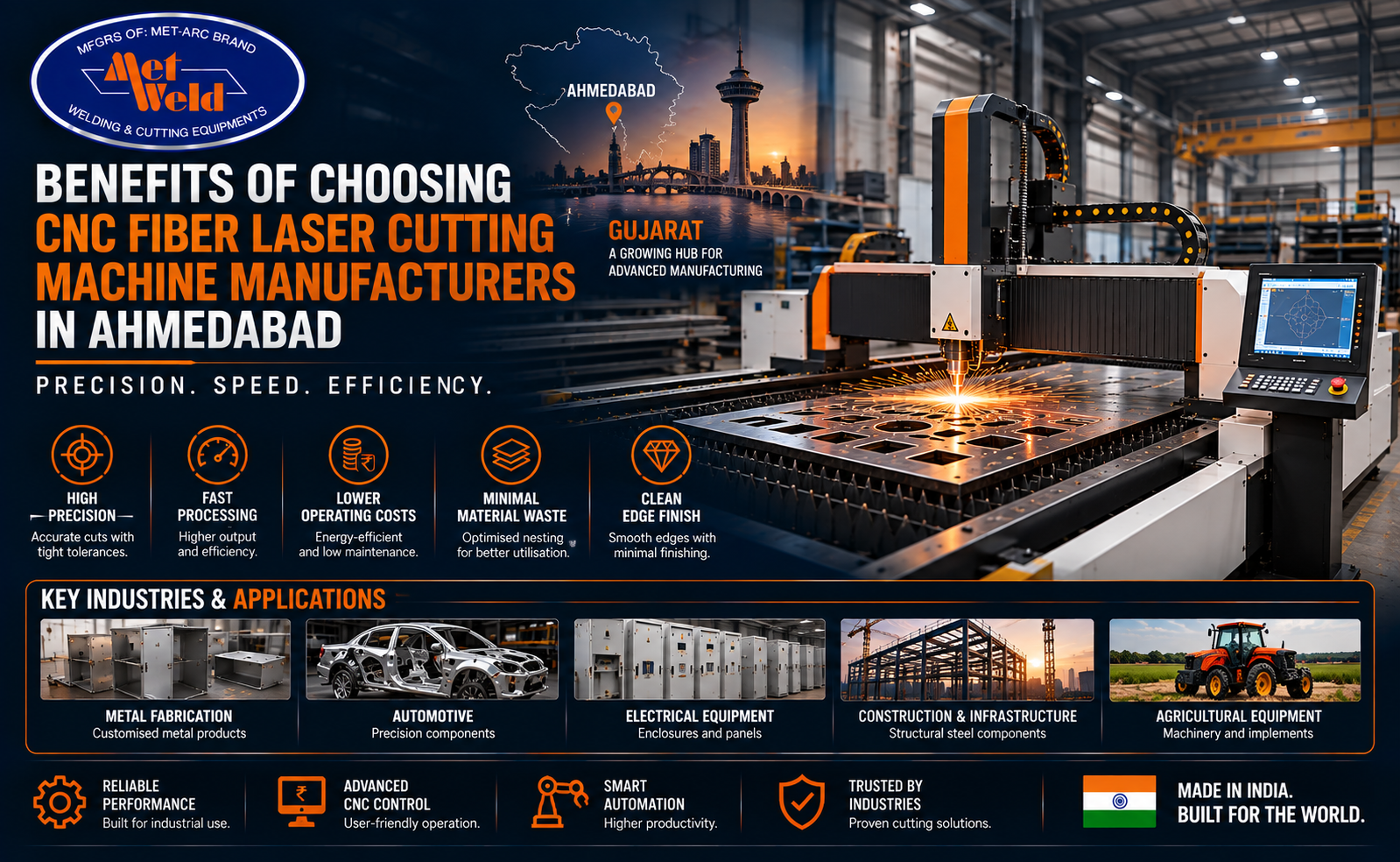
Modern CNC cutting systems can integrate nesting software with CAD/CAM workflows to improve material utilisation. MetWeld highlights optimized nesting as a feature of its CNC fiber laser cutting systems, helping reduce material wastage and improve production efficiency.
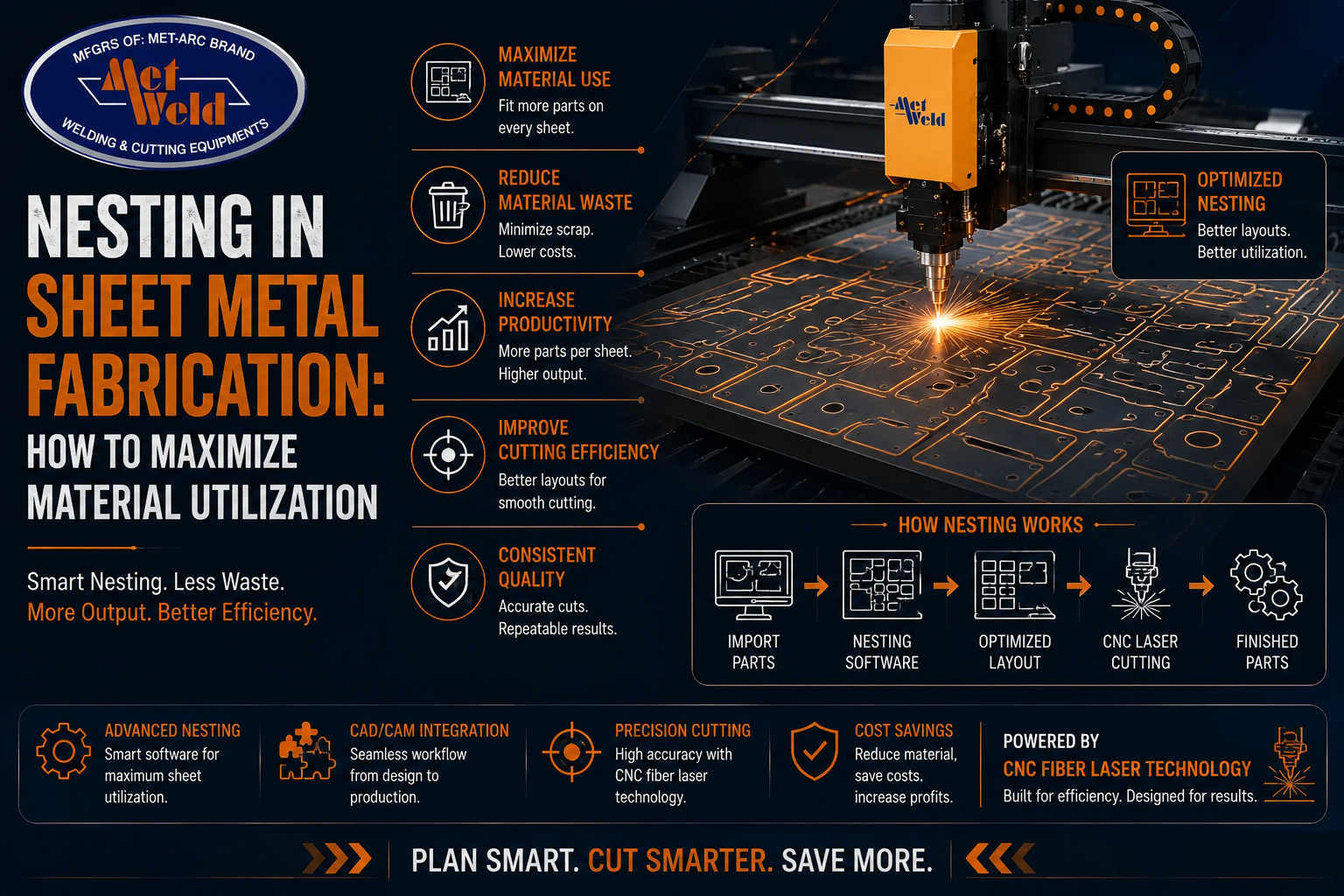
Nesting is the process of arranging different parts or cutting profiles on a sheet before they are processed by a CNC cutting machine.
Instead of treating each component as an individual cutting job, nesting allows multiple parts to be positioned together according to their shapes, dimensions, quantities and cutting requirements.
The process generally begins with digital drawings or CAD files. The required component profiles are prepared for the cutting system, and nesting software determines how they can be arranged on the available sheet.
The layout can consider:
Once the layout is prepared, the CNC machine follows the programmed cutting paths to produce the required components.
MetWeld’s CNC systems support CAD/CAM compatibility, while its fiber laser machines include software-driven features such as nesting, auto-focus and motion control.
Efficient material utilisation is important because every sheet contains a limited amount of usable material. If the cutting layout leaves large unused areas, manufacturers may require additional sheets to produce the same number of components.
One of the primary objectives of nesting is to reduce unnecessary gaps between individual profiles.
MetWeld specifically identifies smart nesting software as a feature that optimizes sheet layouts and helps reduce material wastage.
An efficient layout can allow more components to be produced from one sheet. This can become particularly valuable when the same or similar parts are manufactured repeatedly.
Producing more usable components from each sheet can improve material yield and reduce the amount of unused material generated during production.
Material savings can contribute to better production economics. When less material is lost as scrap, manufacturers can improve utilisation of purchased sheet metal and potentially reduce material costs over repeated production runs.
Nesting does more than optimise material placement. It can also support a more organised CNC cutting workflow.
Digital nesting allows manufacturers to prepare cutting layouts before production starts. This provides a clearer understanding of how components will be arranged and what material will be required for a particular job.
Manually deciding where every component should be placed can be time-consuming, particularly when a sheet contains multiple part sizes and shapes.
Software-based nesting provides a more systematic method for creating layouts and preparing them for CNC cutting.
Once a digital layout has been created, CNC equipment can execute the programmed cutting paths repeatedly. MetWeld highlights consistency and repeatability among the advantages of CNC laser cutting technology.
Nesting becomes particularly useful when integrated with automated laser cutting.
MetWeld’s CNC fiber laser cutting machine systems combine CNC control, fiber laser technology and software features designed for efficient metal processing. The company’s published information identifies optimized nesting as a way to improve material utilization and reduce wastage.
An efficient nesting layout is most effective when the cutting machine can accurately follow the programmed paths.
MetWeld’s table-type CNC fiber laser machine lists positioning accuracy of ±0.03 mm and repositioning accuracy of ±0.02 mm. Its published specifications also include a working area of 3050 × 1530 mm and maximum movement speed of 140 m/min.
Accurate CNC movement helps maintain consistency when multiple profiles are arranged closely across a sheet.
MetWeld highlights high-speed cutting as an advantage of its fiber laser systems. Faster cutting can help reduce production cycles and support higher output, although actual cutting speed depends on material, thickness and cutting conditions.
Creating an effective nesting layout involves more than placing components as close together as possible.
Complex or irregular profiles can create unused spaces around their edges. An efficient nesting arrangement can position different shapes to make better use of these areas.
The dimensions of each component influence how many parts can fit on a particular sheet.
The available sheet size establishes the overall working area for the nesting layout. Selecting suitable sheet dimensions can help improve material utilisation.
The number of components required can influence the most practical nesting arrangement. Large production batches may benefit significantly from optimised layouts.
Parts need appropriate spacing and cutting paths. Therefore, the most compact arrangement is not necessarily the most effective if it compromises reliable cutting or part quality.
Manufacturers can consider several approaches when trying to improve sheet utilisation.
Automated nesting software can analyse different arrangements and identify efficient layouts for multiple profiles.
MetWeld identifies optimized nesting as a feature designed to maximise material utilisation and minimise wastage.
When production requirements allow, combining large and small components on the same sheet can help use areas that might otherwise remain unused.
Preparing digital layouts before production begins can help manufacturers understand material requirements and organise cutting jobs more efficiently.
The machine’s working area, laser power and configuration should match the materials, sheet dimensions and component sizes being processed.
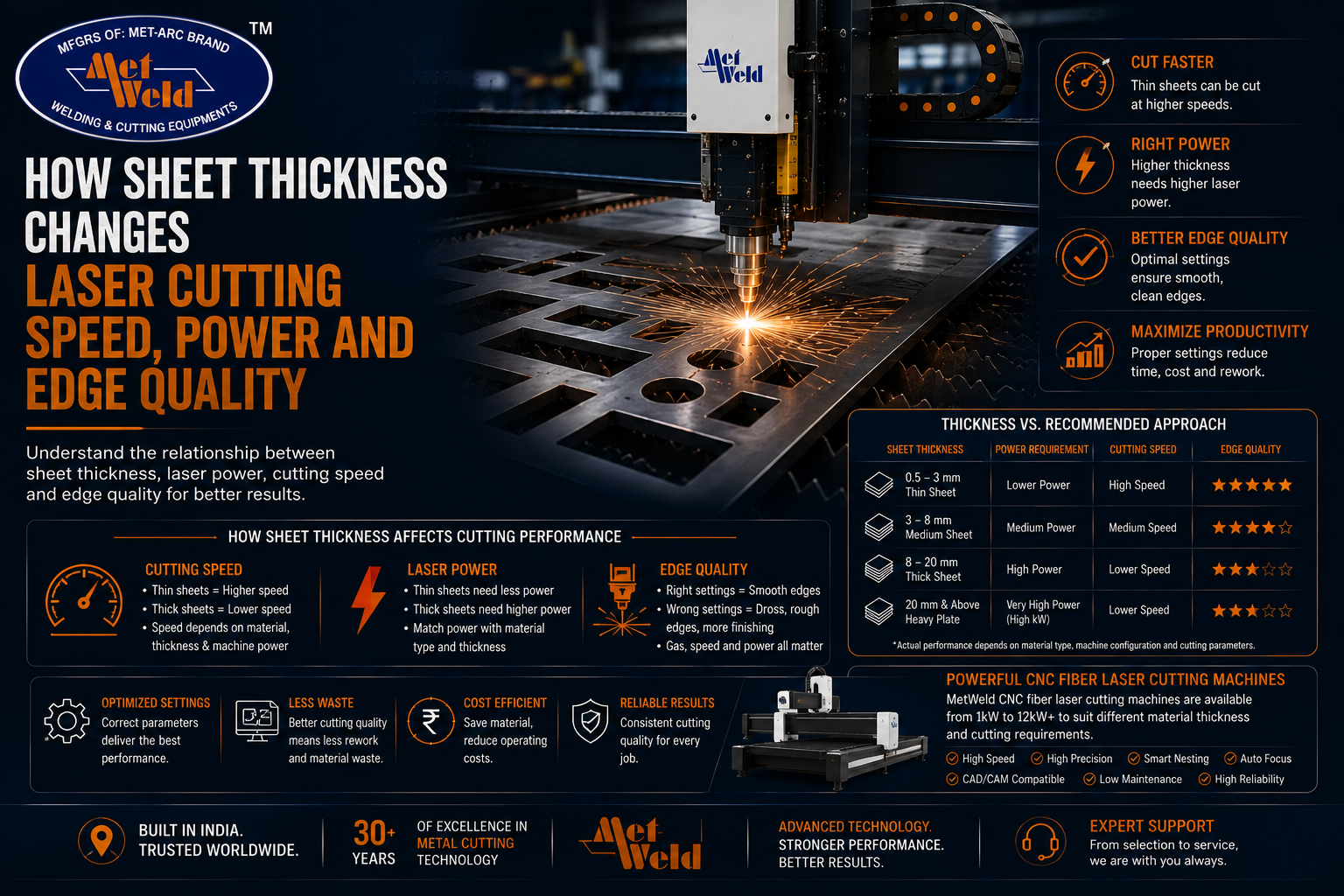
MetWeld offers fiber laser machines with different power configurations, from 1kW to 12kW+ depending on material thickness and cutting requirements.
Nesting can support different metal fabrication requirements when used with an appropriate cutting system.
MetWeld states that its fiber laser machines can process:
The appropriate machine configuration depends on the material, thickness and required cutting performance.
Effective nesting can provide several practical benefits for fabrication operations:
For manufacturers producing components in repeated batches, these benefits can become increasingly significant over time.
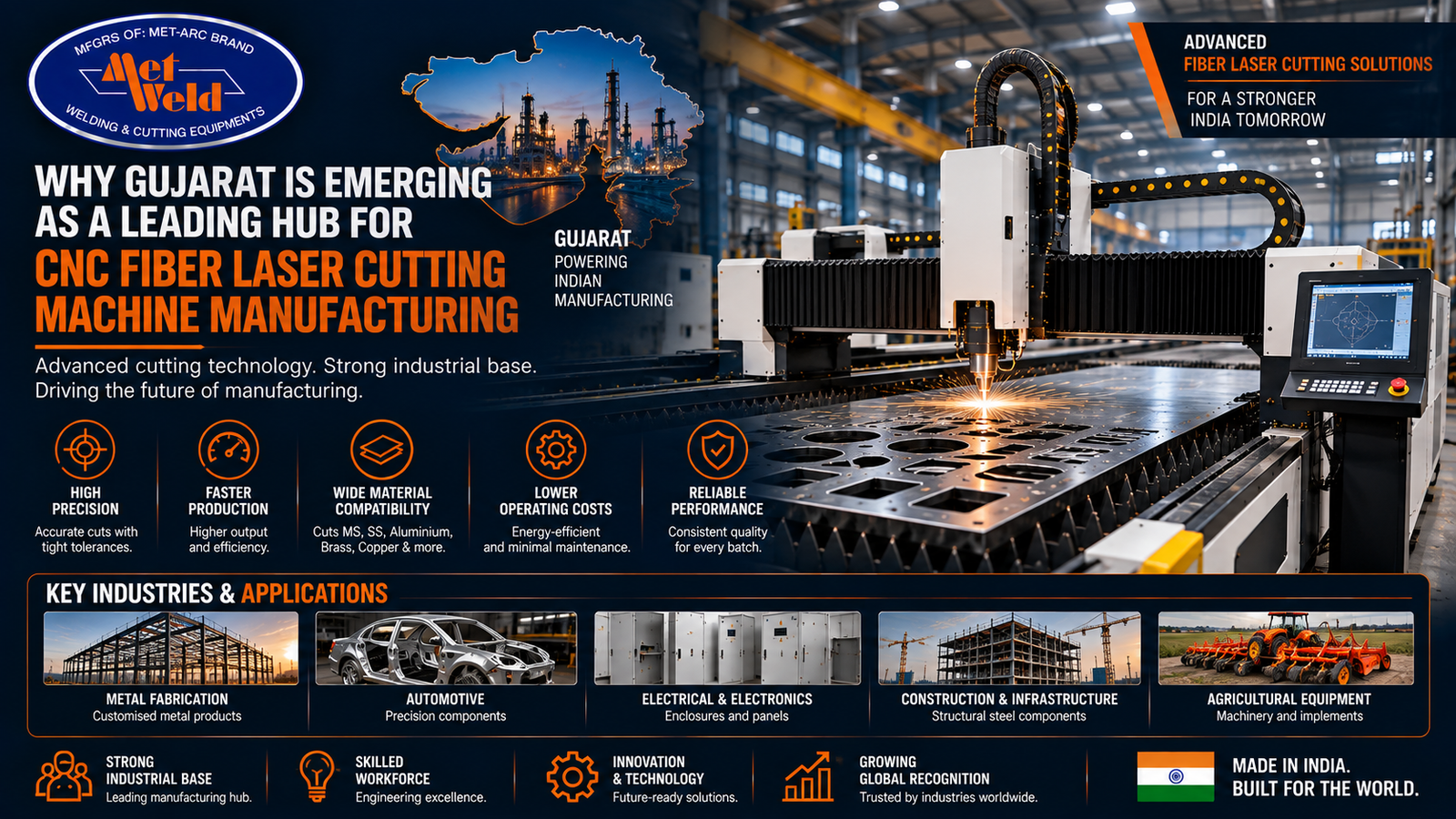
MetWeld is a Gujarat-based manufacturer of CNC fiber laser cutting machines, CNC plasma systems and other industrial cutting solutions. Its fiber laser systems combine CNC automation, CAD/CAM compatibility and nesting capabilities for precision metal processing.
For manufacturers looking for laser cutting machine manufacturers, MetWeld offers different power configurations based on material thickness and cutting requirements. The company also highlights installation, operator training, maintenance and spare-parts support.
Its CNC cutting solutions are positioned for applications across fabrication, automotive, construction, electrical and electronics, furniture, renewable energy and other industrial sectors.
Sheet metal nesting plays an important role in improving material utilisation during modern CNC cutting operations. By arranging multiple components efficiently on a sheet, manufacturers can reduce unused areas, minimise scrap and potentially produce more parts from the same material.
When combined with CNC automation, CAD/CAM integration and precision cutting, nesting can become an important part of an efficient sheet metal fabrication workflow.
For manufacturers looking to improve material efficiency, integrating optimized nesting with a suitable laser cutting machine can help make better use of every sheet while supporting consistent and productive fabrication.
The goal is not simply to fit as many parts as possible onto a sheet. An effective nesting strategy balances material utilisation, cutting paths, component dimensions, production quantity and finished-part requirements. With the right approach, manufacturers can turn better material planning into a more efficient overall fabrication process.