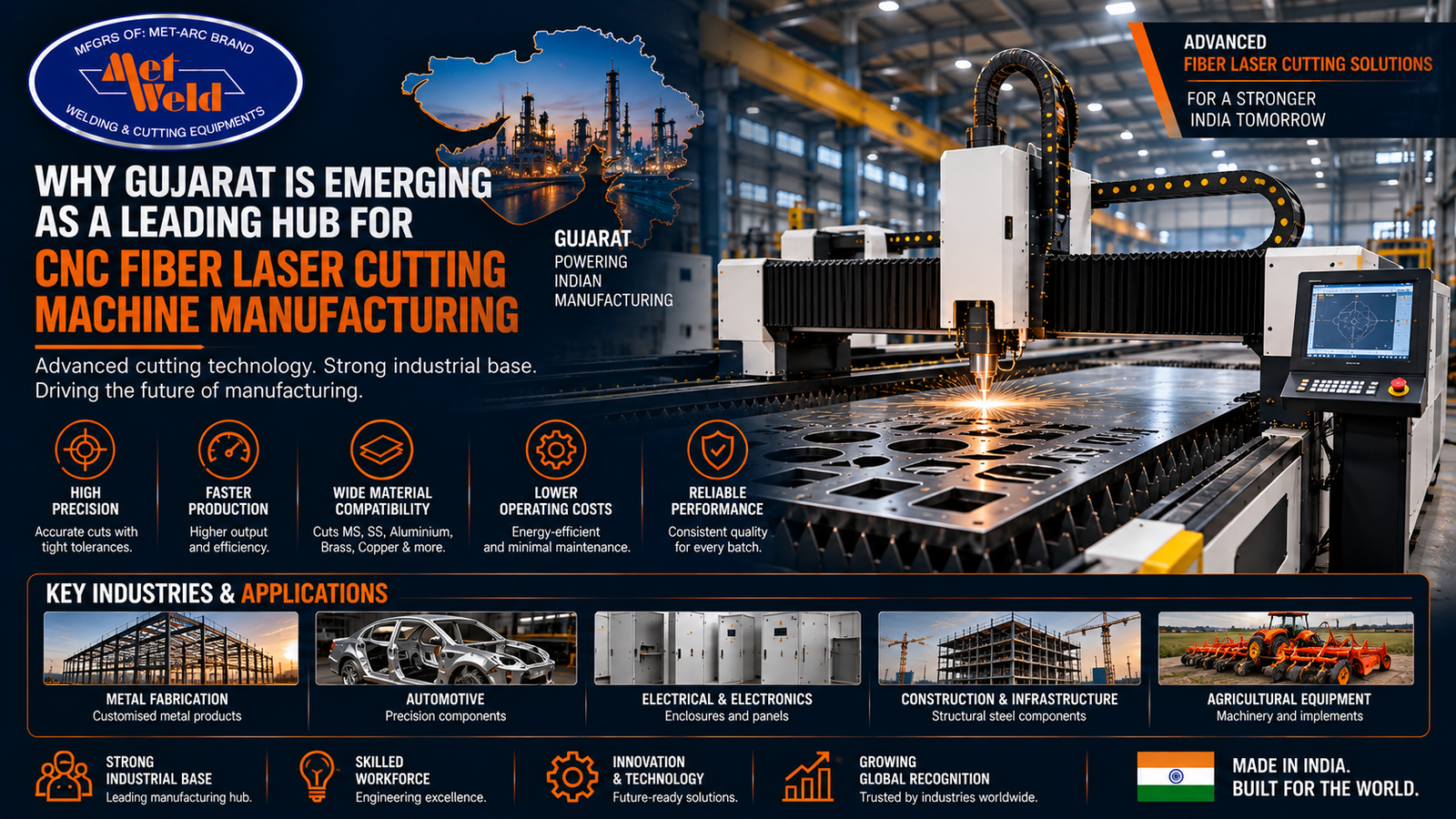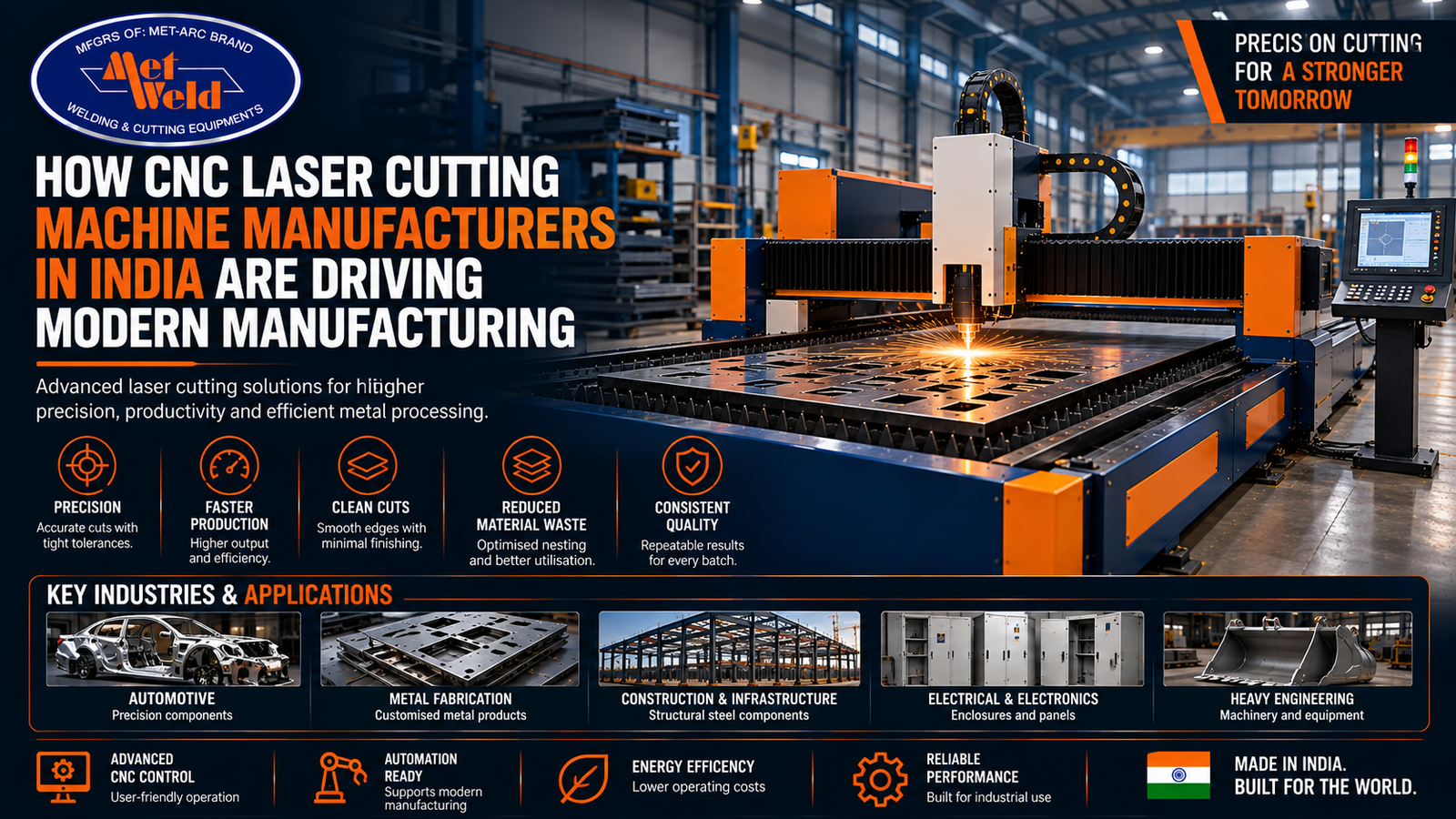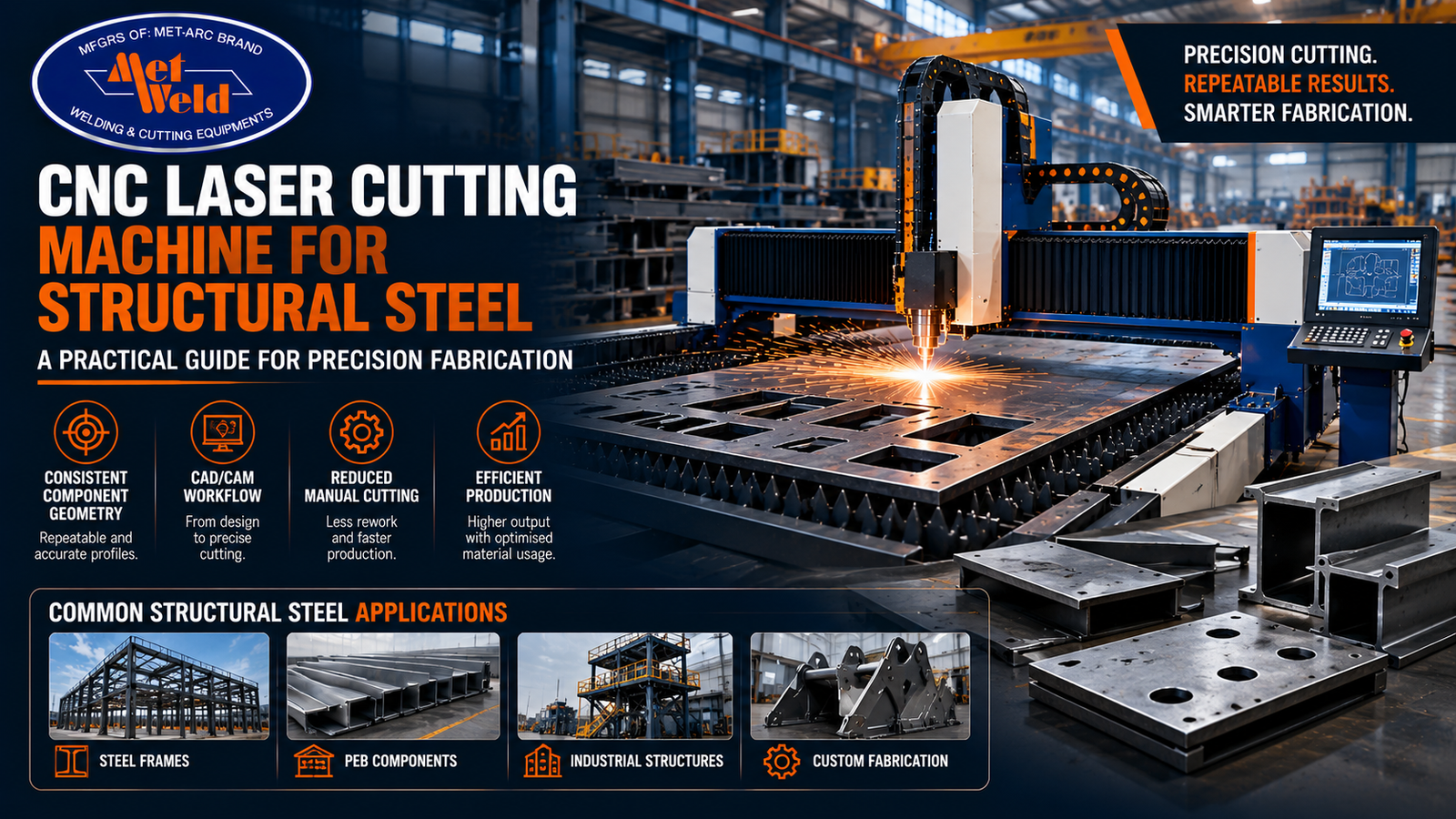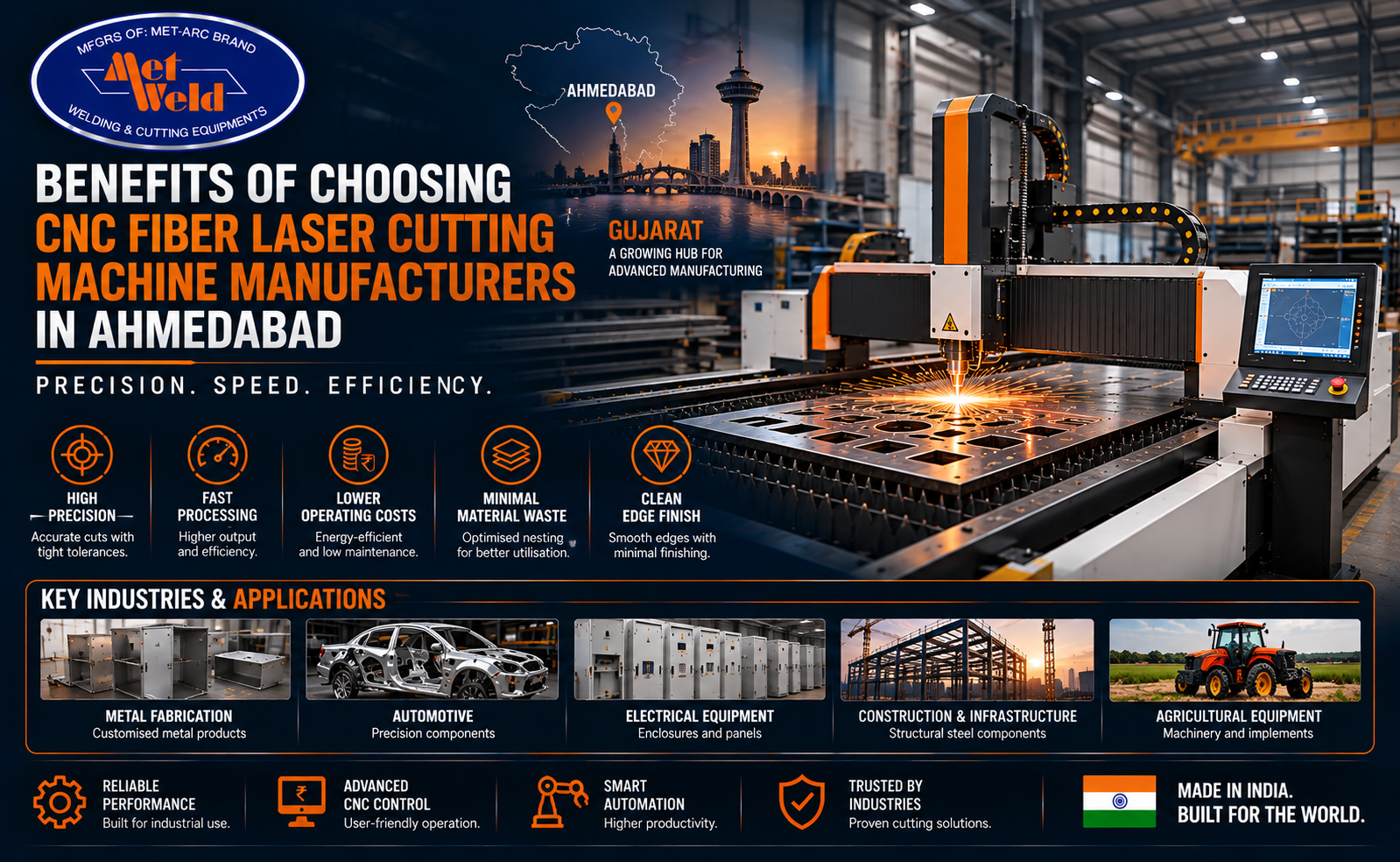
Steel plate cutting is an important process in industries that manufacture structural components, construction equipment, railway components, industrial machinery, and large metal structures. These applications often require metal plates to be cut into specific shapes and dimensions before they move to the next stage of production.
Traditional cutting methods can require considerable manual effort, particularly when manufacturers handle complex profiles or repeat the same cutting operations across multiple production batches. CNC plasma cutting machines provide a computer-controlled approach that helps manufacturers improve cutting consistency, reduce manual intervention, and manage production more efficiently.
By combining plasma cutting technology with programmed cutting paths, these machines help businesses process conductive metals according to their design requirements. The appropriate machine configuration depends on plate dimensions, material thickness, production volume, and the complexity of the required profiles.
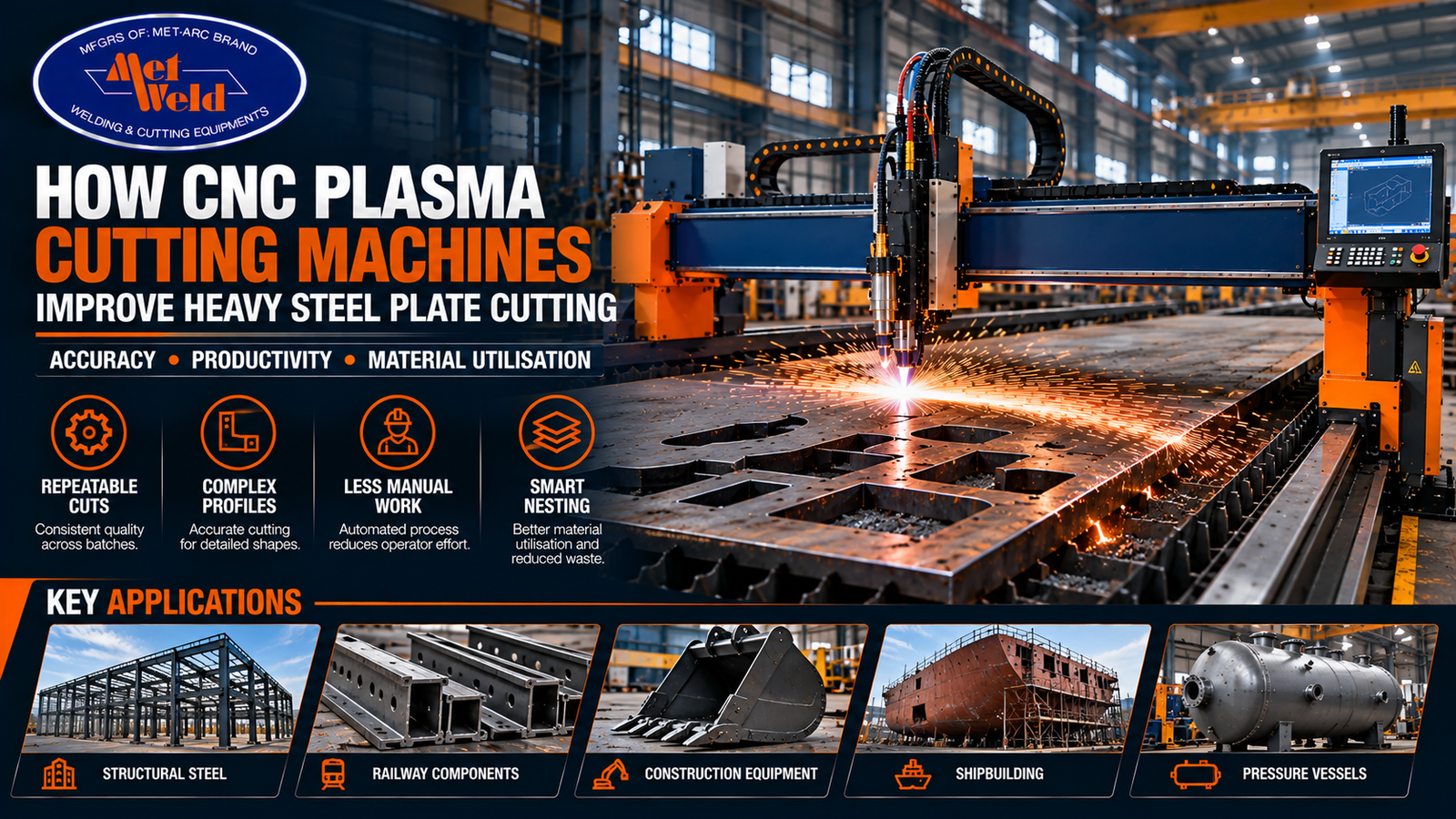
A CNC plasma cutting machine uses computer numerical control (CNC) to guide a plasma torch along a programmed path. The plasma arc generates sufficient heat to melt electrically conductive metal, while a high-velocity gas stream removes the molten material from the cut.
The process is commonly used for cutting materials such as mild steel, stainless steel, and aluminium, subject to the machine configuration and material specifications.
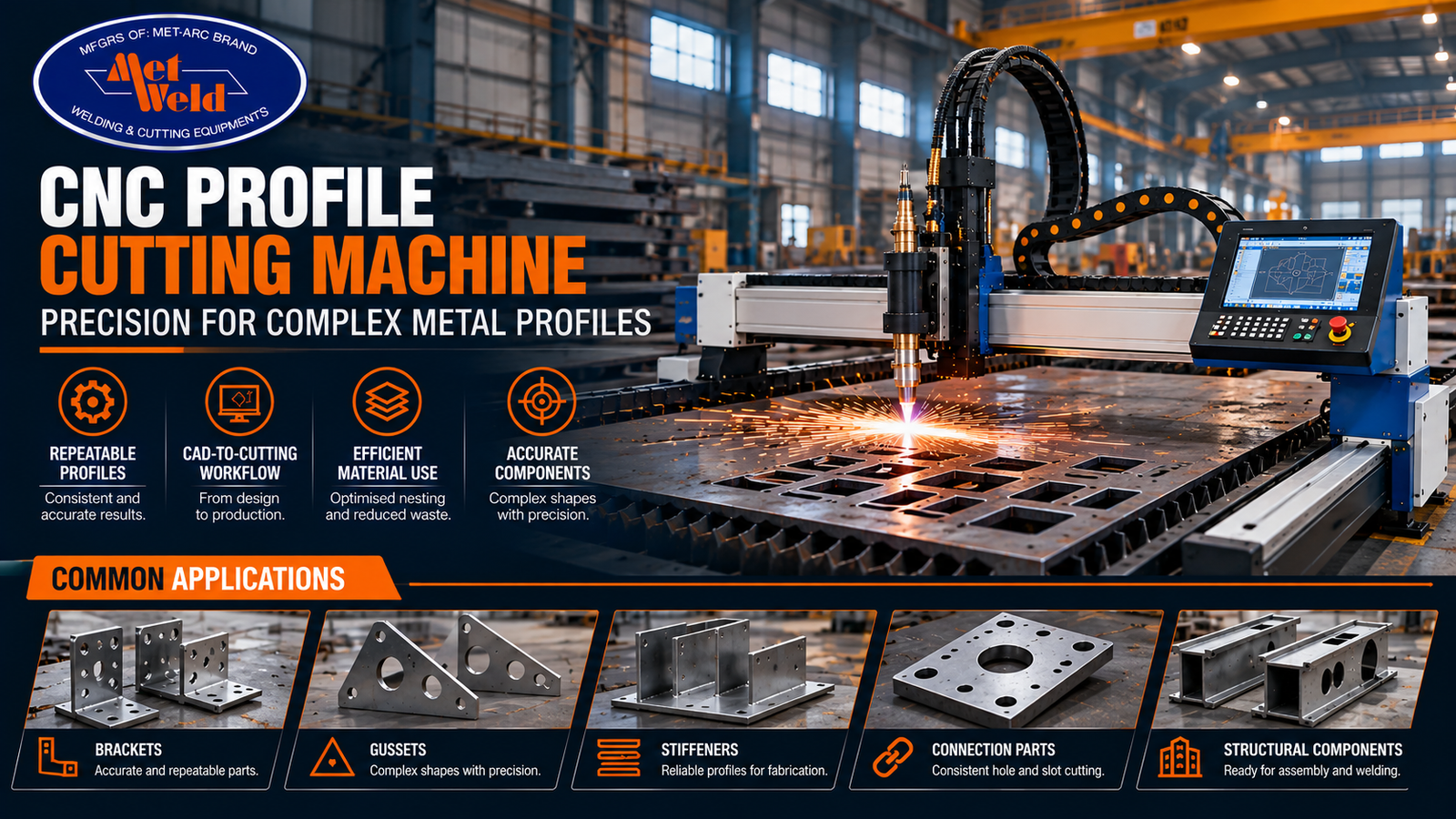
Instead of guiding the torch manually throughout the cutting operation, the operator uses programmed instructions to control the cutting path. This makes CNC plasma technology useful for producing repeated shapes, profiles, openings, and components based on engineering drawings.
A suitable industrial CNC plasma cutting system can help manufacturers establish a more consistent workflow for plate processing and component preparation.
Industrial manufacturers frequently work with large sheets and plates that must be cut into specific profiles. Accuracy, cutting speed, and material utilisation all influence production costs and delivery schedules.
Manufacturers often produce several components with identical or similar dimensions. Repeating these jobs manually can introduce variations between parts.
CNC technology allows operators to use programmed cutting paths for repeat production. Once the program and cutting parameters are properly established, the machine can reproduce the specified profiles with greater consistency.
This is particularly valuable for businesses producing structural plates, equipment components, brackets, and other repeated metal parts.
Industrial components may include slots, curves, openings, and irregular outlines that require controlled cutting movements.
CNC plasma systems follow programmed paths to create these shapes according to the design. The achievable accuracy depends on factors such as machine condition, torch setup, material thickness, cutting speed, and process settings.
This makes CNC plate cutting technology suitable for many industrial applications where components need to match engineering drawings.
Manual cutting requires operators to guide the cutting process and maintain the intended shape. CNC automation reduces the need for continuous manual torch movement during programmed operations.
Operators remain responsible for preparing materials, checking programs, setting process parameters, monitoring cutting, and inspecting finished parts.
The result can be a more organised production process, especially when businesses regularly manufacture components with repeatable cutting requirements.
Steel plates are a significant raw material expense for many manufacturing businesses. Poor placement of component profiles can leave unnecessary unused material.
Nesting software helps arrange multiple component shapes within a plate to improve material utilisation. The layout can consider part dimensions, cutting gaps, plate boundaries, and production quantities.
Effective nesting can reduce avoidable scrap and help manufacturers control material costs. Actual savings depend on the component design, plate size, and production requirements.
Different production environments require different machine configurations. Metweld lists both table type and gantry type CNC plasma cutting machines, allowing manufacturers to evaluate equipment according to their workload and available space.
A table type CNC plasma cutting machine uses a table-based structure to support the material during cutting. This configuration can be suitable for workshops that process sheet metal and plates within the machine’s working-area and thickness limits.
Businesses evaluating a table type system should consider:
The right configuration helps manufacturers align machine capacity with their regular production needs.
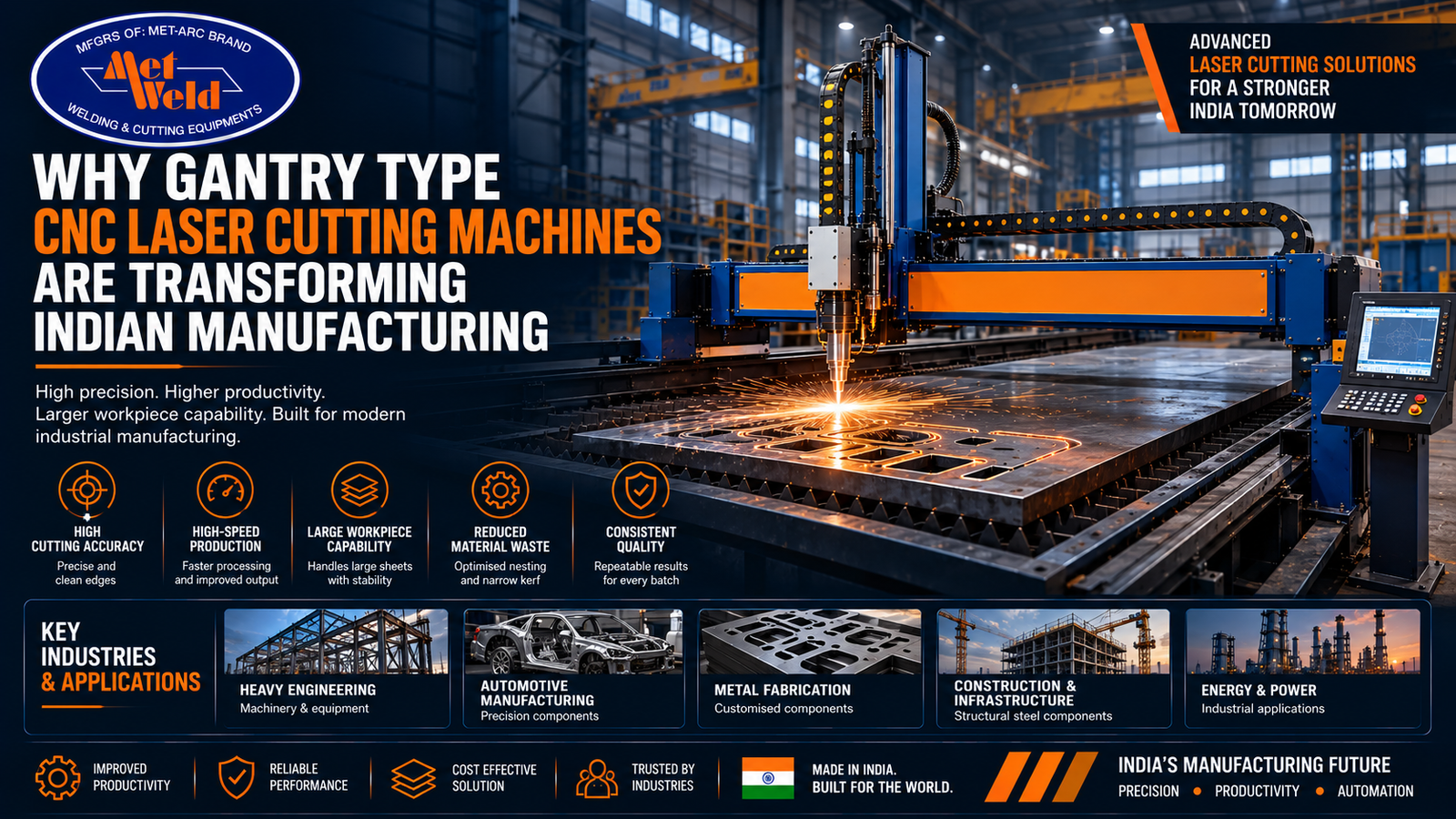
A gantry type CNC plasma cutting machine uses a gantry structure that moves the cutting equipment across a larger working area. It can be suitable for manufacturers processing larger plates or handling demanding industrial cutting workloads.
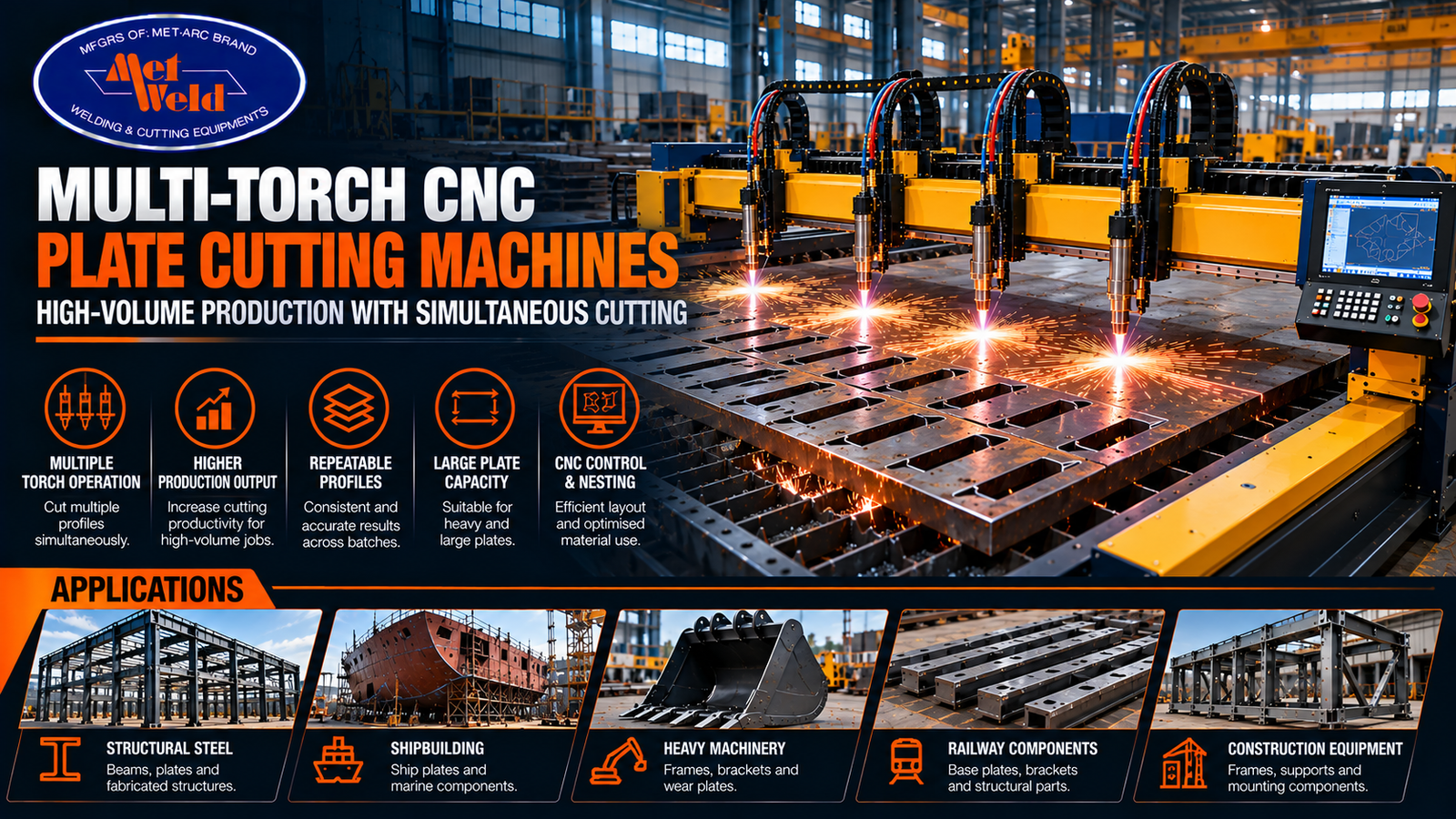
Depending on the configuration, gantry machines may support plasma cutting, oxy-fuel cutting, and multi-torch arrangements.
When evaluating this equipment, manufacturers should review the effective cutting area, supported processes, material thickness range, positioning performance, and available automation features.
Selecting a machine based on actual production requirements helps avoid investing in equipment that is either insufficient for the workload or unnecessarily oversized.
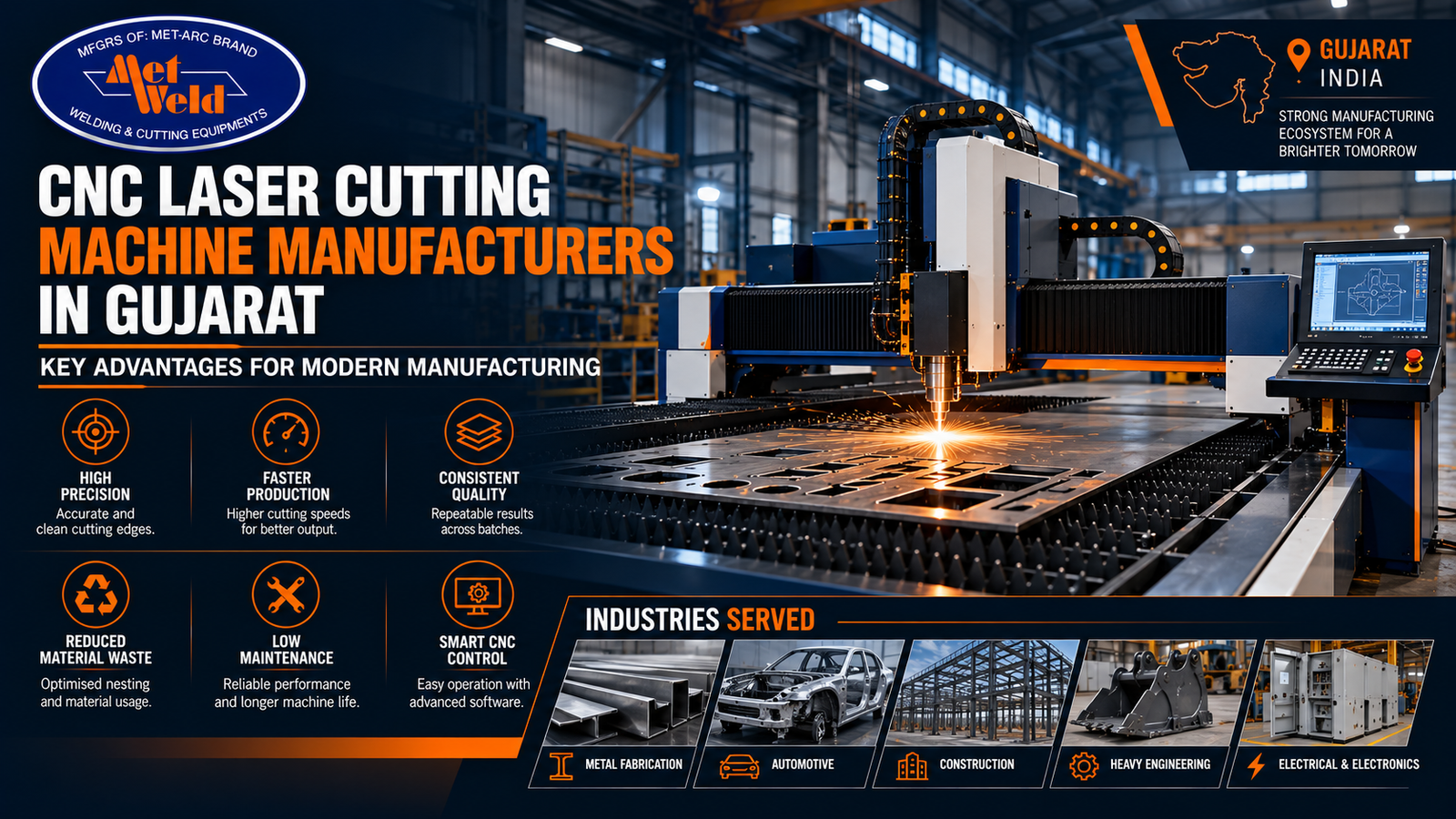
CNC plasma cutting technology supports a broad range of metal-processing applications. Metweld identifies several industrial sectors that use its cutting equipment.
Construction and Structural Steel Manufacturing
Structural steel manufacturers process plates and profiles used in buildings, industrial facilities, and supporting structures. CNC plasma cutting can help prepare components according to specified shapes and dimensions.
Railway-related manufacturing involves metal components that require controlled dimensions and repeatable production. CNC plate cutting can support the preparation of selected structural and equipment parts, depending on their design.
Manufacturers of construction machinery may require plates for frames, brackets, supports, and other components. CNC plasma cutting helps produce the required profiles from suitable conductive metals.
Shipbuilding and heavy fabrication operations often handle large metal plates and components. Machine capacity, working area, and cutting-process selection are important when processing these materials.
Certain components used in boiler and pressure equipment manufacturing require accurately cut metal sections. Cutting parameters and equipment must be selected according to the material, thickness, and applicable manufacturing specifications.
Choosing the right equipment involves more than comparing purchase prices. Manufacturers should assess the machine’s suitability for their actual production requirements.
Material type and thickness: Confirm that the proposed machine and plasma power source support the materials and thicknesses required for the intended application.
Working area: Check whether the machine can accommodate the plate dimensions commonly used in production.
Cutting requirements: Review the required profile complexity, edge quality, dimensional tolerances, and expected output.
CNC control and software: Understand how cutting programs are prepared, transferred, managed, and repeated.
Material handling: Consider how plates will be loaded, positioned, supported, and removed safely.
Service and spare parts: Evaluate the availability of technical assistance, operator training, maintenance support, and suitable CNC machine spares.
A careful assessment of these factors helps manufacturers select equipment that fits their operational needs and supports long-term productivity.
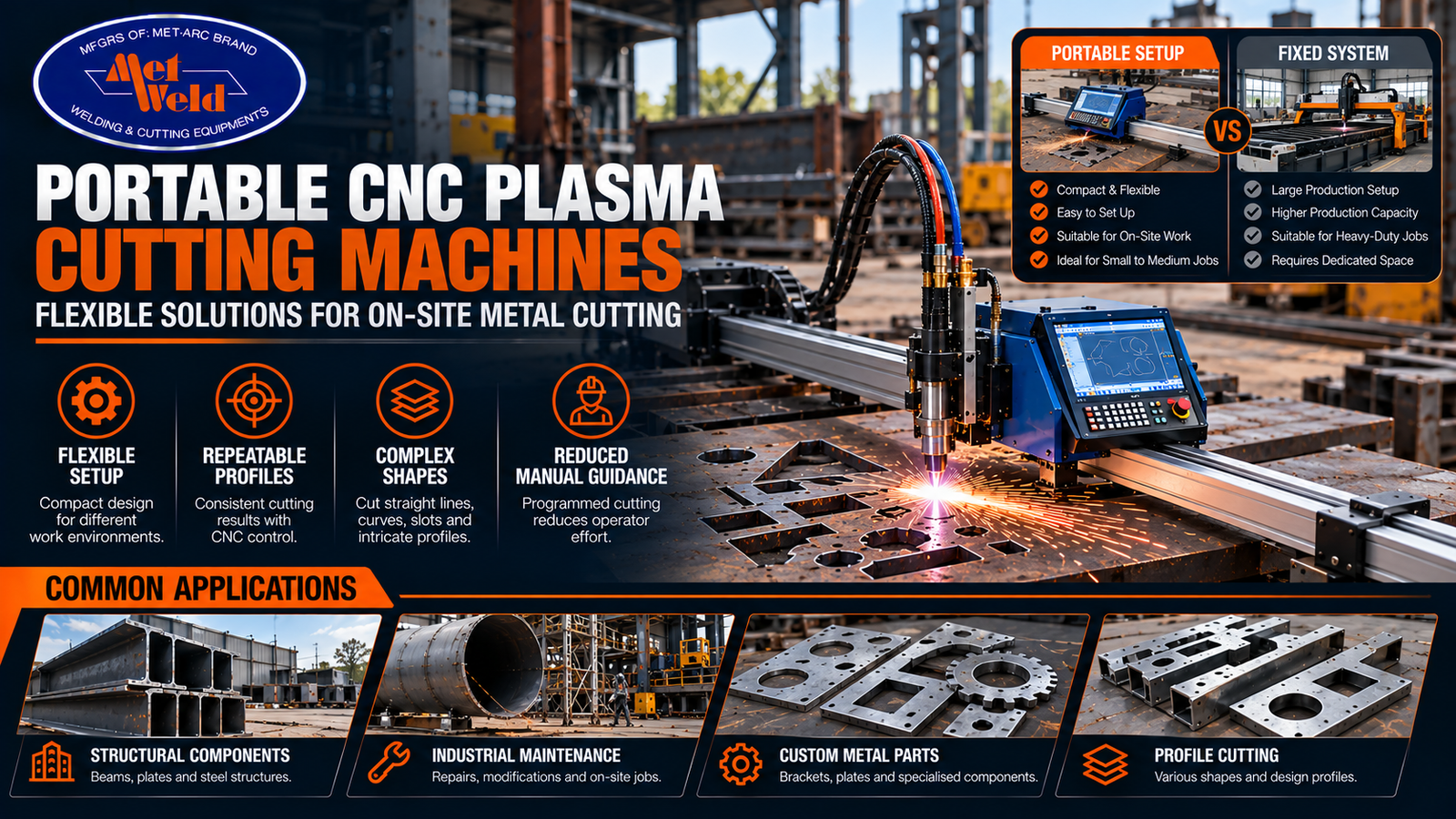
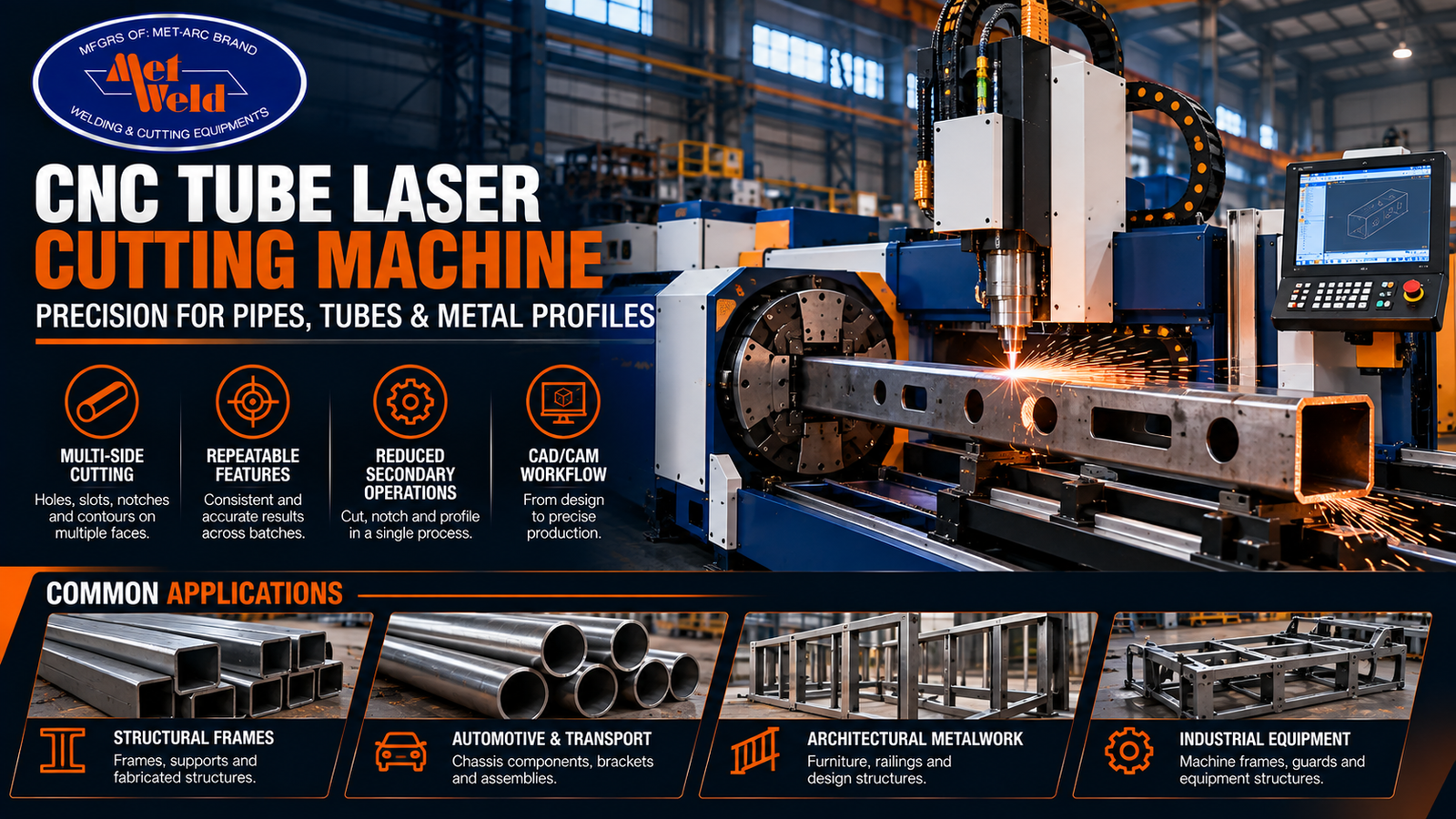
Metweld manufactures CNC plasma cutting equipment for industrial metal-processing applications. Its listed product range includes table type CNC plasma cutting machines, gantry type CNC plasma cutting machines, portable CNC plasma and profile cutting machines, multi-torch CNC plate cutting machines, and CNC plasma plate and pipe cutting machines.
This range enables businesses to explore different machine configurations based on their material dimensions, cutting applications, and production requirements.
Before selecting a model, manufacturers should share their typical material grades, thicknesses, plate sizes, required cutting processes, and expected production volume. These details help determine which machine configuration is appropriate for the application.
Explore Metweld’s CNC plasma cutting machine range to understand the available options and identify a suitable solution for your metal-cutting requirements.
CNC plasma cutting machines help industrial manufacturers process conductive metals using programmed cutting paths and controlled operations. They can improve repeatability, support complex profiles, reduce manual intervention, and help businesses manage plate material more efficiently.
The choice between table type, gantry type, portable, and other CNC plasma configurations should depend on the required working area, material thickness, cutting application, and production volume.
By evaluating these factors and selecting suitable equipment, manufacturers can establish a more consistent plate-cutting workflow and improve production planning.