When fabricators compare fiber laser cutting machines, the conversation usually centres on laser power, bed size and drive systems. Yet one of the biggest influences on cut quality, speed and running cost is something that flows quietly through the nozzle: the assist gas. The choice between oxygen, nitrogen and compressed air decides whether an edge is bright or oxidised, whether a part can go straight to welding or powder coating, and how much each metre of cut actually costs.
This guide explains what each assist gas does inside the cut, where each one performs best, and how shops can set up their gas supply so that a CNC fiber laser cutting machine delivers consistent results shift after shift.
A fiber laser melts metal by focusing a high-energy beam to a very small spot. The beam alone does not clear the kerf. The assist gas, delivered coaxially through the nozzle, performs three jobs at the same time:
Because the gas is part of the cutting process rather than an accessory, changing it changes almost everything: speed, maximum thickness, edge colour, dross level and downstream processing.
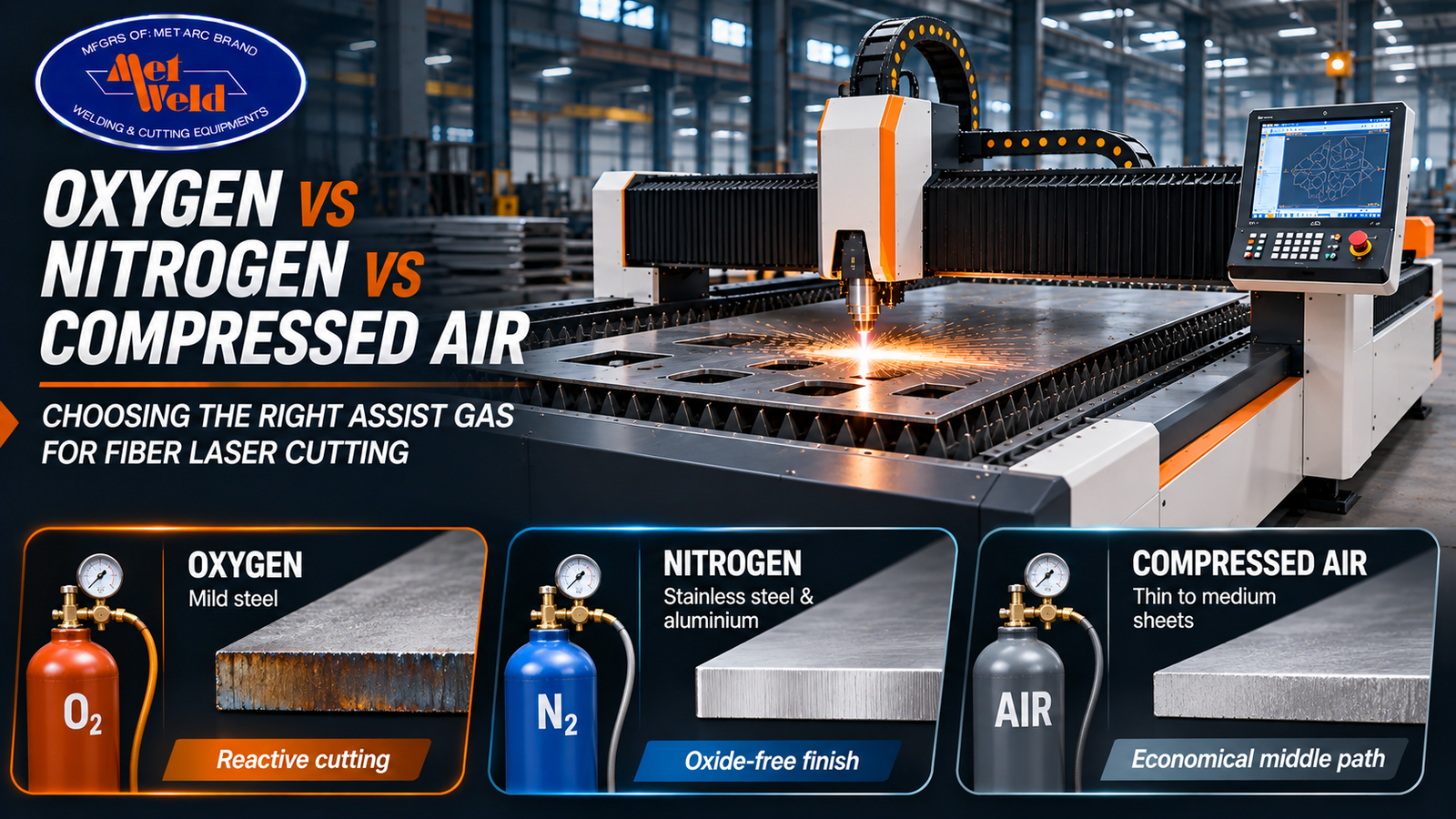
Oxygen reacts exothermically with hot iron. That reaction releases additional heat in the kerf, so the laser does not need to supply all the energy on its own. This is why oxygen remains the traditional choice for carbon steel, especially in medium and thick sections.
The oxide layer matters if parts go straight to welding or powder coating, because it can affect adhesion and weld quality. Many structural and heavy fabrication shops accept it, since parts are shot-blasted before painting. For guidance on thick-section work, see our practical note on CNC laser cutting for structural steel.
Nitrogen is inert. It does not react with the molten metal; instead it blows the melt out at high pressure while preventing oxidation. The result is a bright, oxide-free edge that is ready for welding, painting or assembly without secondary cleaning.
The trade-off is cost. Nitrogen consumption rises sharply with thickness, so shops cutting large volumes of thick stainless often invest in bulk liquid nitrogen or an on-site nitrogen generator rather than cylinder banks. Higher-power sources, such as those discussed in our 3kW vs 6kW vs 12kW comparison, have widened the range of thicknesses where nitrogen cutting is practical.
Compressed air is roughly 78 percent nitrogen and 21 percent oxygen. Using filtered, dried, high-pressure air as an assist gas gives a cut that sits between pure nitrogen and pure oxygen. For many job shops it offers a strong balance of speed and running cost.
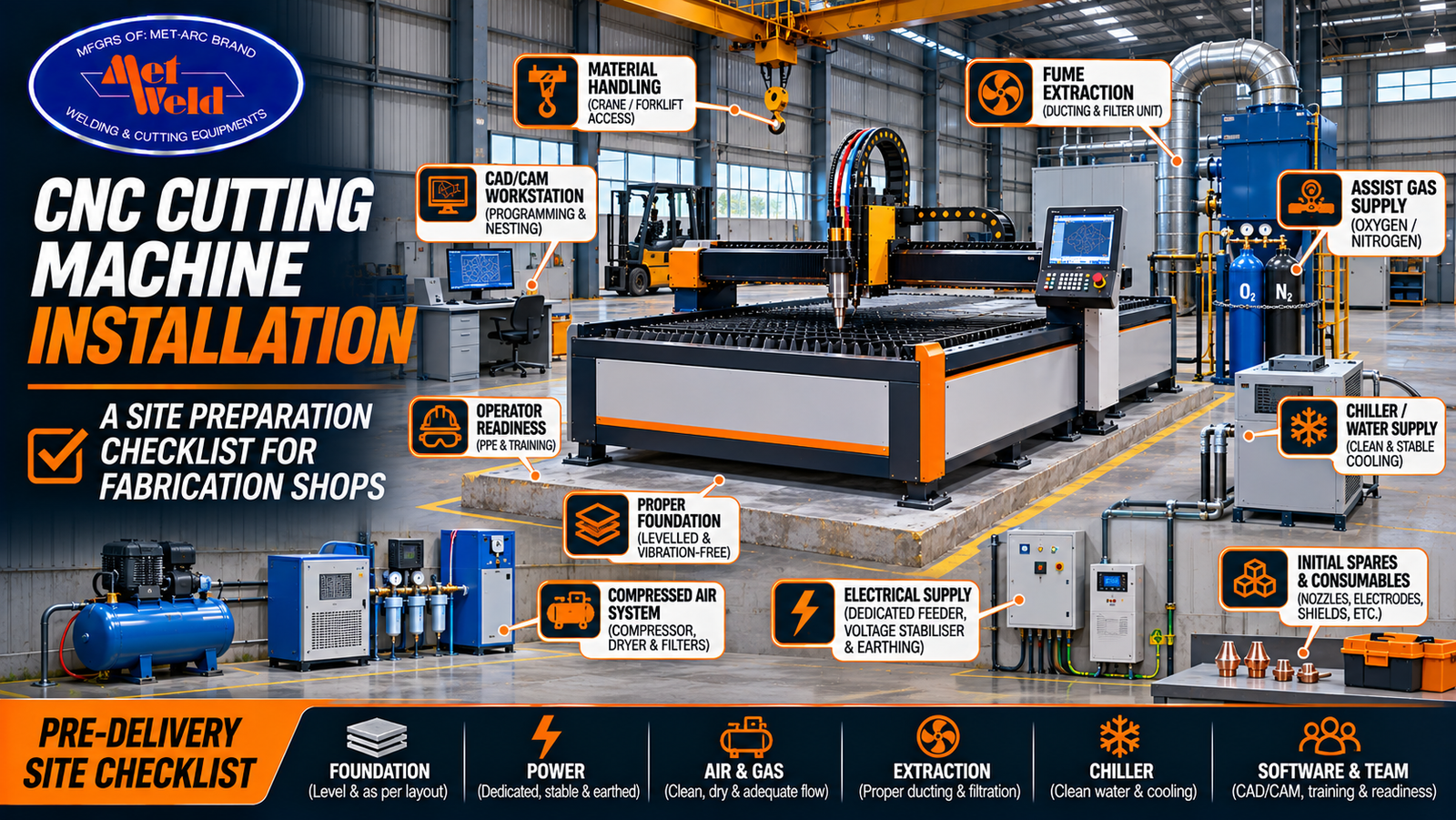
Air quality is not optional. Oil, moisture and particles in the air line will contaminate the protective window, damage optics and cause unstable cutting. A proper air-cutting setup includes a high-pressure compressor, refrigerated and desiccant dryers, multi-stage filtration and a buffer tank sized for the machine’s peak flow.
| Factor | Oxygen | Nitrogen | Compressed Air |
| Cutting mechanism | Reactive (adds heat) | Fusion (inert shield) | Mixed |
| Best materials | Mild steel, thick plate | Stainless, aluminium, coated sheet | Thin and medium mild steel, aluminium |
| Edge finish | Dark oxide layer | Bright, oxide-free | Light grey |
| Pressure | Low | High | High |
| Gas cost per hour | Low | Highest | Lowest |
| Ready for welding or coating | After cleaning | Directly | Usually, with light prep |
The right answer depends on what you cut most, what happens to the parts after cutting, and how your costs are structured. A few practical questions help narrow it down.
What is your material mix? A PEB or structural fabricator cutting mostly 6 to 25 mm mild steel will lean heavily on oxygen. A kitchen equipment or panel manufacturer working with 0.8 to 3 mm stainless and CRCA will lean on nitrogen and air.
What happens after cutting? If parts are welded immediately, oxide-free edges save grinding time. If parts are shot-blasted and painted, an oxygen-cut edge is perfectly acceptable.
How much do you cut per month? At low volumes, cylinders may be sufficient. As volumes rise, the economics usually shift toward bulk liquid supply or on-site generation for nitrogen, and a dedicated high-pressure compressor for air.
What laser power do you have? Higher power makes nitrogen and air cutting viable on thicker material, which can reduce dependence on oxygen and improve throughput. Our article on how sheet thickness changes laser cutting speed, power and edge quality explains this relationship in more detail.
Most busy shops end up using two or even all three gases, switching by job. Modern machine controls make this simple, with cutting parameter libraries that change gas type, pressure, focus and speed automatically when the operator selects a material and thickness.
Even the best assist gas choice fails if the supply is unstable. Pressure drops during long cuts lead to dross, incomplete cuts and wasted sheets. Good practice includes:
These checks should be part of the routine described in our guide on maintaining CNC fiber laser cutting machines for long-term performance.
Worn nozzles are a frequent cause of dross and unstable cuts, so keep genuine CNC machine spares in stock.
Metweld supplies table type and gantry type CNC laser cutting machines with proven cutting parameter libraries for oxygen, nitrogen and air. During installation, our team reviews your gas supply arrangement, pressure stability and air quality so that the machine reaches its rated performance from the first day. Operators are trained to select the right gas for each job and to recognise the early signs of supply or consumable issues.
If you are planning a new laser installation or want to reduce gas cost on an existing machine, contact Metweld to discuss your material mix and production targets.
Can I cut stainless steel with oxygen?
It is possible, but the edge oxidises heavily and loses the corrosion resistance that makes stainless valuable. Nitrogen is the standard choice for stainless steel.
Is compressed air cutting safe for the laser optics?
Yes, provided the air is properly dried and filtered. Oil and moisture are the main risks, so a dedicated air treatment system is essential.
Why does nitrogen cutting cost more?
Nitrogen cutting uses high pressure and high flow to blow molten metal out of the kerf, so consumption per hour is much higher than oxygen. Bulk supply or on-site generation reduces the cost per cubic metre.