Choosing the right fiber laser cutting machine is an important decision for manufacturers and fabrication businesses. Laser power influences cutting capability, production performance, and suitability for different applications. The 3kW, 6kW, and 12kW configurations offer different performance levels for businesses with varying production requirements.
Choosing a higher-power machine does not automatically make it the best option. The right configuration depends on material type, thickness, production volume, cutting speed, and long-term requirements.
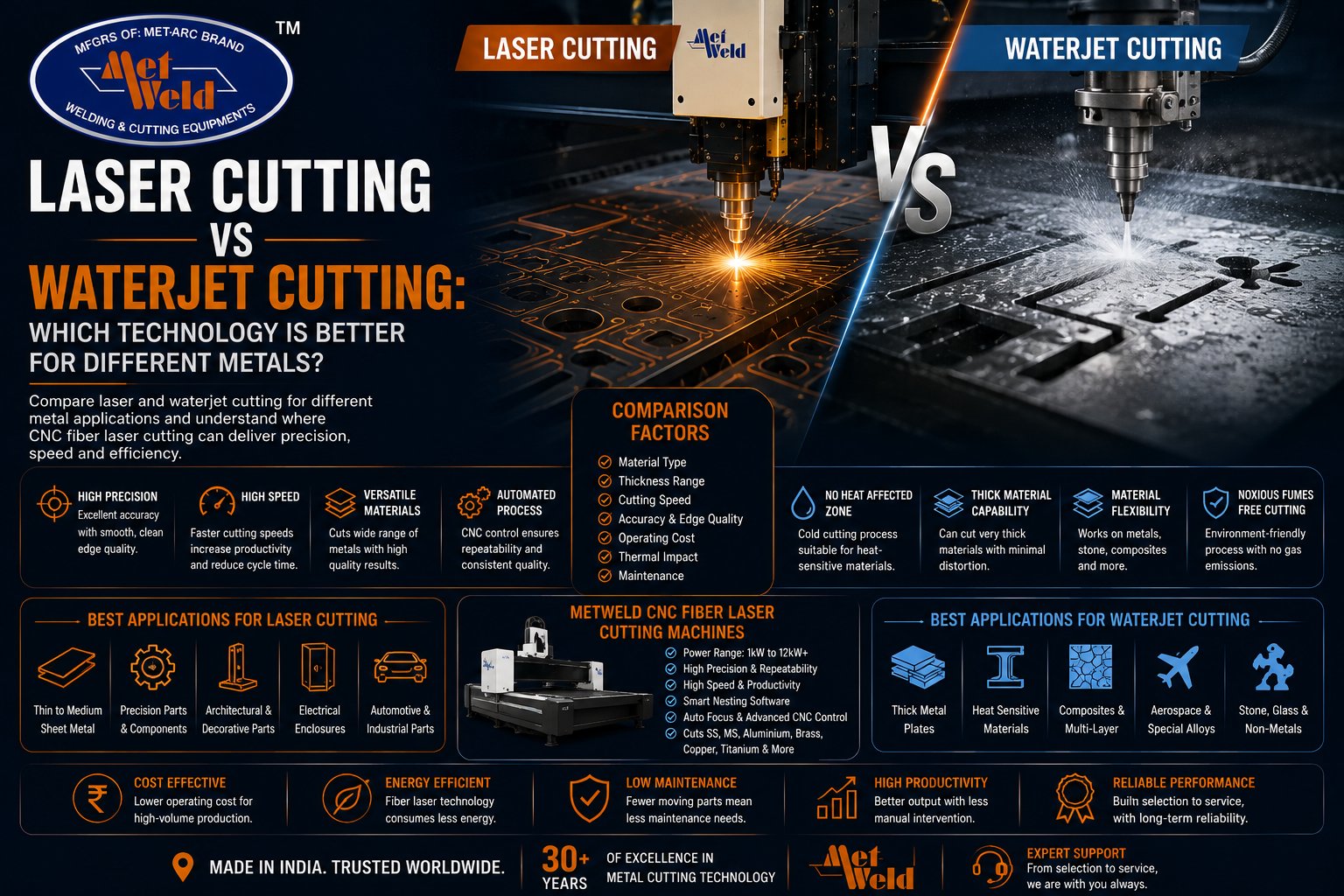
Met Weld offers CNC fiber laser cutting machines in multiple power configurations, with options ranging from 1kW to 12kW+ depending on the model and application.
The power rating of a fiber laser cutting machine is expressed in kilowatts (kW). It is an important factor in determining cutting performance.
Lower-power machines can be suitable for thinner sheets and detailed cutting, while higher-power machines are generally considered when manufacturers need greater cutting capability and productivity.
However, laser power should not be evaluated independently. Material type, thickness, cutting parameters, cutting head, machine configuration, and required edge quality also influence performance.
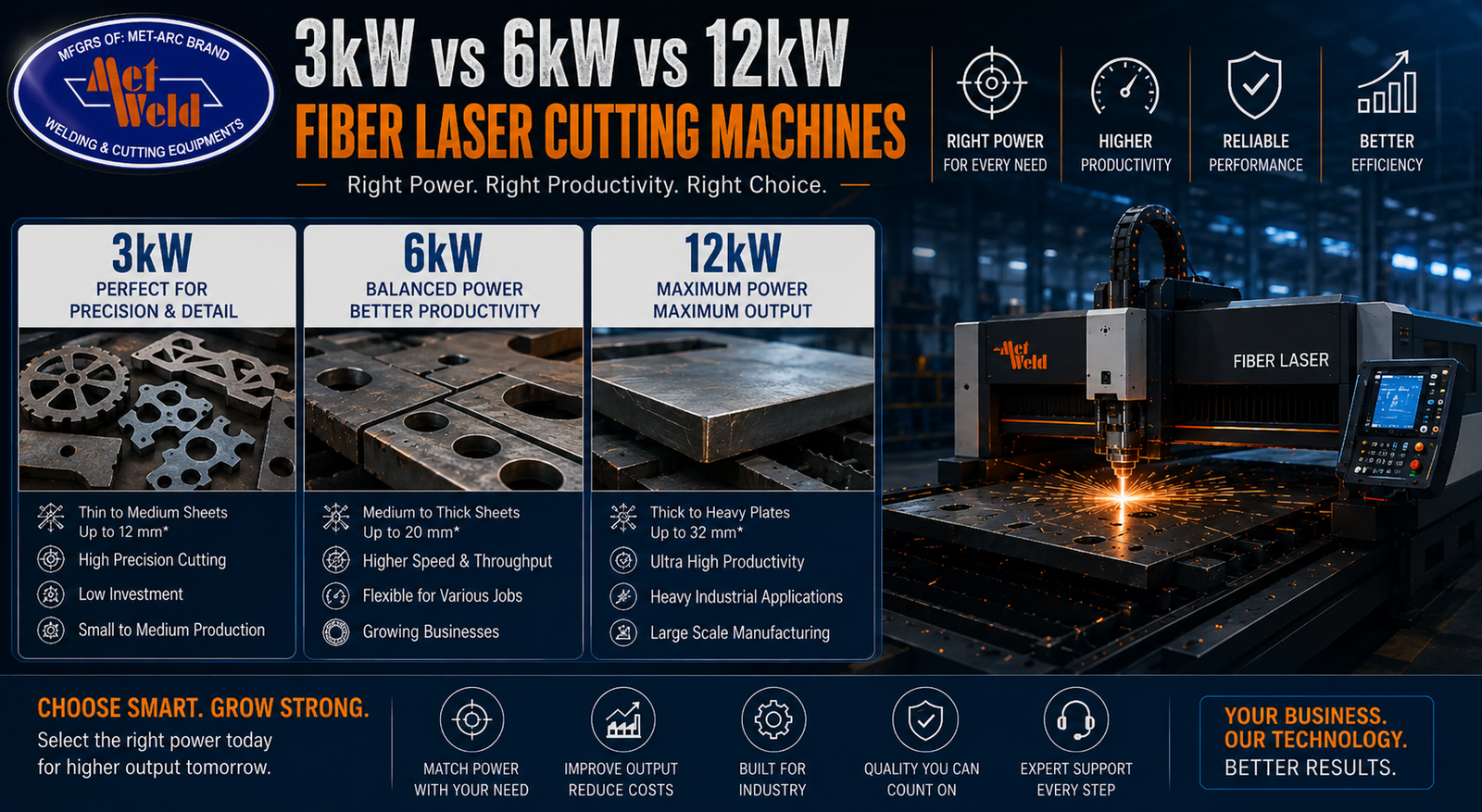
A 3kW fiber laser cutting machine can be a practical choice for manufacturers whose production mainly involves thin to medium sheet-metal applications.
It can suit businesses requiring precision cutting without the additional capacity of a high-power system. Applications can include general fabrication, electrical enclosures, automotive components, brackets, and other sheet-metal parts.
For businesses starting with CNC laser cutting or primarily working with thinner materials, 3kW can provide a balanced combination of performance and investment.
A 6kW fiber laser cutting machine provides higher power and can be considered by manufacturers looking for increased production capability and flexibility across different material thicknesses.
It can be useful for fabrication companies handling varied materials or businesses where production volume is increasing.
For manufacturers that have outgrown a lower-power machine but do not require the highest available power, 6kW can represent a practical middle-ground configuration.
A 12kW fiber laser cutting machine is designed for businesses with demanding industrial production requirements. Higher-power configurations are generally considered when manufacturers require greater cutting capability and productivity.
Met Weld’s product range includes configurations up to 12kW+ depending on material thickness and cutting requirements.
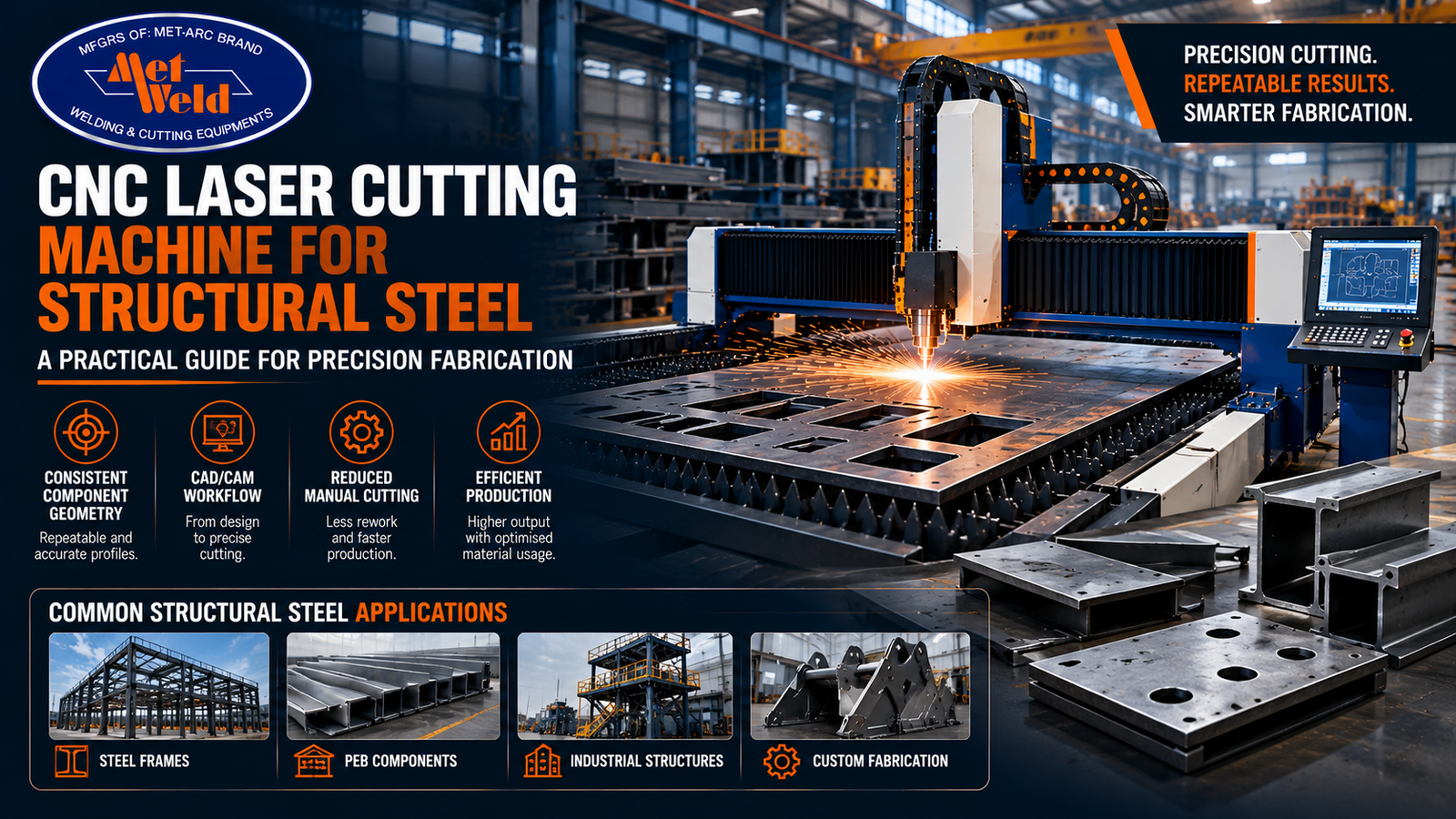
This type of machine can be relevant for large fabrication facilities, heavy engineering, structural manufacturing, and businesses where production volume justifies a higher-power investment.
However, 12kW should not be selected simply because it offers more power. The machine must be matched to actual production requirements.
The main difference between these configurations is their intended production capability.
A 3kW machine may be appropriate when the business primarily processes thinner materials and requires precision cutting for regular fabrication work.
A 6kW machine can be considered when the manufacturer requires greater production flexibility, higher throughput, or a wider range of cutting requirements.
A 12kW machine becomes more relevant when production volume is high and the business needs greater cutting capability for demanding industrial applications.
The decision should therefore be based on actual production requirements rather than simply comparing laser power.
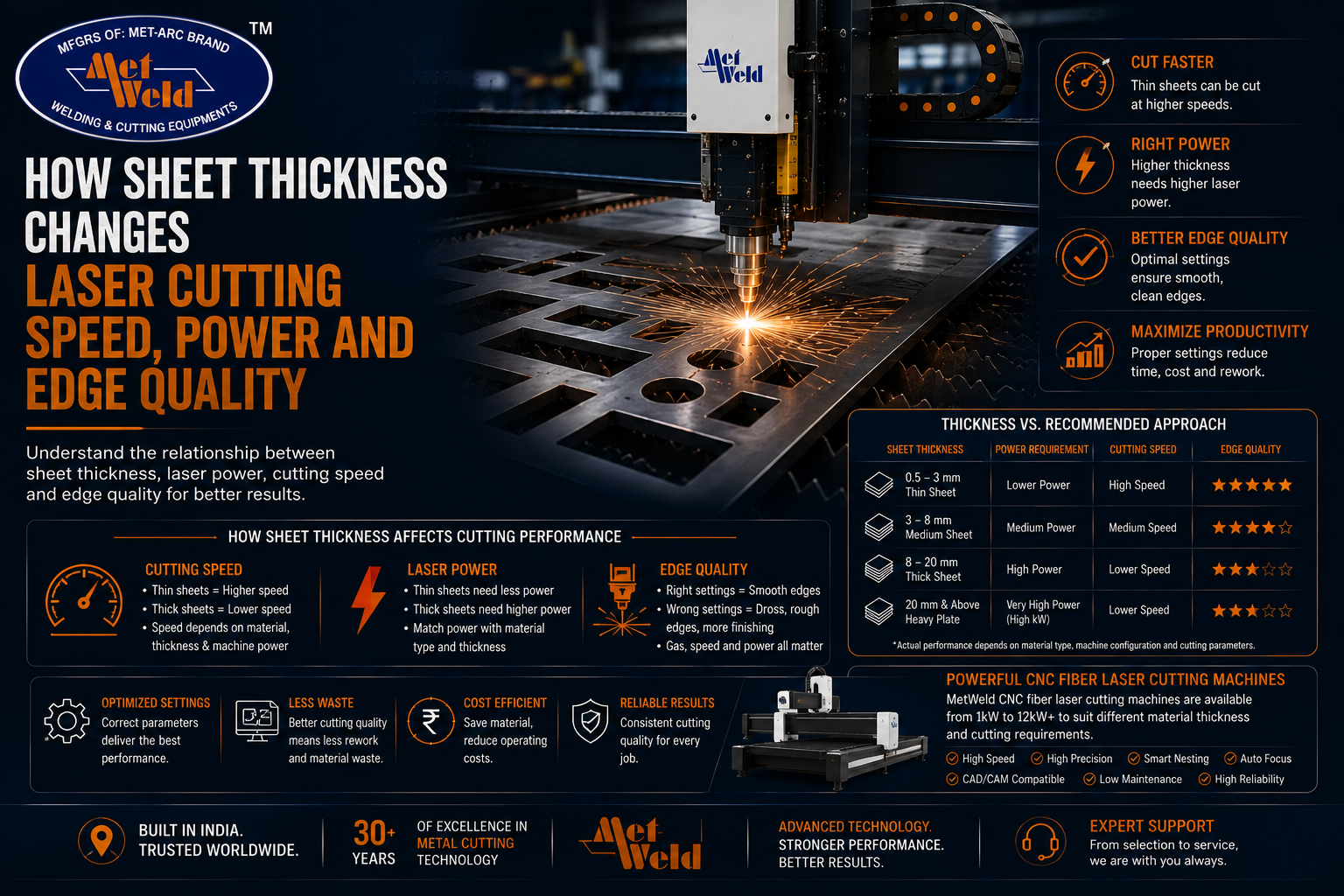
Before selecting a machine, manufacturers should identify the materials they process most frequently. Met Weld’s CNC fiber laser machines are designed for materials including stainless steel, carbon steel, mild steel, aluminum, brass, copper, and titanium, depending on configuration.
Businesses should also determine the thickness range they regularly cut. A company processing mostly thin sheets may not benefit enough from a 12kW machine to justify the additional investment.
On the other hand, a high-volume manufacturer processing a wider range of materials and thicknesses may benefit from a higher-power configuration.
Higher laser power can provide greater cutting capability and may increase processing speed for suitable materials and thicknesses. However, actual cutting speed depends on several factors and should not be judged solely by the kW rating.
Met Weld’s table-type CNC fiber laser machine specifications include a maximum movement speed of 140 m/min, with listed configurations from 1000W to 6000W.
Manufacturers should evaluate actual production requirements and expected throughput rather than assuming higher laser power will automatically produce proportionally higher output.
Laser power is only one part of the machine. The cutting head, laser source, CNC control system, motion components, machine bed, software, automation, and working area can all influence overall performance.
Met Weld’s CNC fiber laser systems include features such as auto-focus, nesting, motion control, and CAD/CAM compatibility. Its product information also highlights heavy-duty construction, precision, low maintenance, and customizable power and bed-size options.
Two machines with the same laser power may therefore deliver different results depending on their overall configuration.
The initial machine price should not be the only factor when comparing 3kW, 6kW, and 12kW systems.
Businesses should also consider:
A higher-power machine can make sense when its additional productivity justifies the investment. For businesses with limited production requirements, a lower-power configuration may provide better overall value.
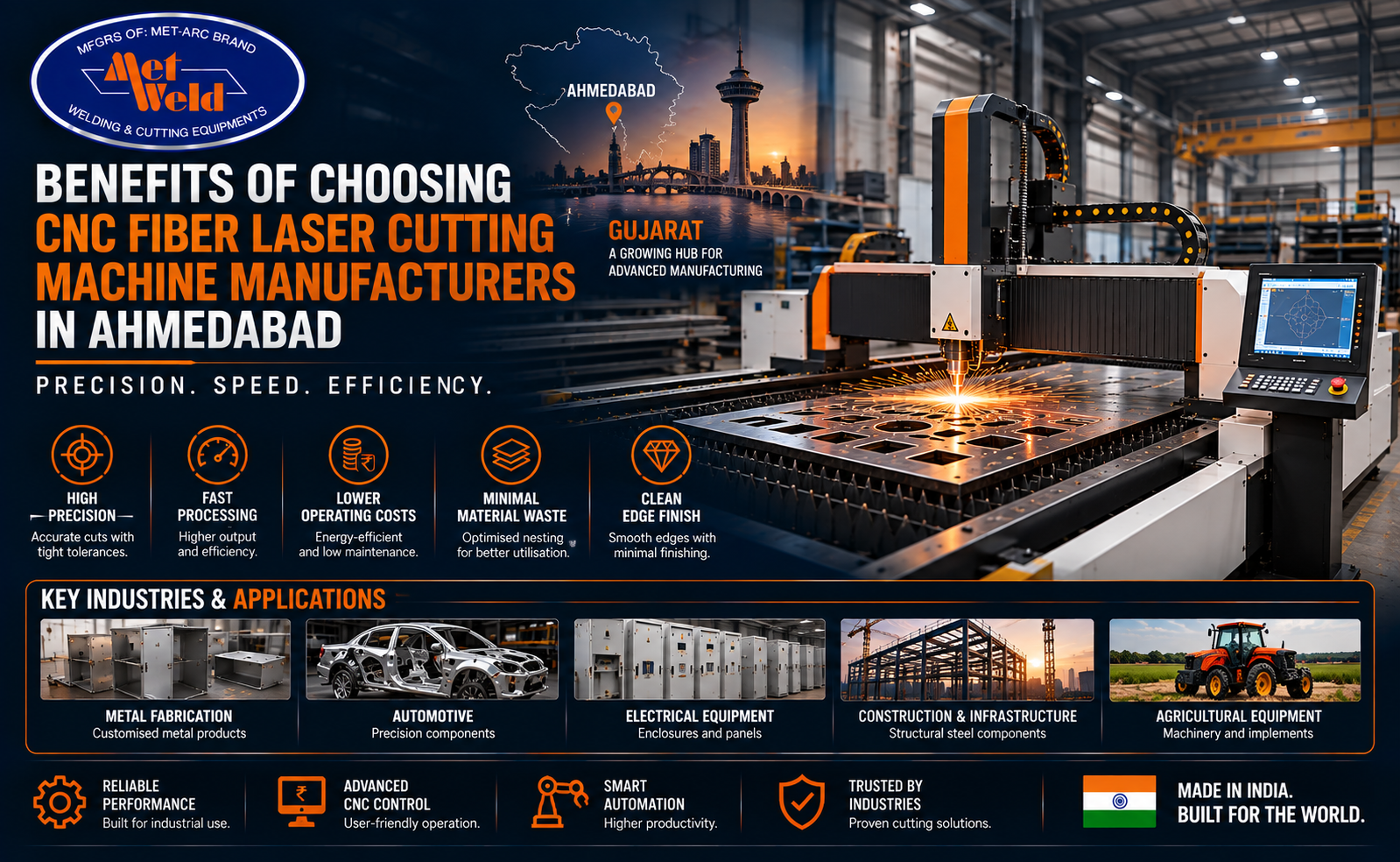
Met Weld manufactures CNC fiber laser cutting machines for industrial applications including metal fabrication, automotive, construction, PEB, railway, shipbuilding, agriculture equipment, and heavy engineering.
Its range provides multiple power options, allowing businesses to select a configuration according to material thickness, production volume, and cutting requirements.
Met Weld also provides installation, operator training, maintenance, spare-parts availability, and after-sales support as part of its machine solutions.
There is no universal answer to which power is best.
Choose 3kW when your business mainly requires precision sheet-metal cutting and moderate production capacity.
Consider 6kW when you need greater flexibility, increased production capacity, and a broader range of cutting requirements.
Consider 12kW when your business operates at high production volumes and requires greater cutting capability for demanding applications.
The best machine is the one that matches your workload, materials, thickness requirements, production targets, and future expansion plans.
The choice between 3kW, 6kW, and 12kW fiber laser cutting machines depends on more than laser power. Material type, thickness, production volume, cutting speed, machine configuration, automation, and operating costs should all be considered.
A 3kW system can be suitable for precision sheet-metal applications and moderate production. A 6kW machine provides greater production flexibility, while a 12kW configuration is better suited to demanding, high-volume industrial requirements.
For manufacturers evaluating different CNC fiber laser solutions, Met Weld offers multiple power configurations and industrial cutting solutions. By assessing current production needs and future growth plans, businesses can select the appropriate fiber laser power and achieve better productivity, precision, and long-term value.