Many pieces of industrial equipment face a difficult combination of demands. A reactor, heat exchanger or pressure vessel must withstand high pressure and temperature, which calls for a strong, economical carbon or low-alloy steel shell. At the same time, the inside surface is exposed to corrosive process fluids that would attack ordinary steel within months. Building the whole vessel from stainless steel or a nickel alloy would solve the corrosion problem, but at a cost that is often impossible to justify.
Weld overlay cladding offers a practical answer. A layer of corrosion-resistant alloy is deposited by welding onto the inside of a carbon steel component. The base metal carries the load; the overlay resists corrosion. Among the methods available, strip cladding stands out for covering large areas quickly with consistent quality. This guide explains how it works and where it is used.
Weld overlay cladding deposits a metallurgically bonded layer of a different alloy onto a base metal. Common overlay materials include:
The overlay may be applied with wire processes such as MIG, TIG or submerged arc welding, or with a wide strip electrode. Wire processes suit smaller areas and complex shapes. Strip cladding suits large, accessible surfaces such as vessel shells, dished ends, tube sheets and flat plates.
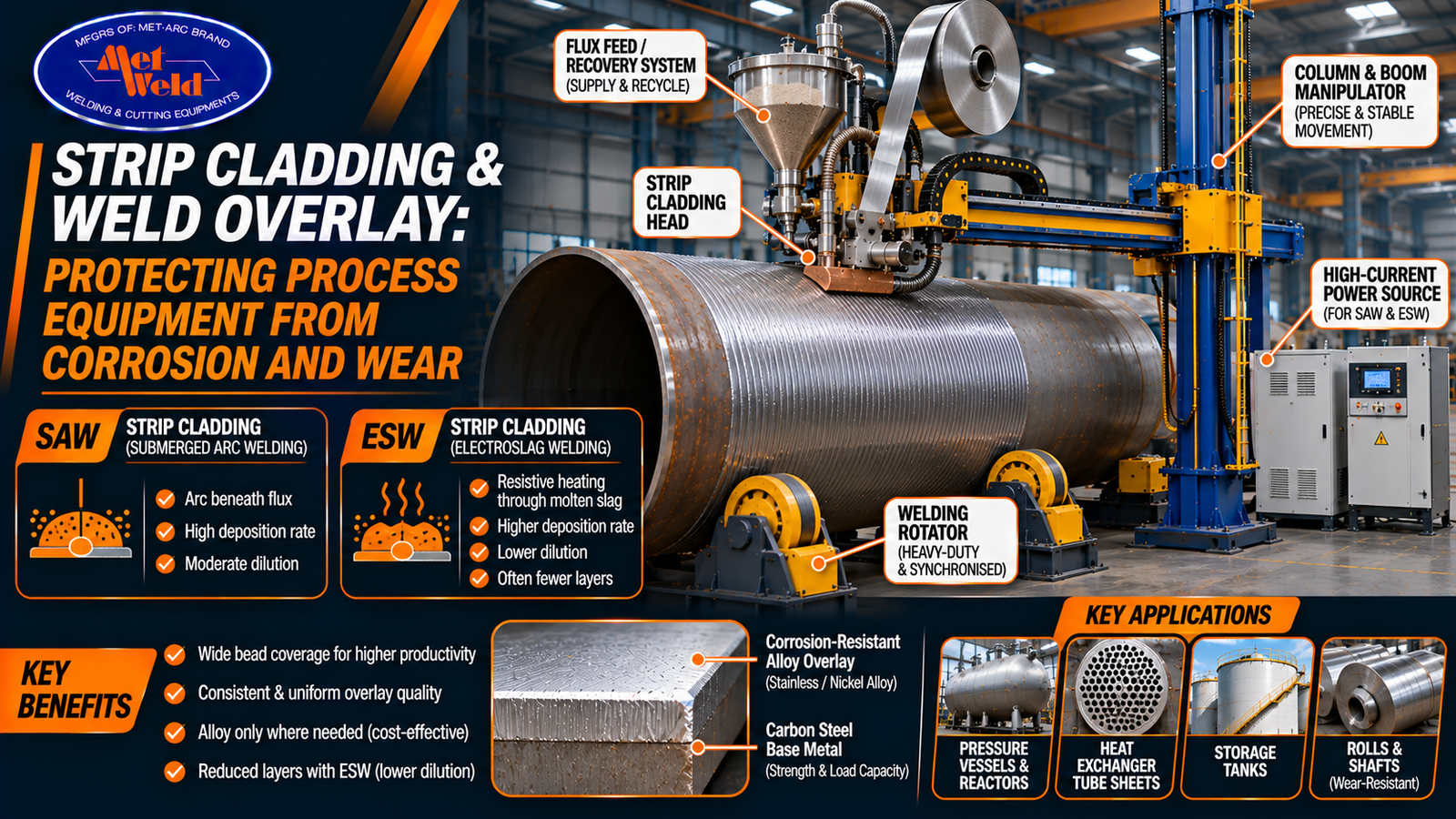
Instead of a round wire, strip cladding uses a thin, wide metal strip as the electrode. The strip is fed through a specially designed cladding head, which deposits a wide, flat bead with each pass. Successive beads overlap slightly to cover the surface.
There are two main strip cladding processes.
An arc forms between the strip and the workpiece beneath a layer of flux, much like conventional submerged arc welding. It is well established and offers good deposition rates with reliable quality.
After initial arc ignition, the process becomes resistive. Current passes through a conductive molten slag layer, which melts the strip and a thin layer of base metal. Electroslag cladding generally offers:
| Factor | SAW strip cladding | ESW strip cladding |
| Heat source | Arc under flux | Resistive heating through slag |
| Deposition rate | High | Higher |
| Dilution | Moderate | Low |
| Layers needed for chemistry | Often two | Often one |
| Process sensitivity | Lower | Requires closer control |
During overlay welding, some base metal melts and mixes with the overlay. This mixing is called dilution. Because the carbon steel base contains little chromium or nickel, high dilution reduces the alloy content of the surface layer and therefore its corrosion resistance.
Lower dilution means fewer layers are needed to achieve the specified chemistry at the surface. This saves time, consumables and inspection effort. Process choice, strip width, current, travel speed and bead overlap all influence dilution.
Our page on CNC cutting solutions for pressure vessel and boiler manufacturing shows how cladding fits into the wider vessel fabrication workflow.
A productive strip cladding setup typically includes:
For smaller bores and nozzles, internal cladding with wire may be used. Metweld’s small pipe inner cladding solution addresses these applications.
A clean, properly prepared base surface is essential for sound overlay.
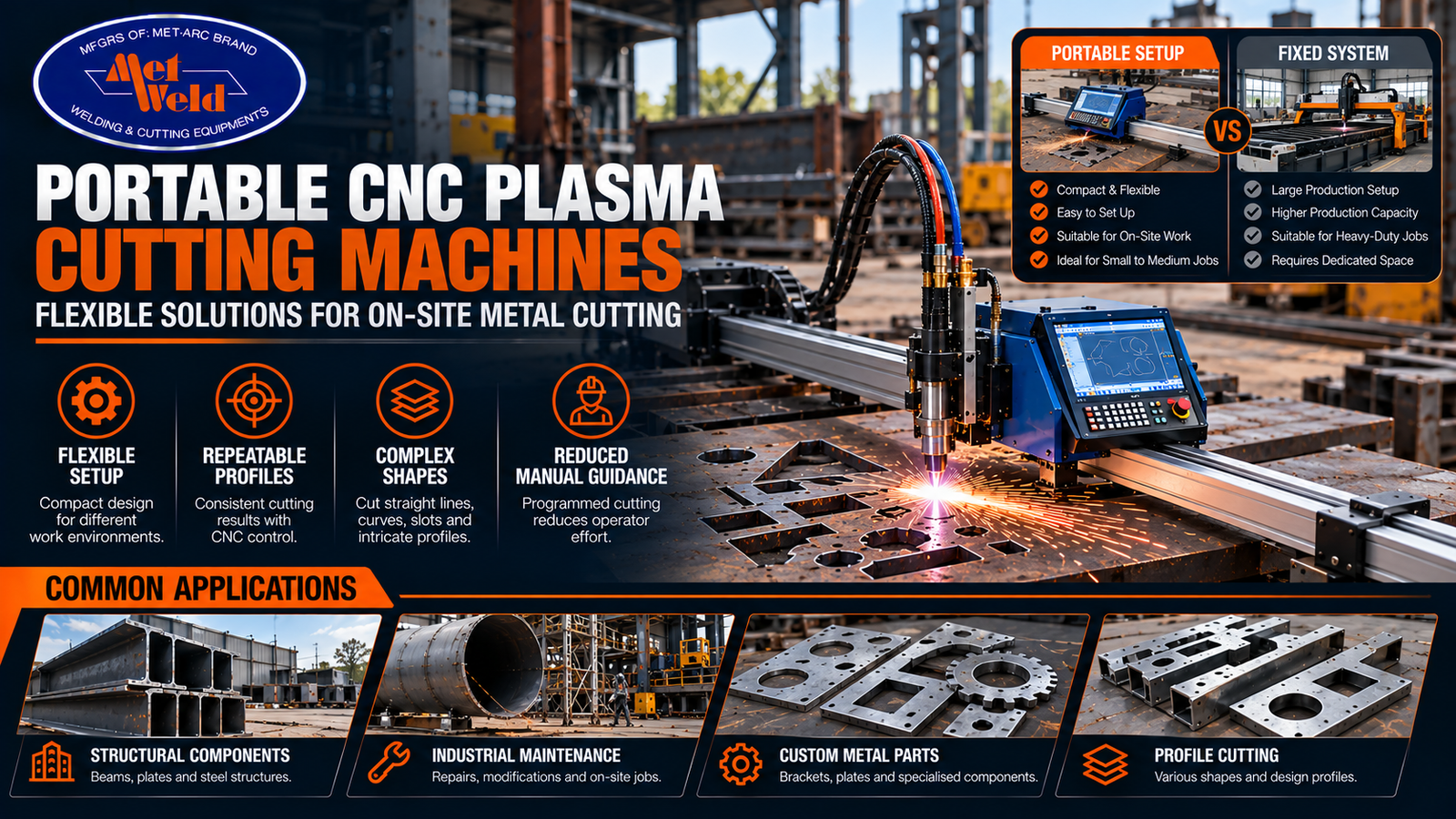
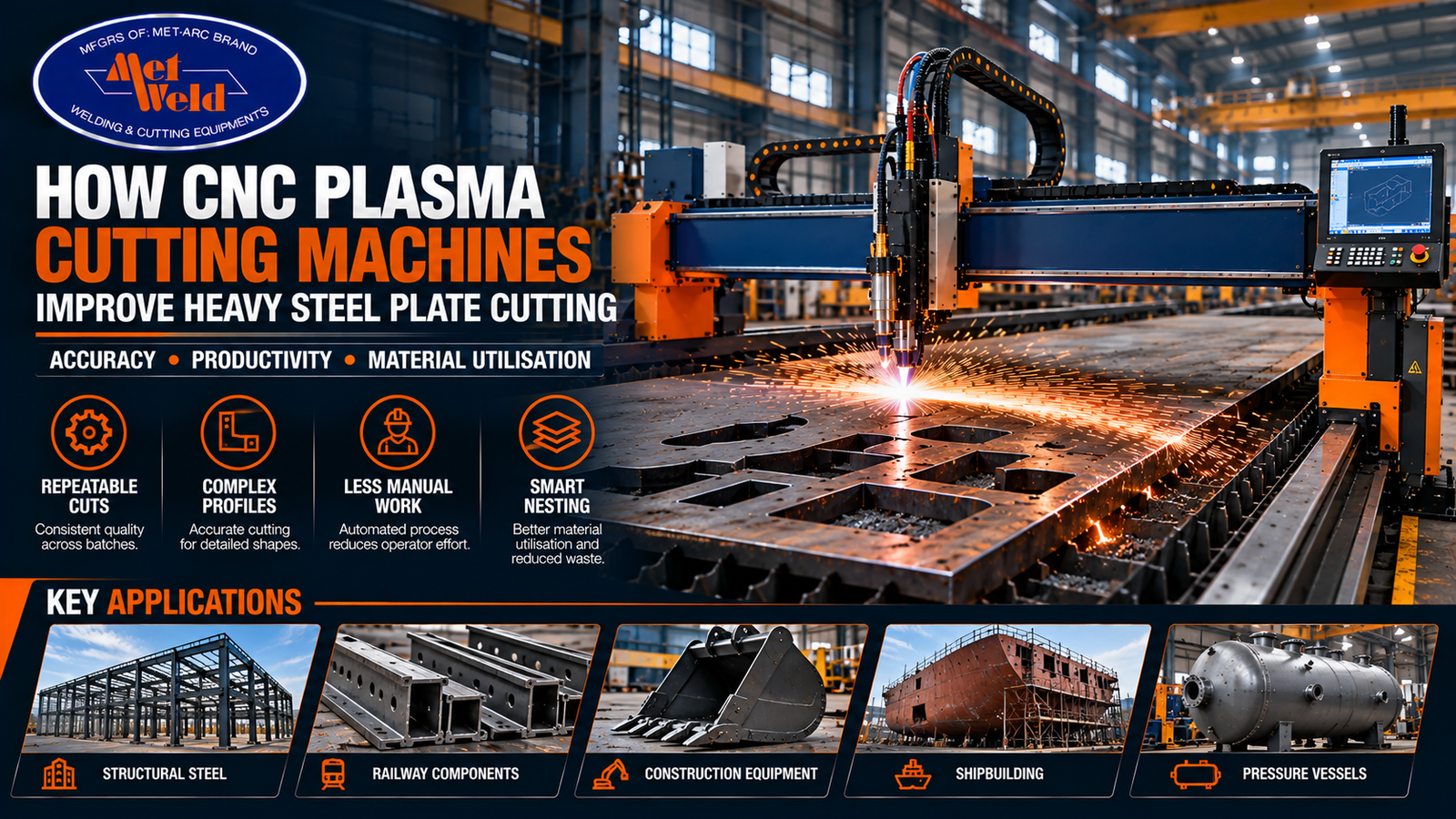
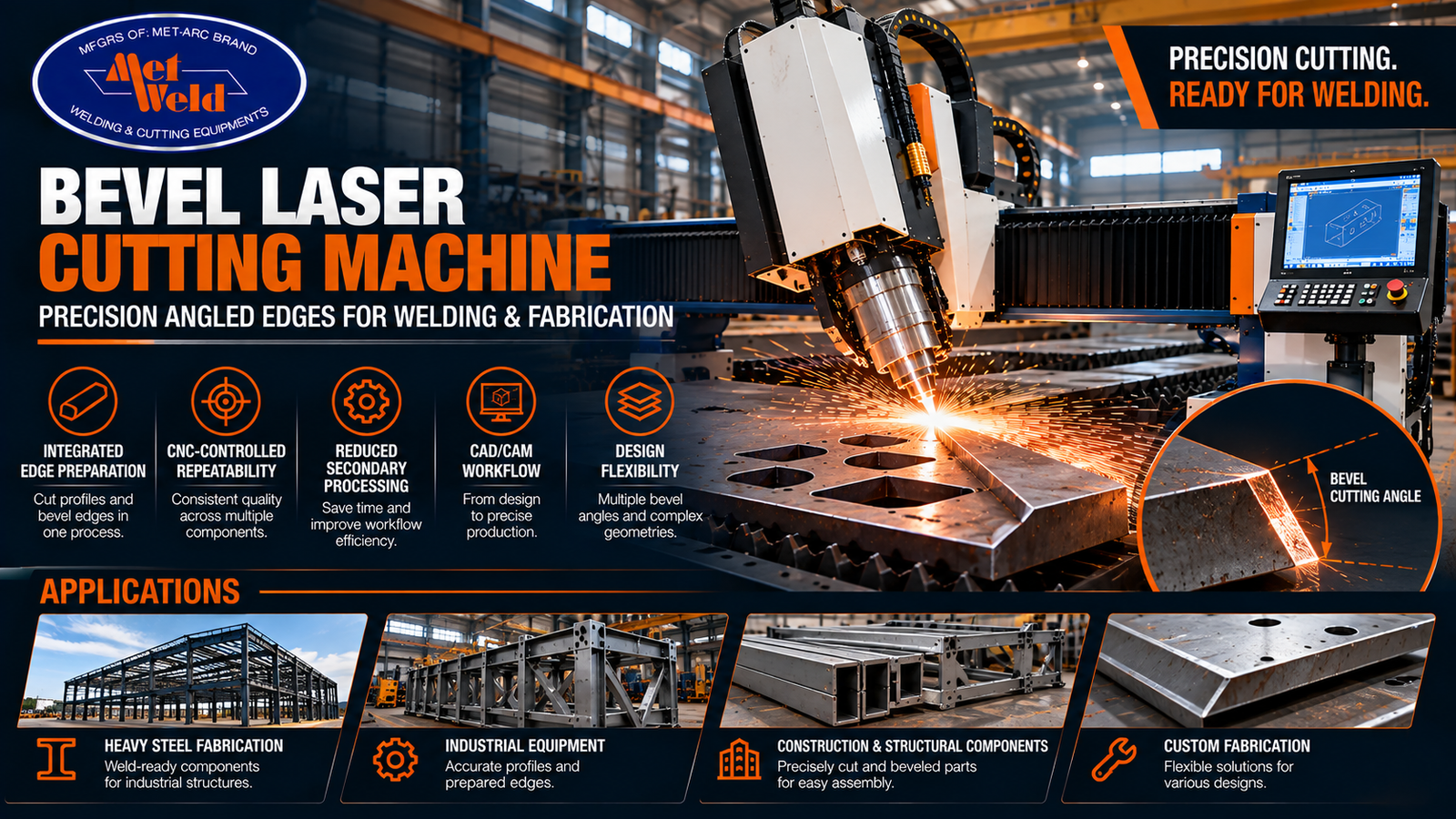
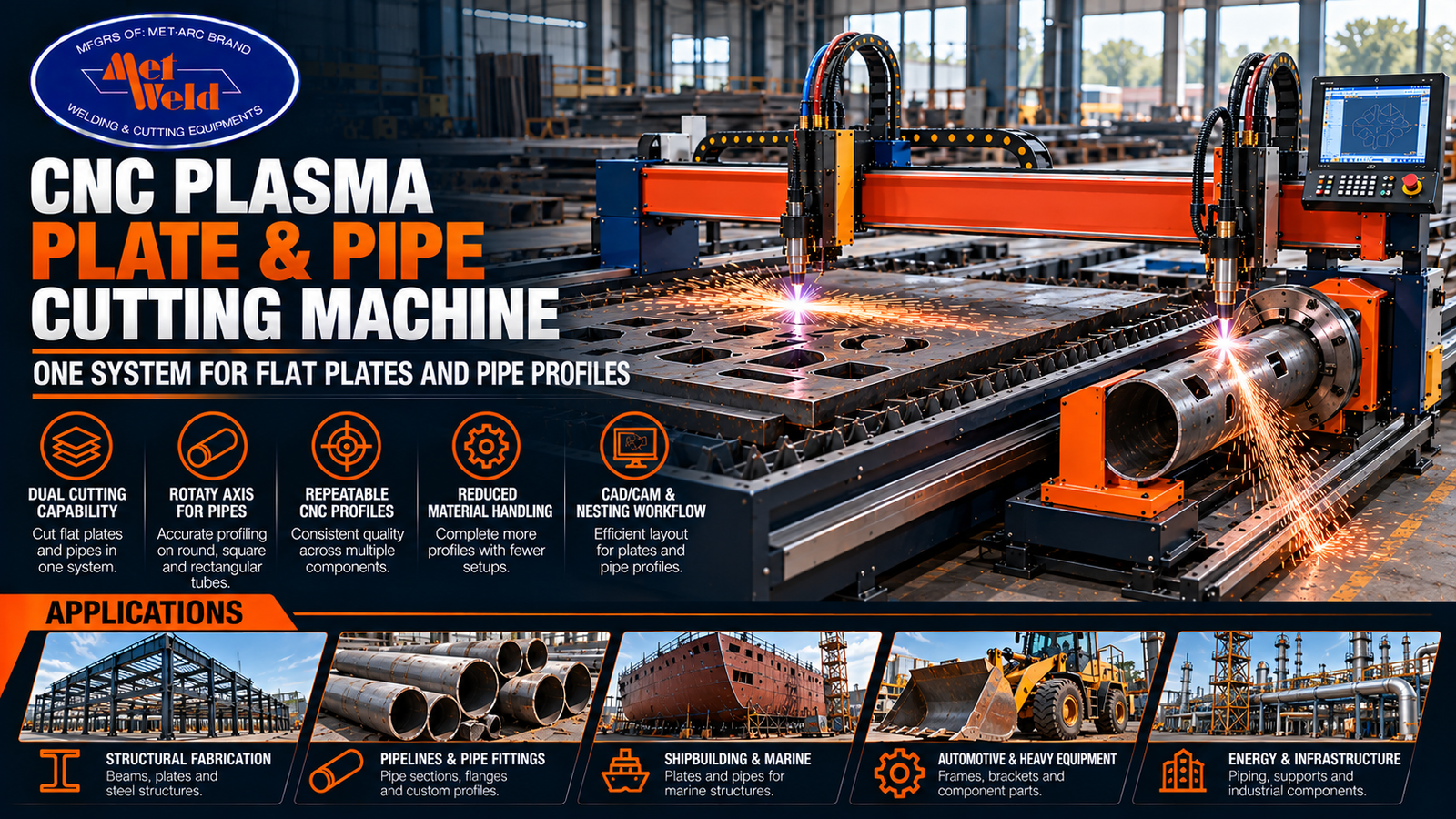
Accurate preparation upstream also helps. Shell plates cut and bevelled precisely on CNC plasma plate and pipe cutting machines roll and fit up more consistently, giving the cladding head a uniform surface to work on.
Strip cladding and weld overlay are not limited to new equipment. Maintenance workshops use the same techniques to restore corroded or worn surfaces on existing vessels, rolls, shafts and valve bodies. Instead of replacing an expensive component, the damaged layer is removed, the surface is inspected and prepared, and a fresh overlay is deposited and machined to size. This approach shortens plant shutdowns, reduces spare part inventory and extends equipment life. For refurbishment work, flexible handling equipment that adapts to different sizes is particularly valuable, since each job may be different from the last.
Before investing in strip cladding, consider:
These factors determine strip width, power source capacity and the manipulators, rotators and positioners required.
Metweld supplies strip cladding heads, SAW equipment and complete handling systems for vessel fabricators, heat exchanger manufacturers and maintenance workshops. Our team reviews your components and specifications to recommend the right combination of equipment and supports installation, procedure trials and operator training.
Contact Metweld to discuss a strip cladding or weld overlay solution for your workshop.
What is the difference between cladding and overlay?
The terms are often used interchangeably. Weld overlay cladding refers to depositing a corrosion- or wear-resistant layer by welding onto a base metal.
Why is ESW strip cladding preferred for some applications?
Electroslag strip cladding offers higher deposition and lower dilution, so the required chemistry can often be reached with fewer layers.
Can strip cladding be used on small diameters?
Strip cladding suits larger surfaces. Small bores and nozzles are usually clad with wire processes using dedicated internal cladding equipment.