Heavy fabrication shops handle plates that would stop most sheet metal equipment in its tracks. Boiler components, crane parts, earthmoving equipment, ship blocks, press frames and bridge girders regularly need cuts in 25, 50, 100 mm or more of carbon steel. For these thicknesses, the choice usually comes down to two proven thermal processes: oxy-fuel and plasma.
Both have loyal users, and both have clear strengths. The right choice depends on your thickness range, materials, production volume and the edge quality your downstream processes need. Many fabricators eventually decide they need both. This guide compares the two processes in practical terms.
Oxy-fuel cutting uses a preheat flame, from a fuel gas such as acetylene, LPG, propane or natural gas mixed with oxygen, to raise the steel to its ignition temperature. A jet of pure oxygen is then directed at the heated spot. The iron oxidises rapidly in an exothermic reaction, and the oxygen stream blows the resulting oxide out of the kerf.
Because the cutting action relies on iron oxidation, oxy-fuel works only on carbon and low-alloy steels. It cannot cut stainless steel, aluminium or copper effectively.
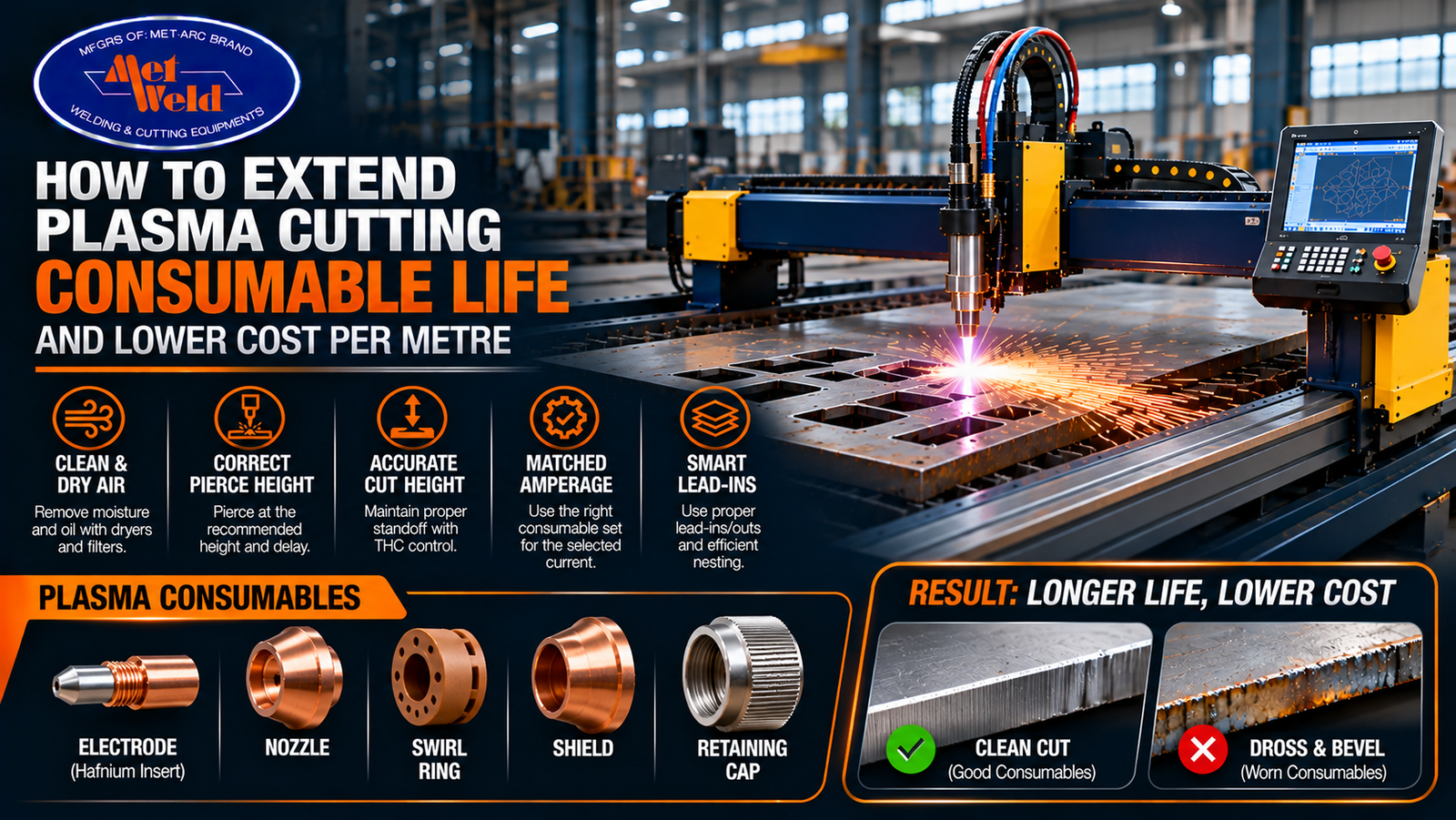
Plasma cutting forces gas through a constricted nozzle while an electric arc ionises it into plasma at extremely high temperature. The plasma jet melts the metal and blows it away. Because it melts rather than oxidises the metal, plasma cuts carbon steel, stainless steel, aluminium and other conductive metals.
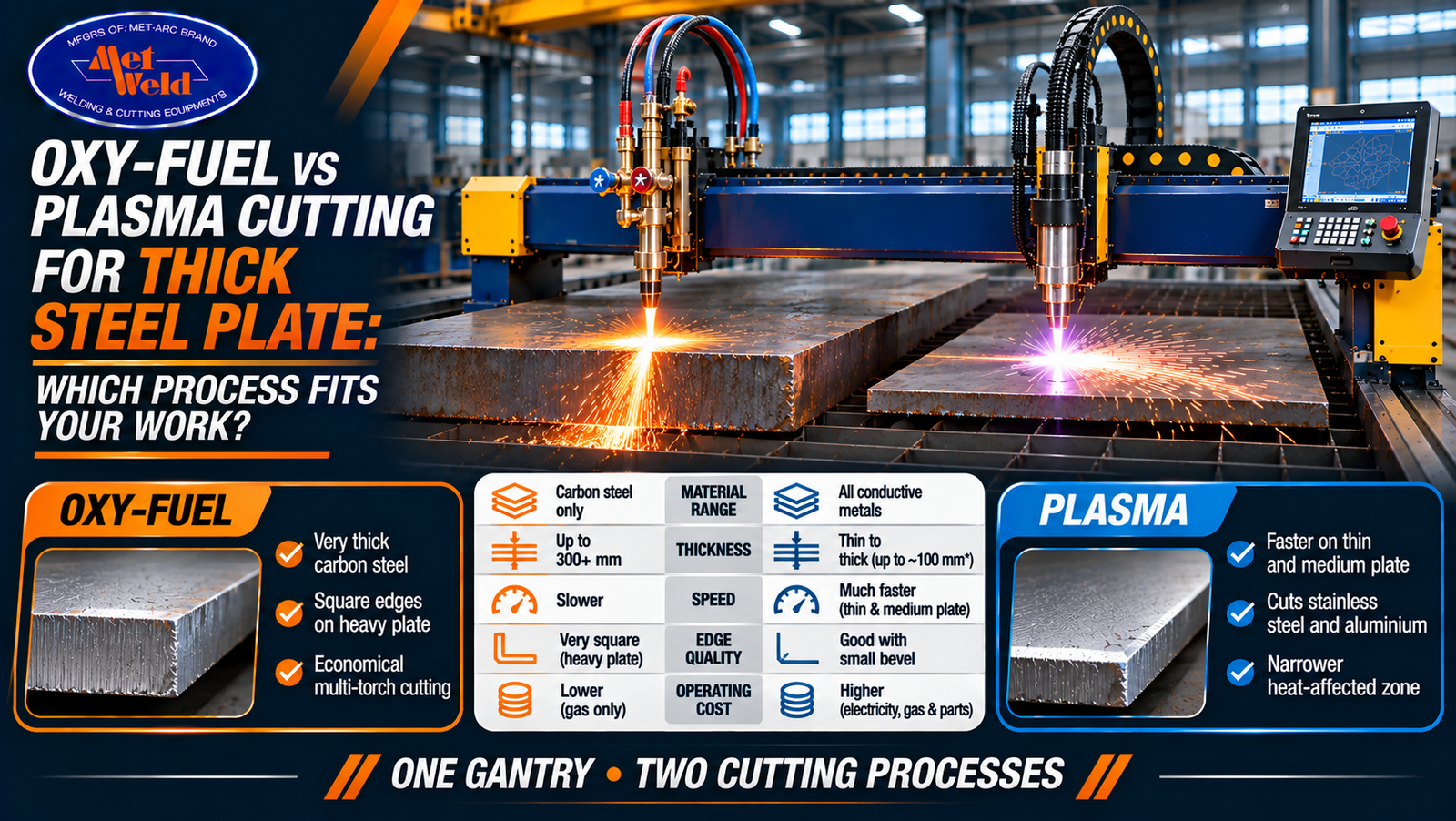
| Factor | Oxy-Fuel | Plasma |
| Materials | Carbon and low-alloy steel only | All conductive metals |
| Practical thickness | Very thick plate, well beyond plasma range | Thin to thick, with best economy in thin and medium plate |
| Cutting speed on thin and medium plate | Slow | Much faster |
| Cutting speed on very thick plate | Competitive and reliable | Limited by system capacity |
| Edge squareness | Very square on thick plate | Slight bevel, improved with high-definition systems |
| Heat-affected zone | Wider | Narrower |
| Pierce time | Long, especially on thick plate | Short |
| Equipment cost | Low per torch | Higher per torch |
| Running cost | Gas only, low per torch | Electricity, gas and consumables |
| Multi-torch capability | Easy and economical | Possible but costlier |
Oxy-fuel’s thickness capability far exceeds that of standard plasma systems. For plates in the 100 to 300 mm range, it remains the practical choice.
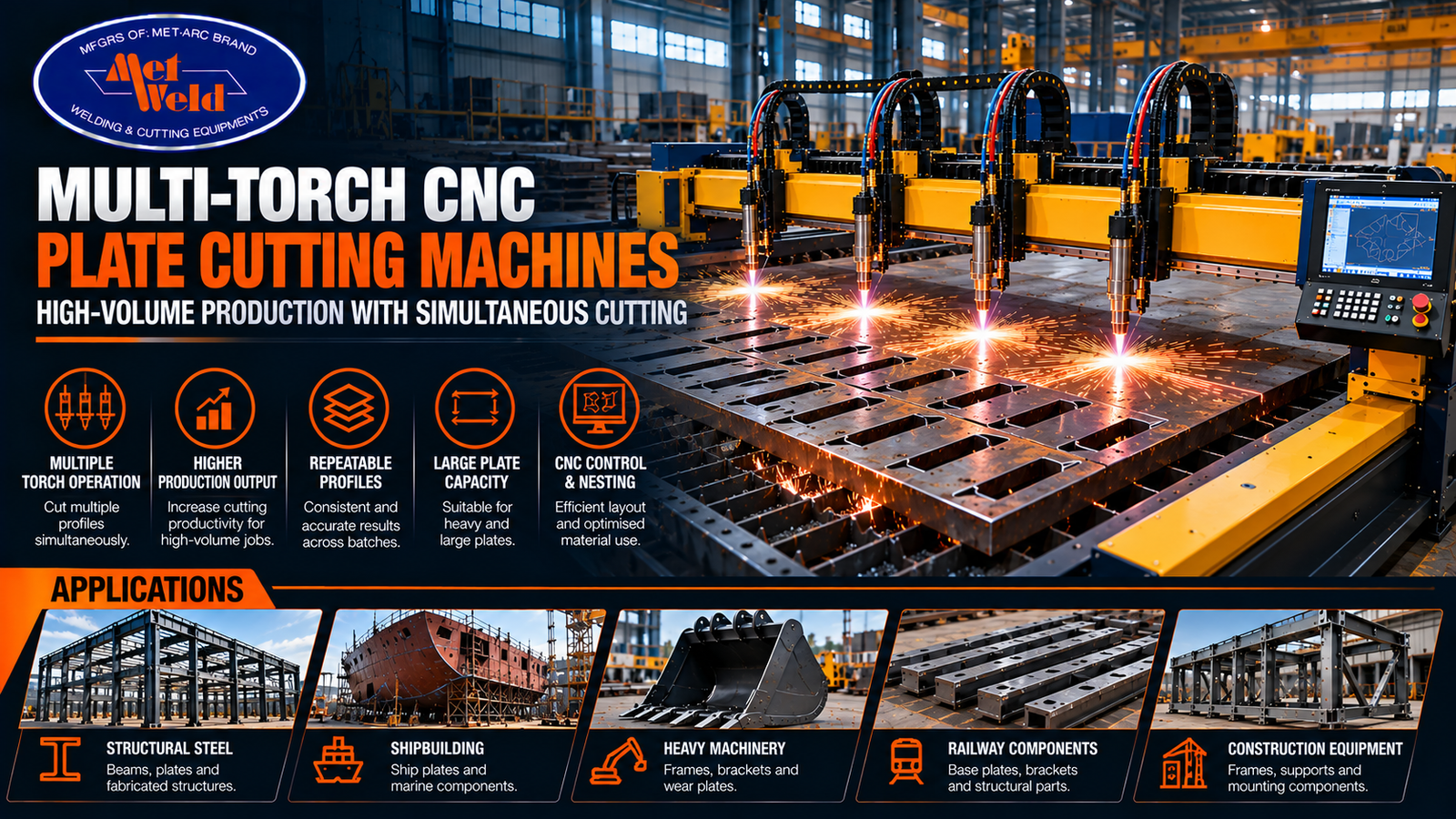
Each oxy-fuel torch costs relatively little, so a CNC machine can carry several torches cutting identical parts simultaneously. On a multi-torch CNC plate cutting machine, output on repetitive thick parts multiplies with each added torch. Our article on multi-torch CNC plate cutting for high-volume production covers this in detail.
There is no expensive power source per torch, and gas costs per hour are modest. For shops cutting mostly heavy carbon steel, oxy-fuel offers excellent value.
On plates up to medium thickness, plasma cuts several times faster than oxy-fuel. Pierce times are also much shorter, which matters greatly for nests with many small parts and holes.
Plasma cuts stainless steel and aluminium as easily as carbon steel. Shops with a mixed material list need plasma or laser.
Lower heat input means less distortion on thinner plate and a smaller zone of altered material at the edge.
Modern plasma systems produce good-quality bolt holes in medium plate, often reducing the need for drilling.
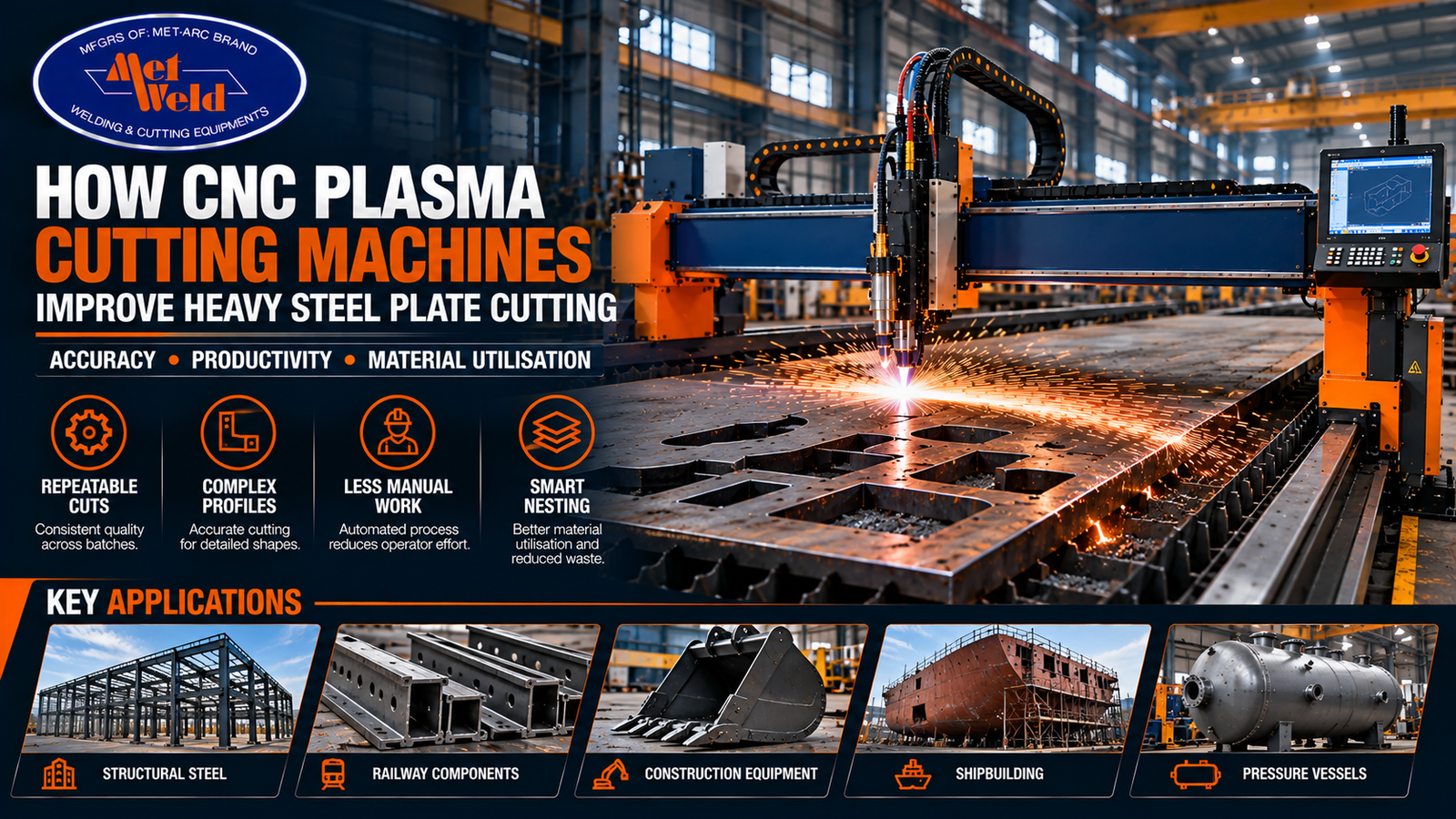
For more on heavy plasma work, see our guide on CNC plasma cutting machines for heavy steel plate cutting.
In the middle of the thickness range, both processes can do the job. Here the decision usually depends on:
Rather than choosing one process, many heavy fabrication shops specify a gantry machine that carries a plasma torch alongside one or more oxy-fuel torches. Plasma handles thin and medium plates and parts with many holes. Oxy-fuel takes over for thick plate and repetitive heavy parts.
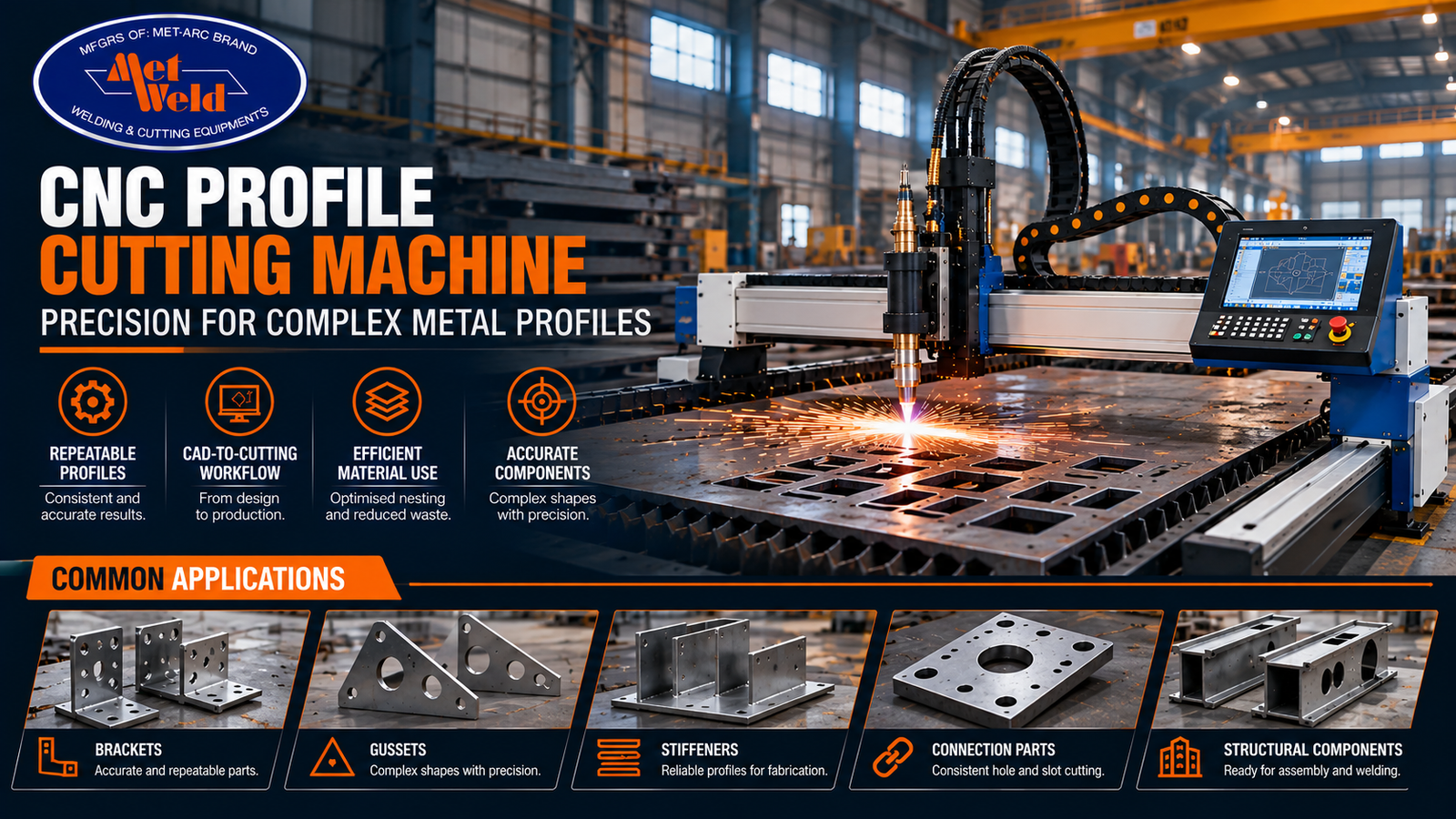
A gantry type CNC plasma cutting machine configured with both processes gives one machine the flexibility of two. For site work and smaller shops, a portable CNC plasma and profile cutting machine can also carry oxy-fuel and plasma torches.
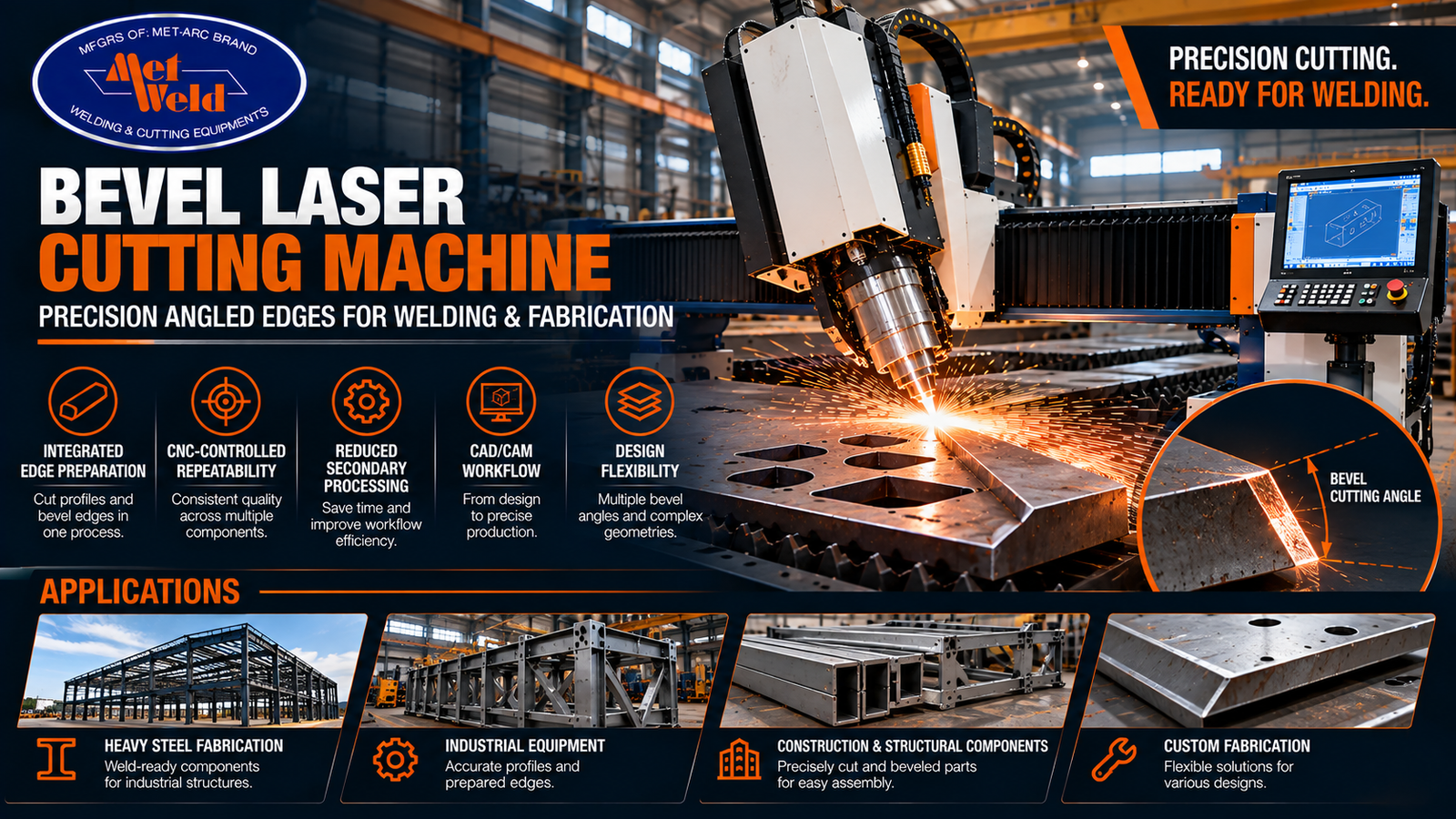
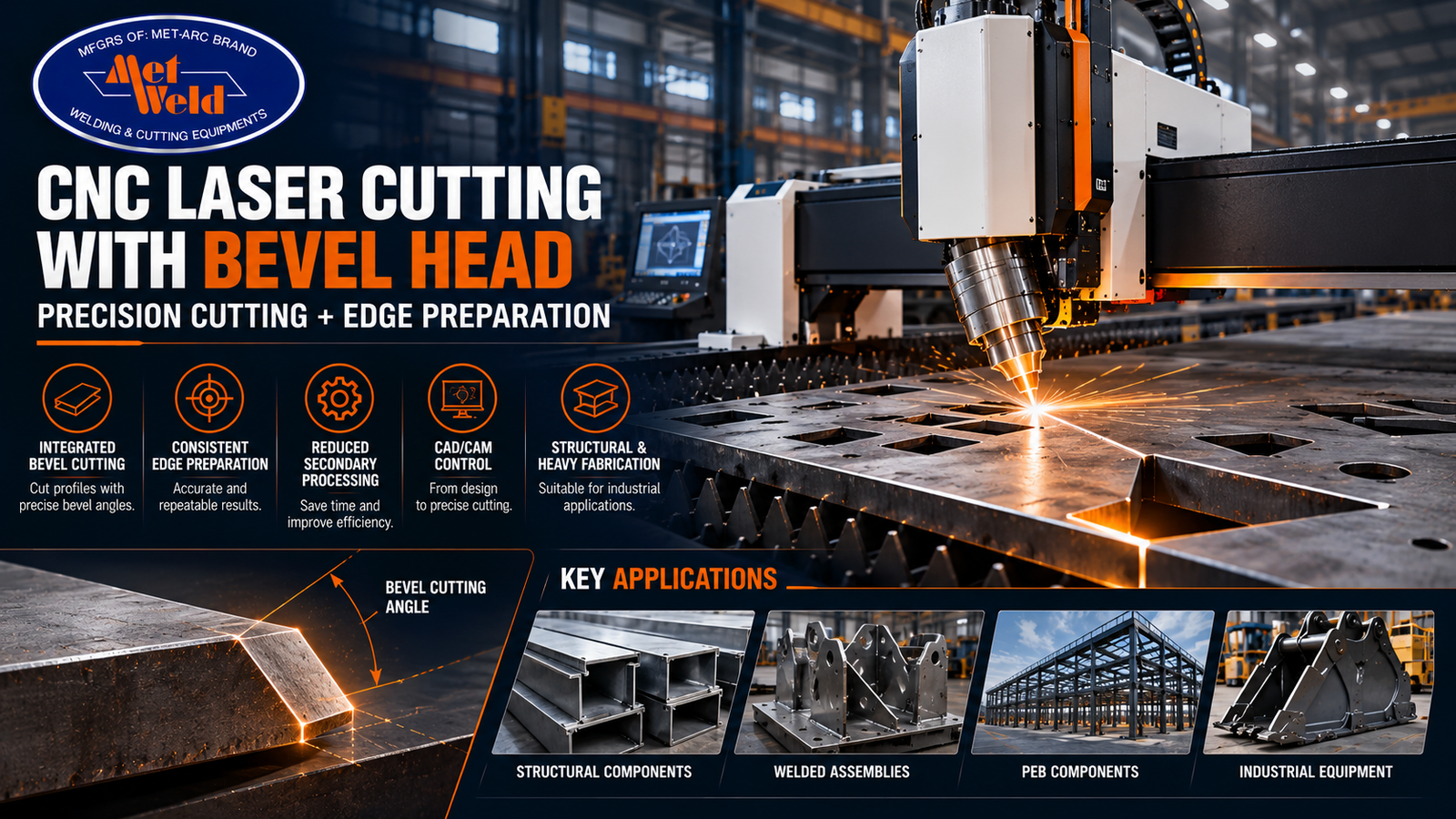
Both processes can cut bevels for edge preparation when fitted with a bevel head. Oxy-fuel bevelling is common for thick plates, including double-bevel (K and X) preparations with multi-torch bevel heads. Plasma bevelling suits thinner and medium plates and offers speed.
When comparing costs, look beyond the gas or electricity bill:
A balanced comparison based on your actual part mix gives the clearest answer.
The two processes carry different hazards, and both need clear procedures. Oxy-fuel involves stored fuel gas and oxygen, so cylinder storage, flashback arrestors, hose condition and leak checks are essential. Plasma involves high voltage and intense ultraviolet light, so torch and lead inspection, proper earthing and eye protection are critical. Both produce fumes and molten spatter, which makes fume extraction, flame-resistant clothing and suitable cutting safety accessories necessary around any thermal cutting machine.
Metweld manufactures CNC cutting machines with plasma, oxy-fuel or combined configurations for heavy fabrication. Our engineers analyse your plate thicknesses, materials and part types to recommend the right process mix, number of torches and bevel capability. We also supply genuine CNC machine spares and support training.
Explore our multi-torch CNC cutting solutions for the heavy fabrication industry or contact Metweld to discuss your cutting requirements.
Can oxy-fuel cut stainless steel?
No. Stainless steel forms oxides that resist the oxidation reaction oxy-fuel depends on. Plasma or laser is required.
Which fuel gas is best for oxy-fuel cutting?
Acetylene gives a hot, concentrated flame and fast preheat, while LPG and propane offer lower cost and are widely used for thick plate. The choice depends on cost, availability and application.
Is plasma always faster than oxy-fuel?
Plasma is faster on thin and medium plate. On very thick plate, oxy-fuel remains competitive and can cut thicknesses beyond plasma capability.