Modern metal fabrication requires cutting technologies that can deliver accuracy, consistency and efficient production. As manufacturers work with different metals, thicknesses and component designs, choosing the right cutting process becomes an important production decision.
Laser cutting and waterjet cutting are two technologies often considered for metal processing. However, their suitability can vary depending on the material, required accuracy, production volume and type of component being manufactured.
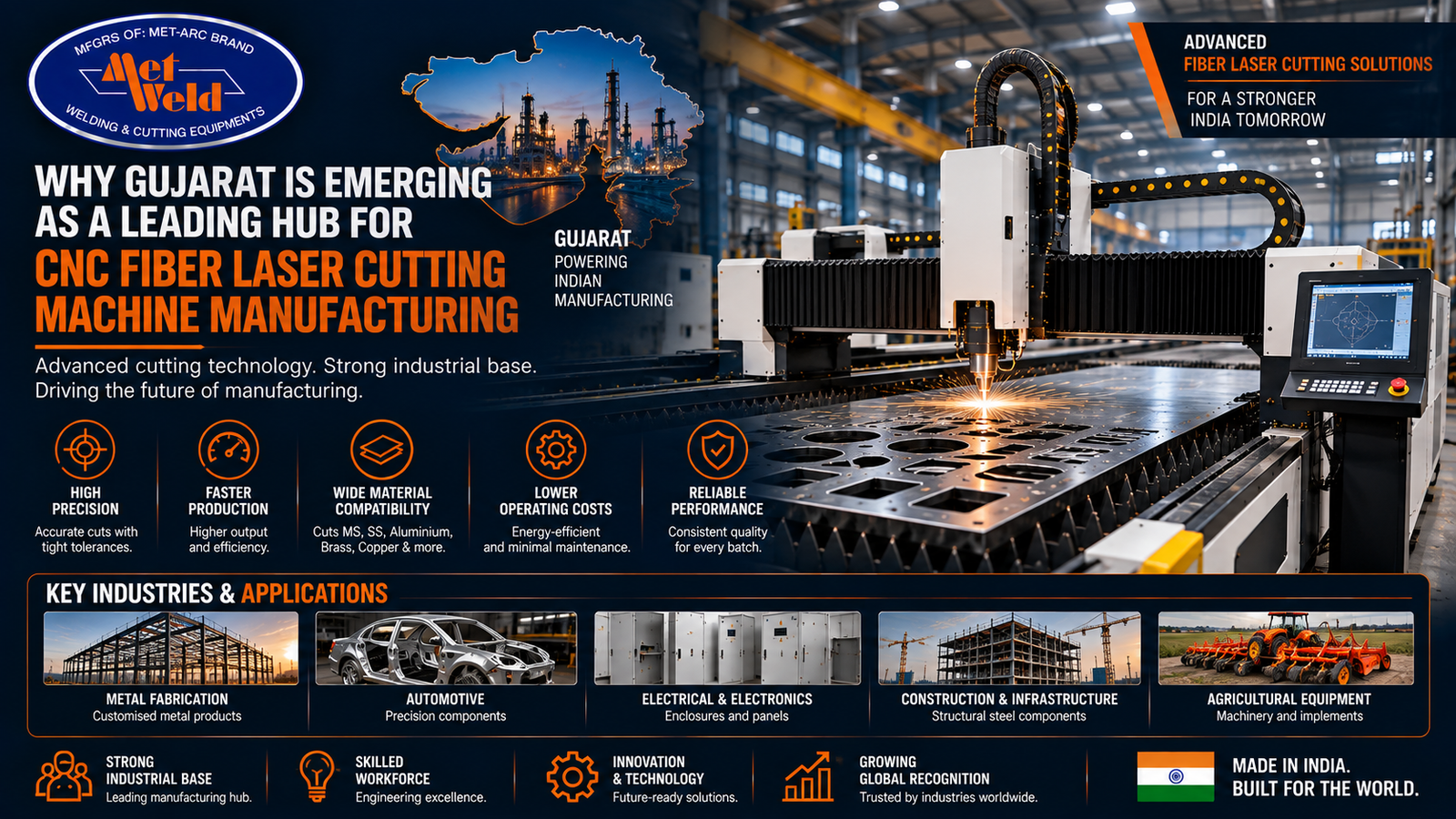
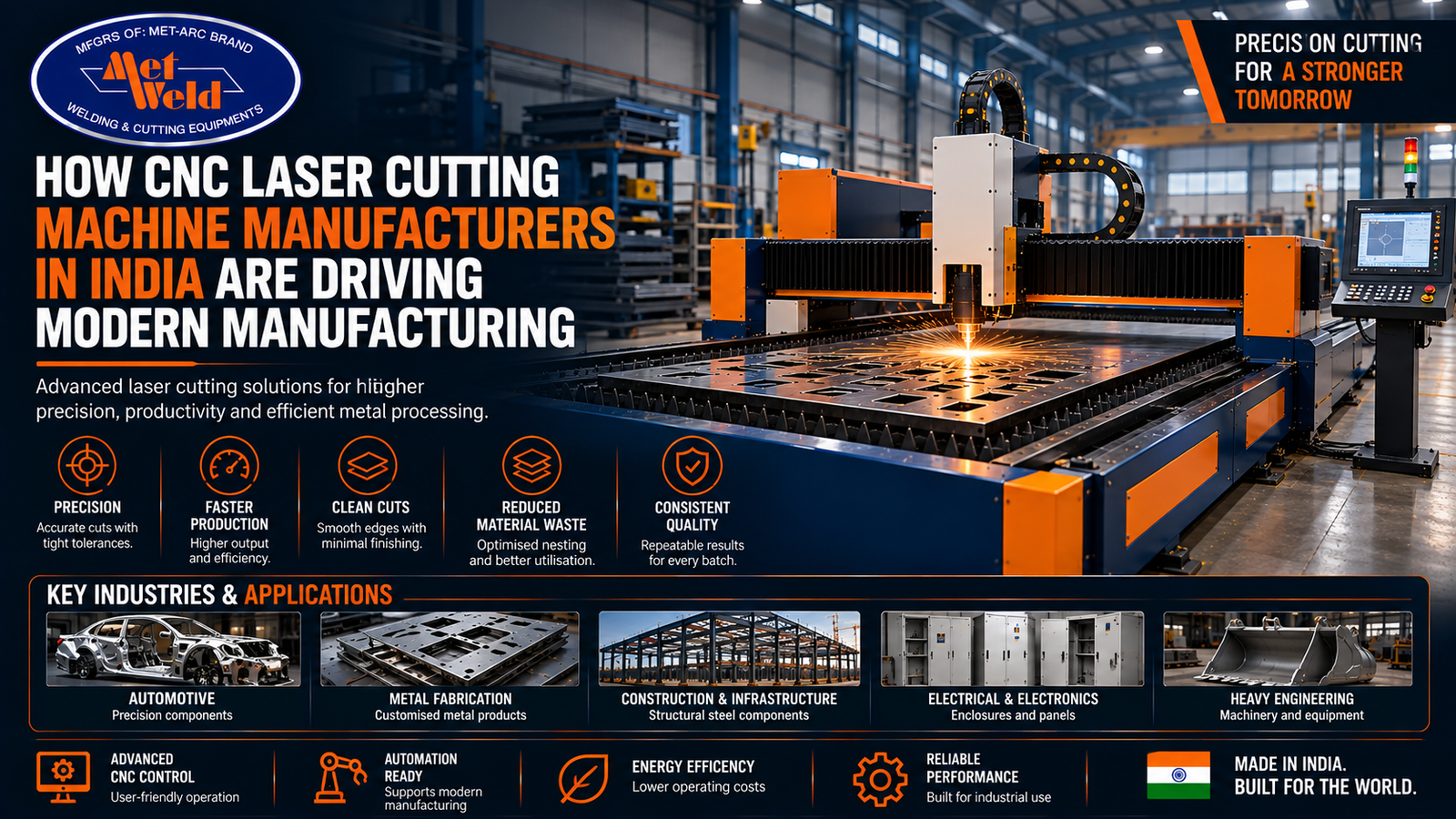
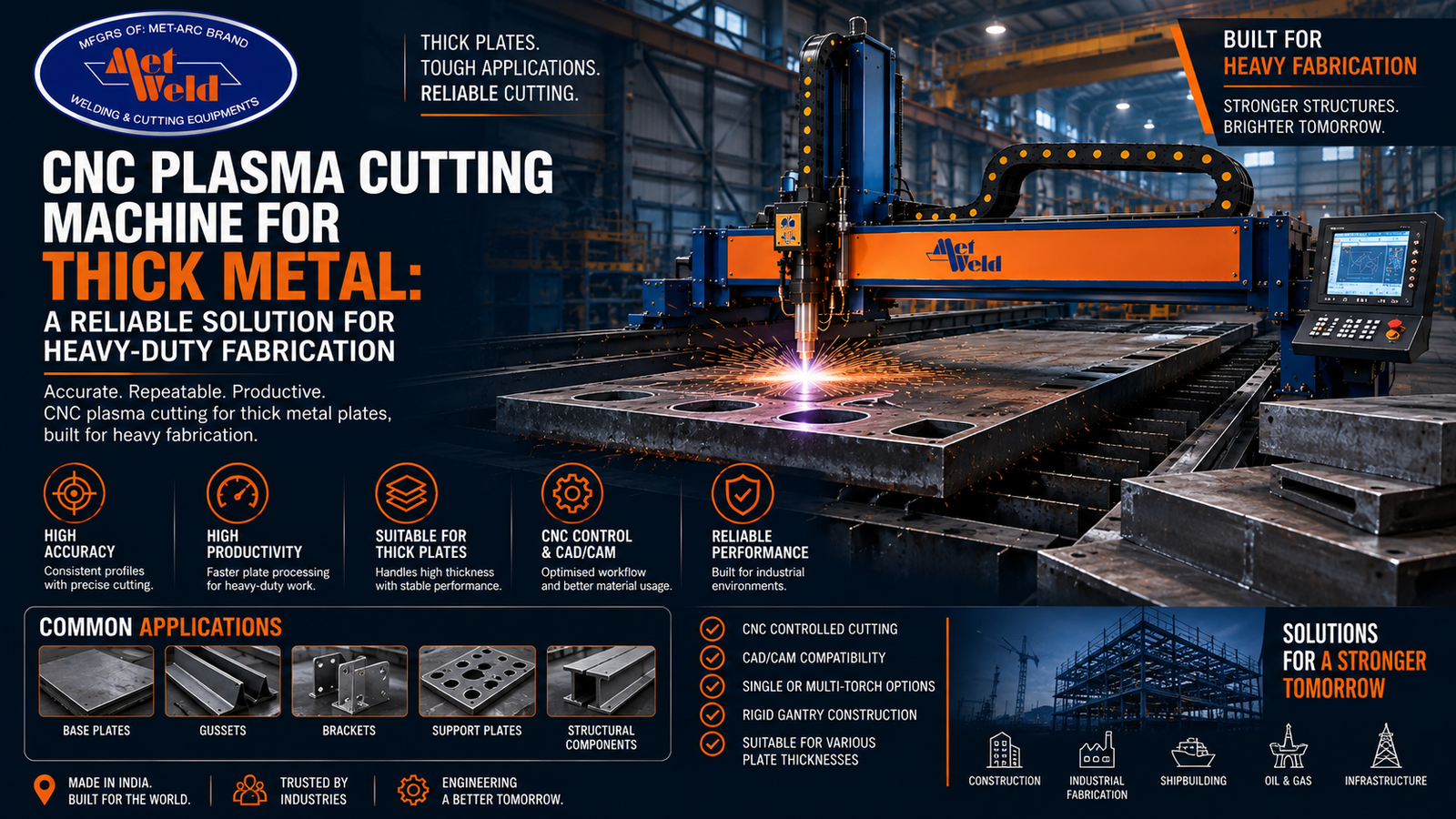
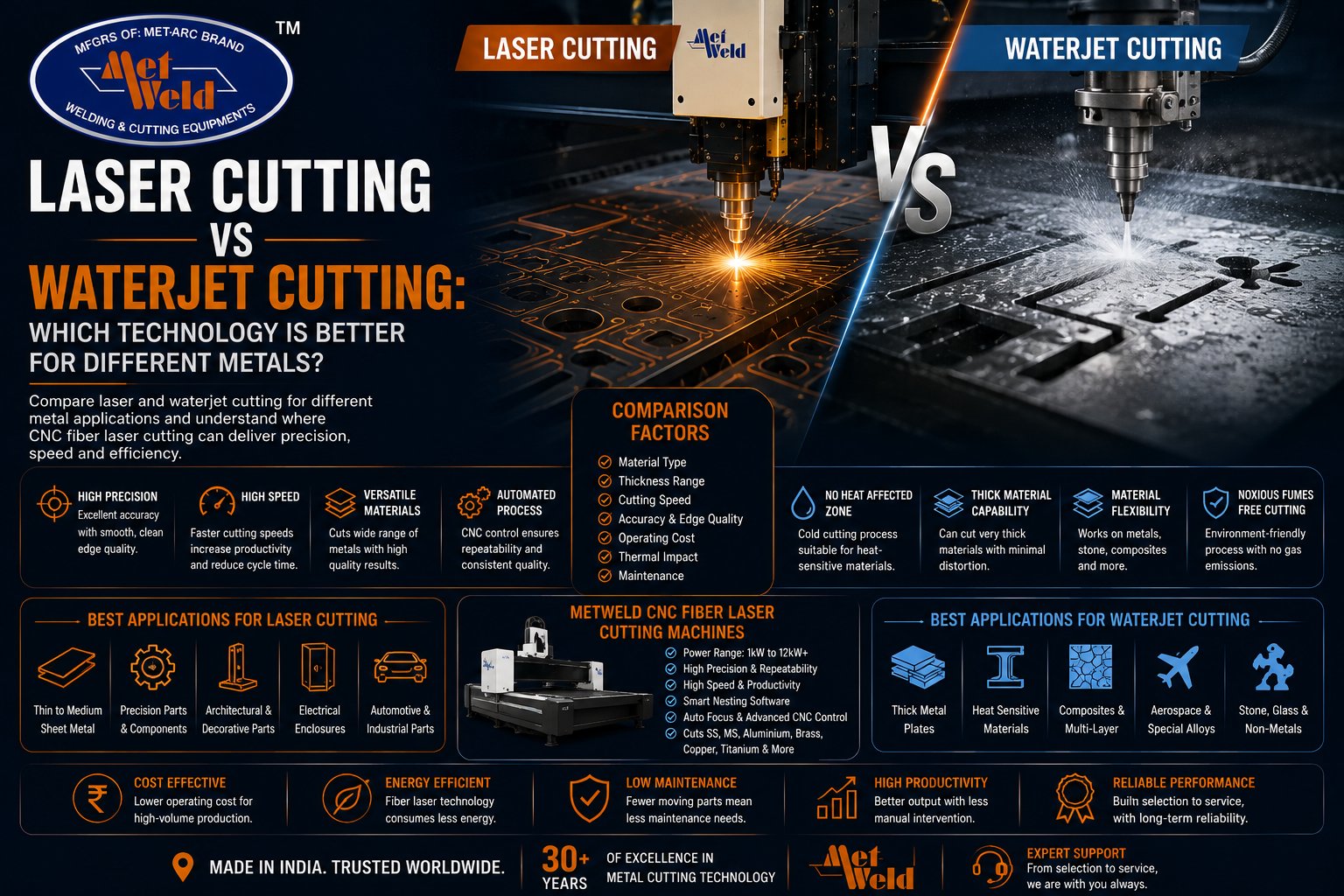
MetWeld’s published product range focuses on CNC fiber laser cutting machines and CNC plasma cutting systems for industrial metal cutting applications. Its fiber laser systems are designed around precision, speed, material flexibility and efficient production.
This guide explains the factors manufacturers should consider when evaluating laser cutting and waterjet cutting, while focusing on the laser-cutting capabilities documented by MetWeld.
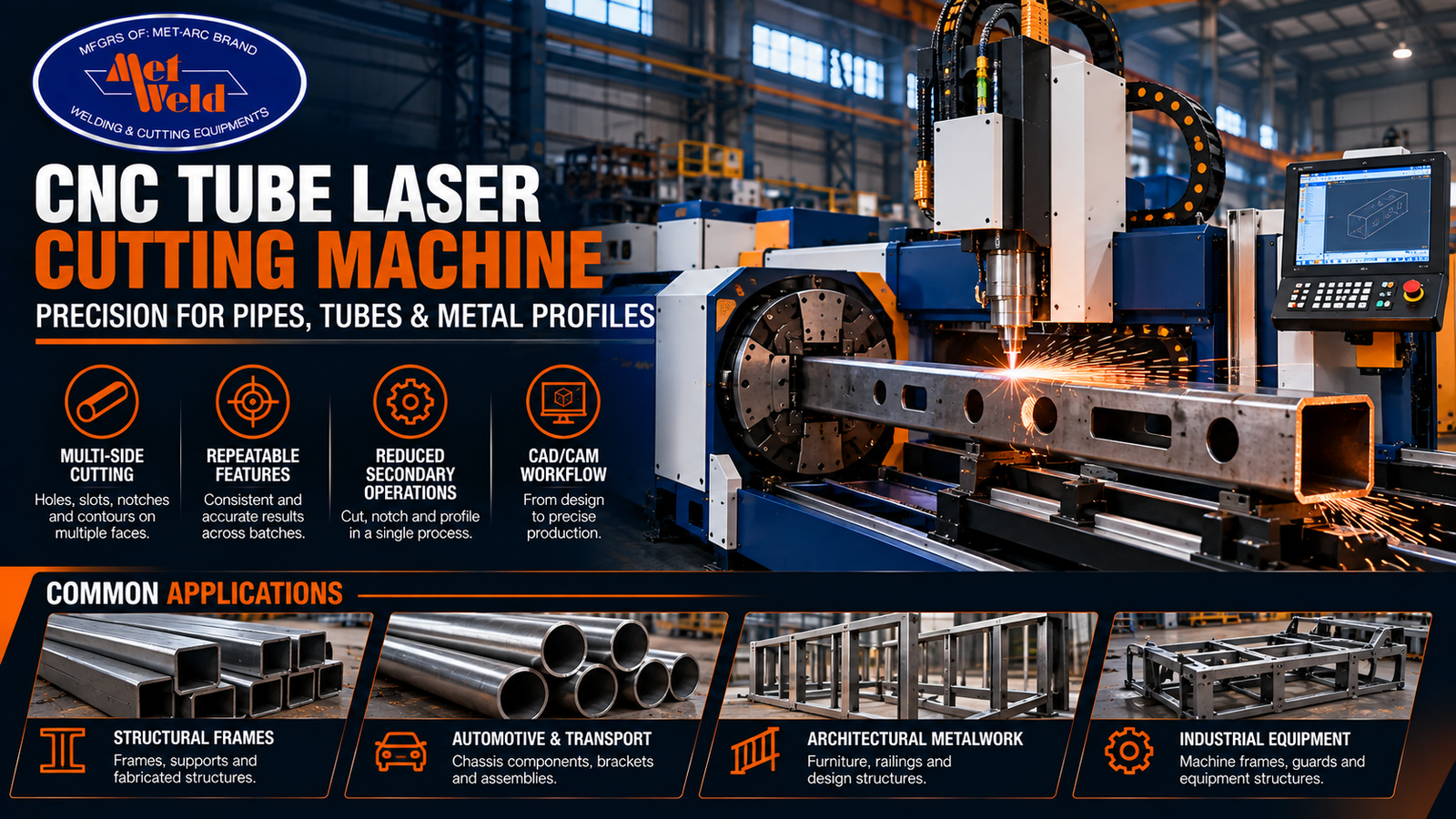
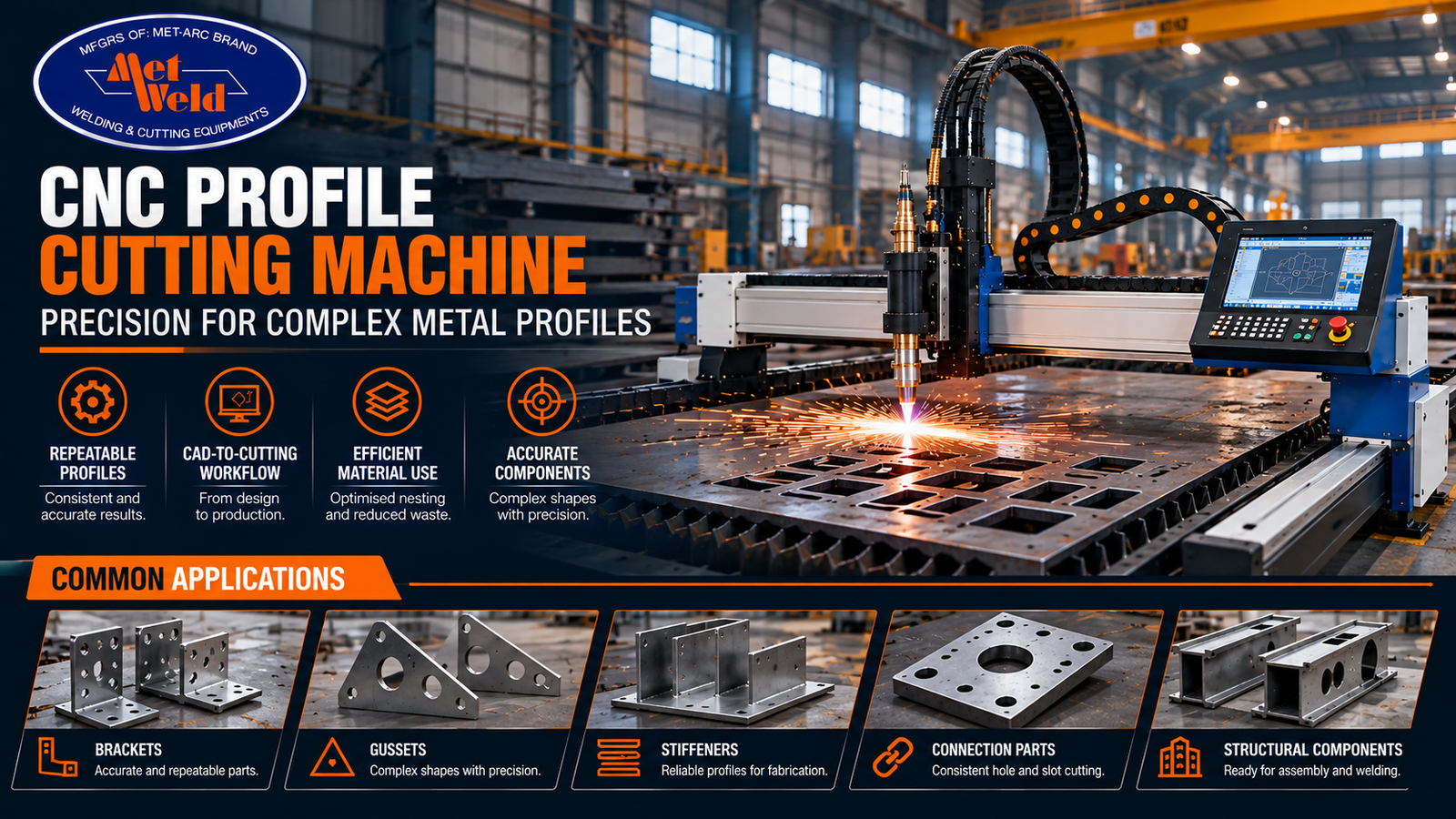
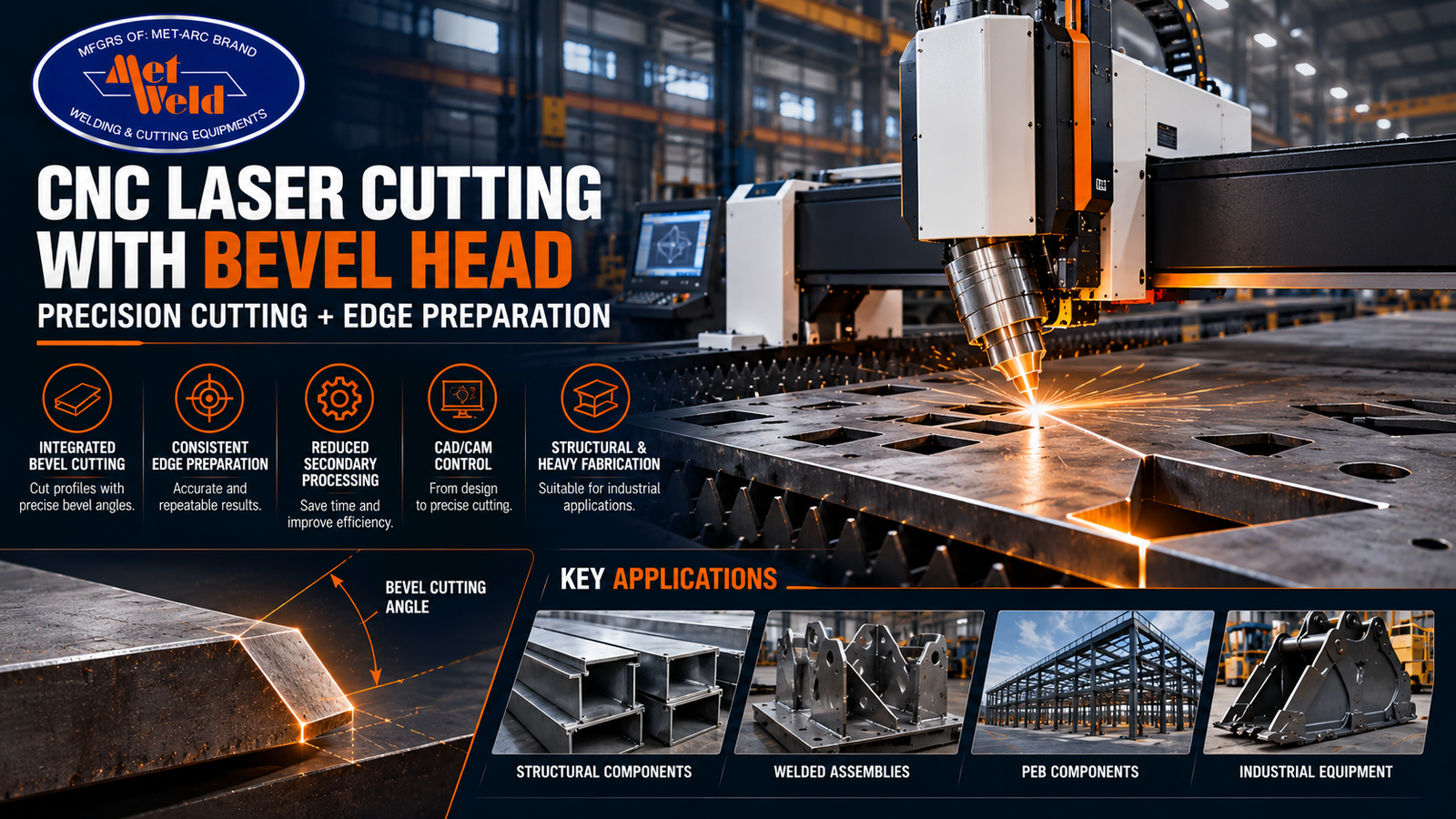
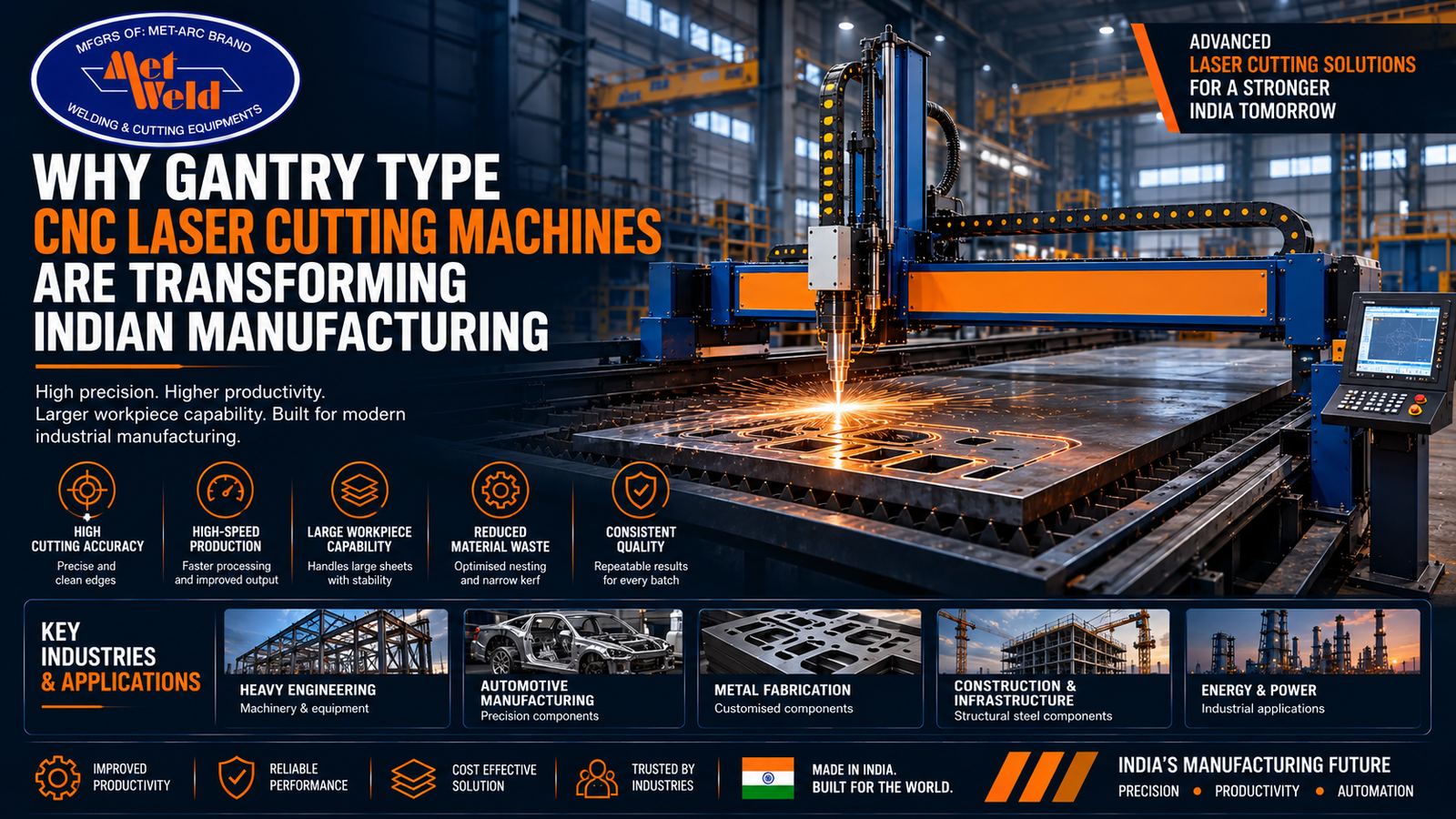
Laser cutting uses a focused laser beam to process material along a programmed cutting path. MetWeld’s CNC fiber laser systems use CNC control and fiber laser technology for accurate and repeatable metal cutting.
The CNC system controls the movement of the cutting head according to the programmed design. This allows manufacturers to produce consistent shapes and dimensions across repeated production runs.
Because the process is non-contact, the laser does not physically touch the workpiece. MetWeld highlights this as one of the characteristics of its CNC laser cutting technology.
According to MetWeld, its fiber laser cutting machines can process a range of metals, including:
This material flexibility makes fiber laser technology suitable for a variety of fabrication and manufacturing requirements.
Waterjet cutting is a metal-cutting technology that uses a high-pressure water stream, often with an abrasive material, to cut through a workpiece.
However, MetWeld’s website does not currently document waterjet cutting machines, waterjet specifications or waterjet applications in its published product information.
Therefore, specific claims about waterjet cutting performance, operating pressure, abrasive requirements, thickness capabilities or comparative costs should not be attributed to MetWeld.
For a MetWeld-focused article, the documented laser-cutting capabilities provide the reliable basis for evaluating where fiber laser technology can be applied.
When comparing different metal-cutting technologies, manufacturers should look beyond the cutting method itself.
The first consideration is the material being processed.
MetWeld’s fiber laser machines are designed for metals including stainless steel, mild steel, aluminium, brass, copper and titanium.
The material should therefore be evaluated together with its thickness, required finish and production requirements before selecting a cutting system.
Thickness is another important factor.
MetWeld states that its fiber laser machines are available across different power capacities, with options from 1kW to 12kW+ depending on the material thickness and cutting requirements. Its published information also indicates cutting capabilities from thin sheets to thicker industrial plates depending on machine configuration.
Precision becomes especially important when components require tight tolerances, intricate shapes or small holes.
MetWeld’s CNC fiber laser machines are designed for high-precision cutting, with its published machine information specifying positioning accuracy of ±0.03 mm and repositioning accuracy of ±0.02 mm for its table-type system.
For manufacturers producing detailed components, this level of repeatability can be an important consideration.
Based on MetWeld’s documented capabilities, CNC fiber laser cutting is particularly suitable where manufacturers require precision, speed, repeatability and efficient material utilisation.
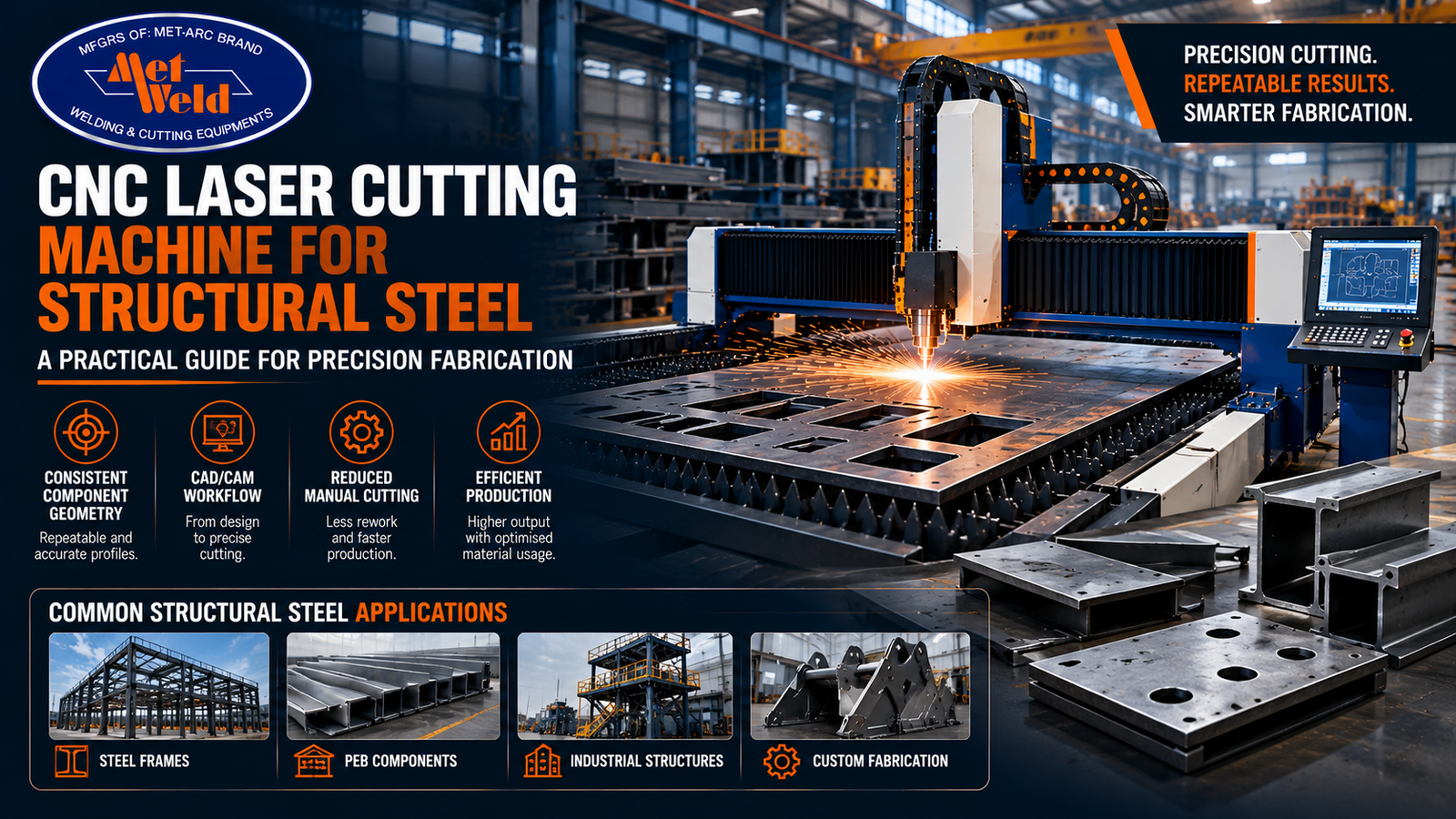
Laser cutting can produce complex shapes, detailed designs and precise dimensions directly from CAD-based designs. This makes it suitable for components where accuracy is important.
Repeatability is another important advantage. CNC systems can reproduce programmed designs consistently, making them suitable for repeated production runs.
MetWeld highlights consistency, repeatability and high-speed cutting as key advantages of its fiber laser technology.
Fiber laser cutting can handle intricate geometries, detailed patterns and customised designs. The process can therefore support both functional industrial components and decorative metal applications.
MetWeld’s fiber laser machines are positioned for a broad range of industrial applications.
Laser cutting can be used for body panels, frames, exhaust components and other precision metal parts.
Applications include structural components, railings, staircases and decorative facades.
Fiber laser cutting can be used for cabinets, housings and machinery enclosures requiring accurate dimensions.
The technology can produce customised panels, frames, fixtures and decorative metal elements.
MetWeld also identifies applications in solar energy systems, wind turbines and power-related equipment.
Rather than choosing a cutting process based only on the technology name, manufacturers should evaluate their actual production requirements.
Identify the metals being processed and their typical thickness range.
Consider the tolerances, hole sizes, shapes and edge quality required for finished components.
High-volume production benefits from repeatable CNC processes and efficient cutting cycles.
The required laser power depends on the material and thickness being processed. MetWeld offers different power configurations to accommodate varying requirements.
MetWeld highlights lower energy consumption, minimal maintenance requirements and reduced operational costs as advantages of its fiber laser technology.
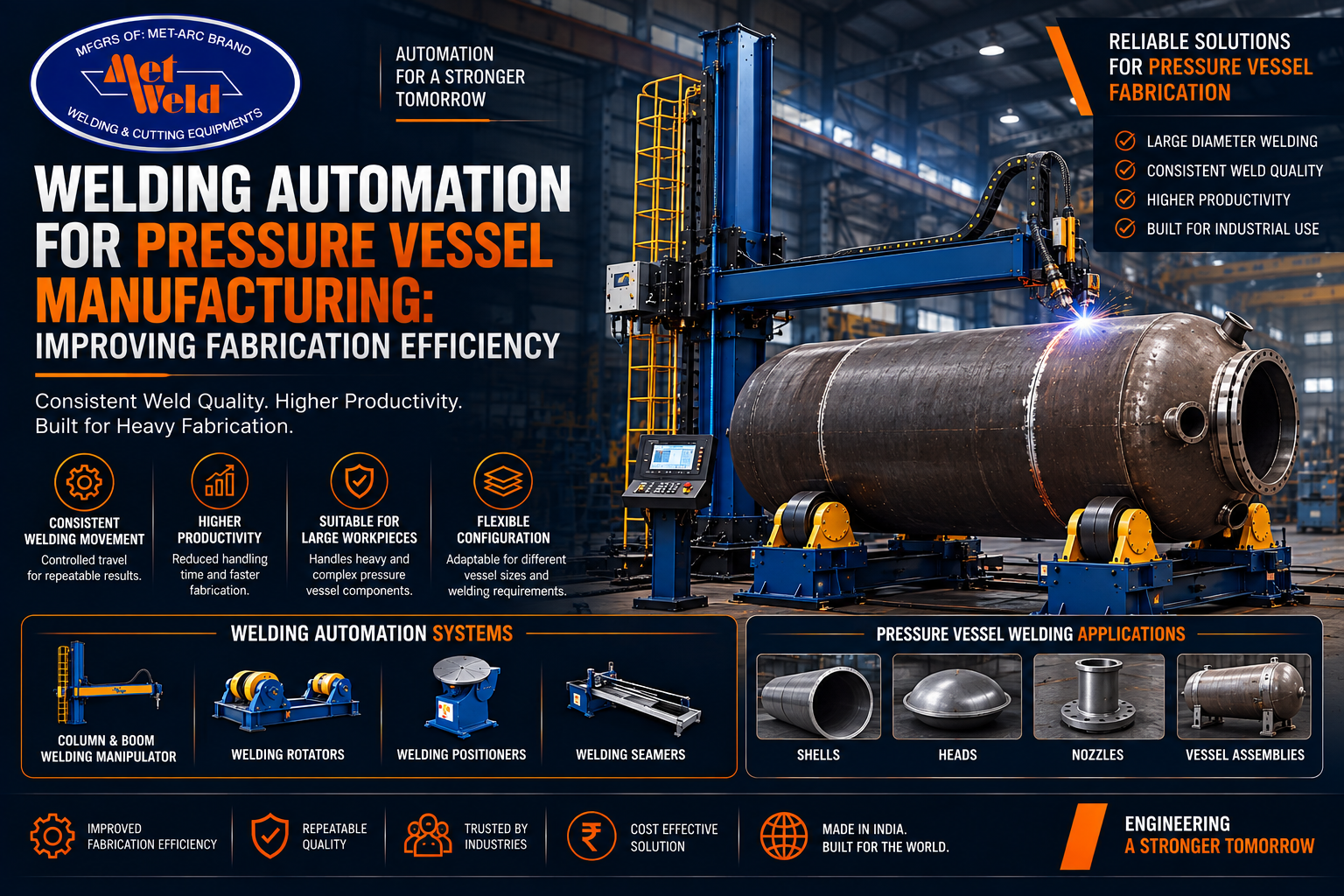
MetWeld has been involved in welding and cutting equipment manufacturing since 1982 and began manufacturing CNC plasma cutting machines in 2011. The company currently offers CNC plasma, laser cutting, welding automation and related equipment.
Its fiber laser machines combine fiber laser technology with CNC control, with configurations designed for different material thicknesses and production requirements.
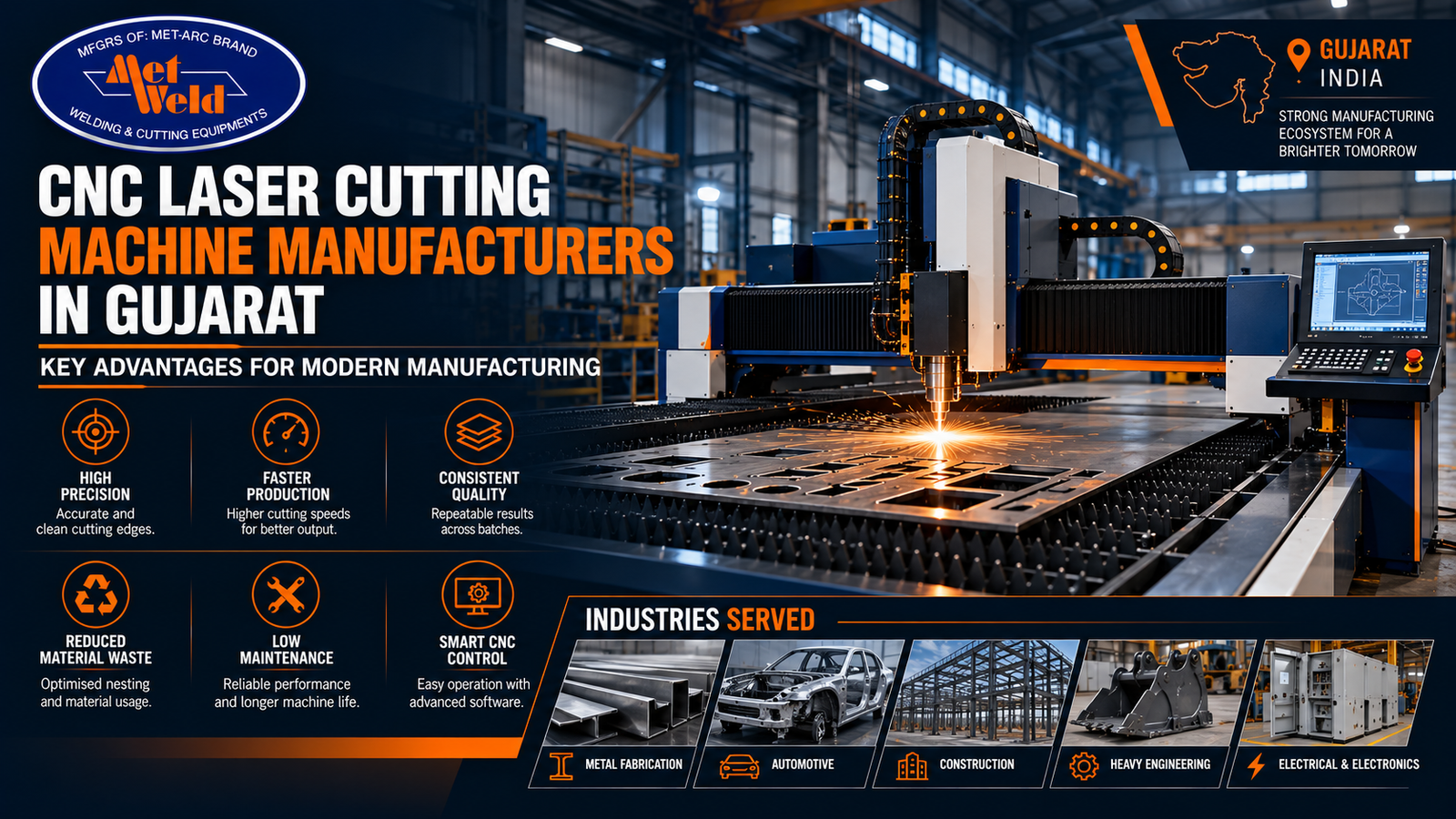
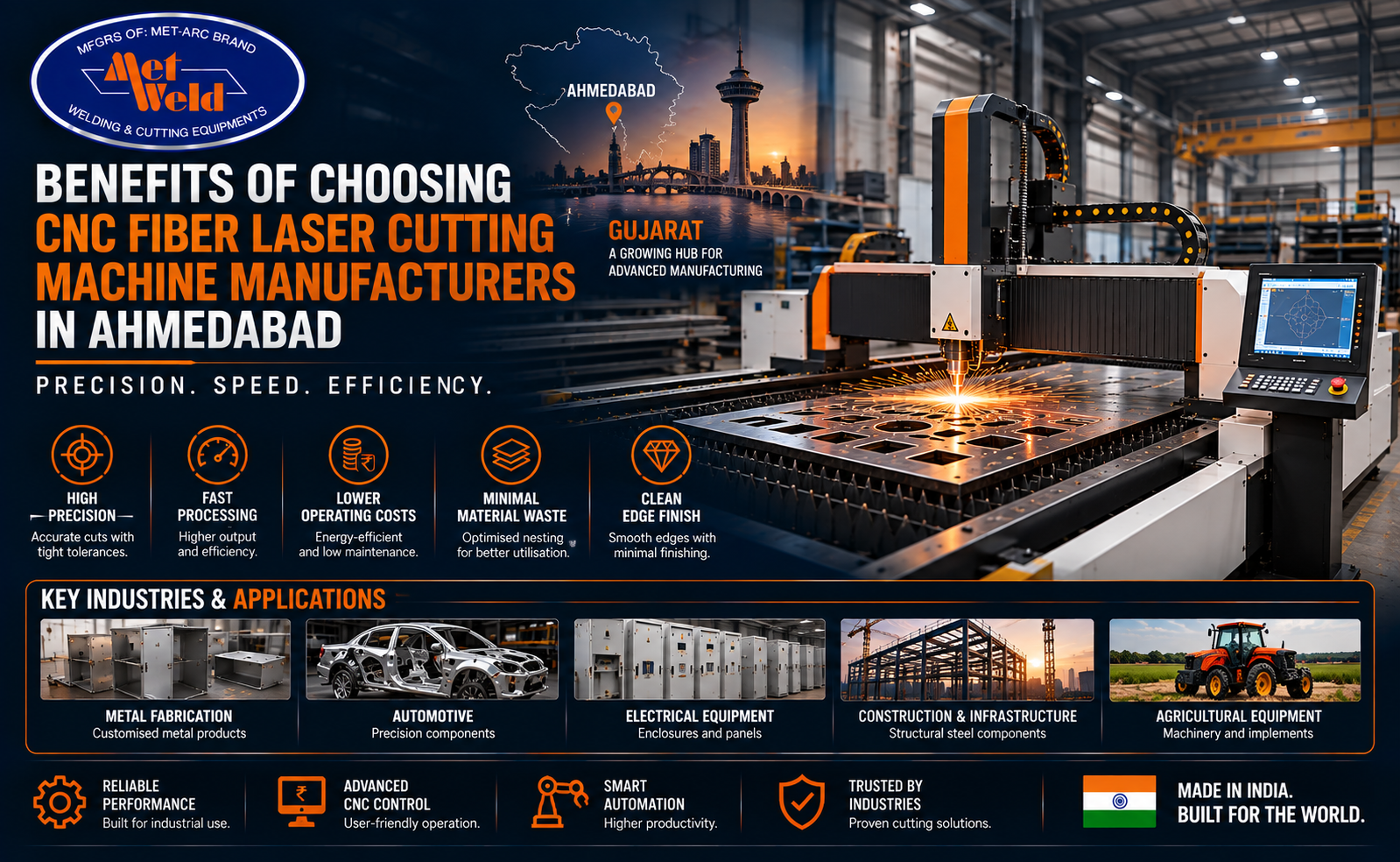
For manufacturers looking for laser cutting machine manufacturers in Gujarat, MetWeld provides machines supported by installation, operator training, maintenance assistance and spare-parts availability.
Its published information also highlights applications across fabrication, automotive, construction, PEB, aerospace, electrical, energy and other industrial sectors.
Choosing a metal-cutting technology requires careful consideration of material, thickness, accuracy, production volume and operating requirements.
Waterjet cutting may be considered for certain industrial applications, but MetWeld’s published product range and technical information focus on CNC fiber laser and plasma cutting rather than waterjet technology.
For manufacturers working with stainless steel, mild steel, aluminium, brass, copper and titanium, MetWeld’s CNC laser cutting machines provide a documented solution focused on precision, speed, repeatability and efficient metal processing.
The right choice ultimately depends on the specific production requirement. Evaluating material type, thickness, required accuracy, machine capacity and production volume can help manufacturers select a cutting solution that supports consistent quality and efficient manufacturing.