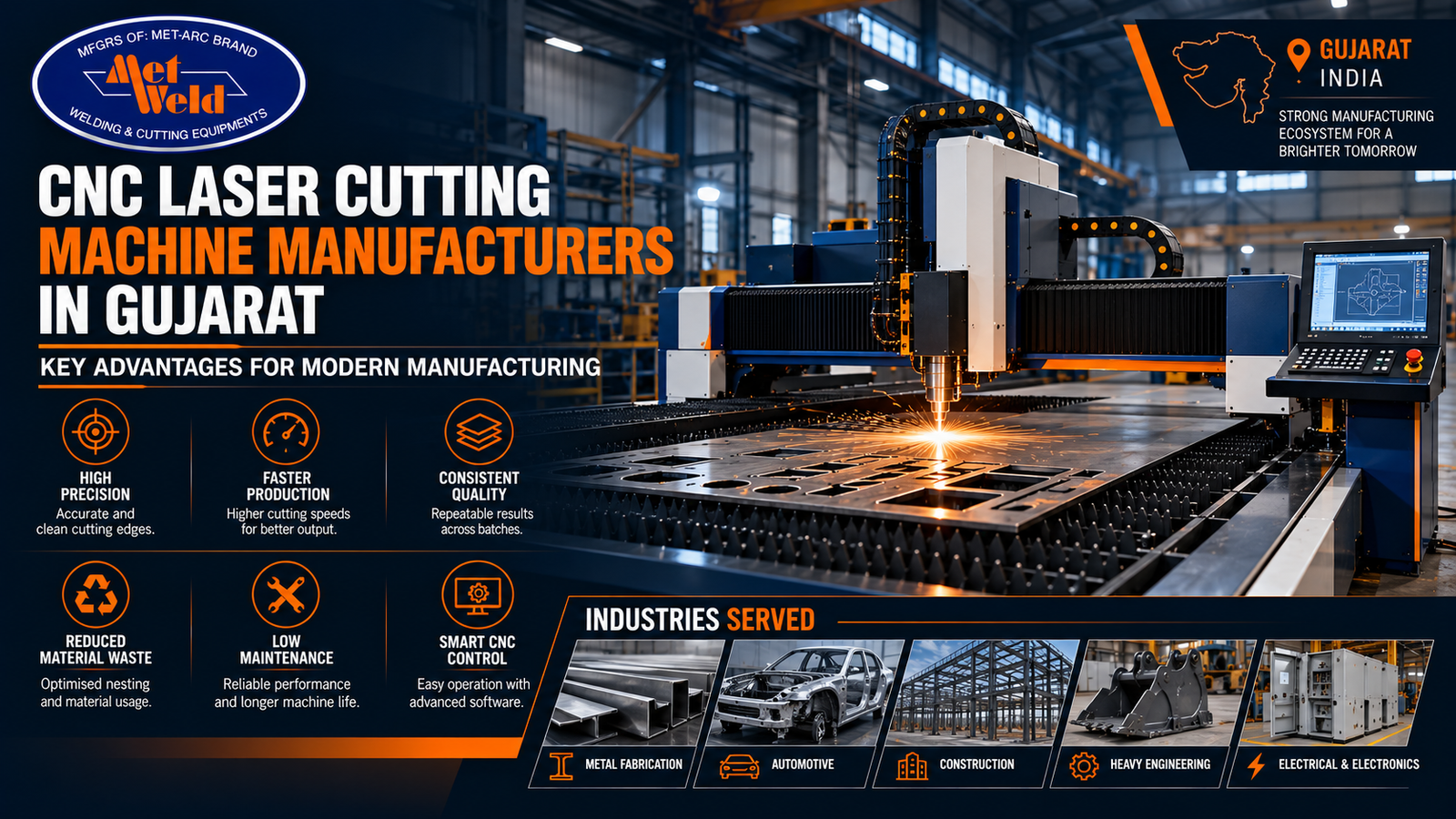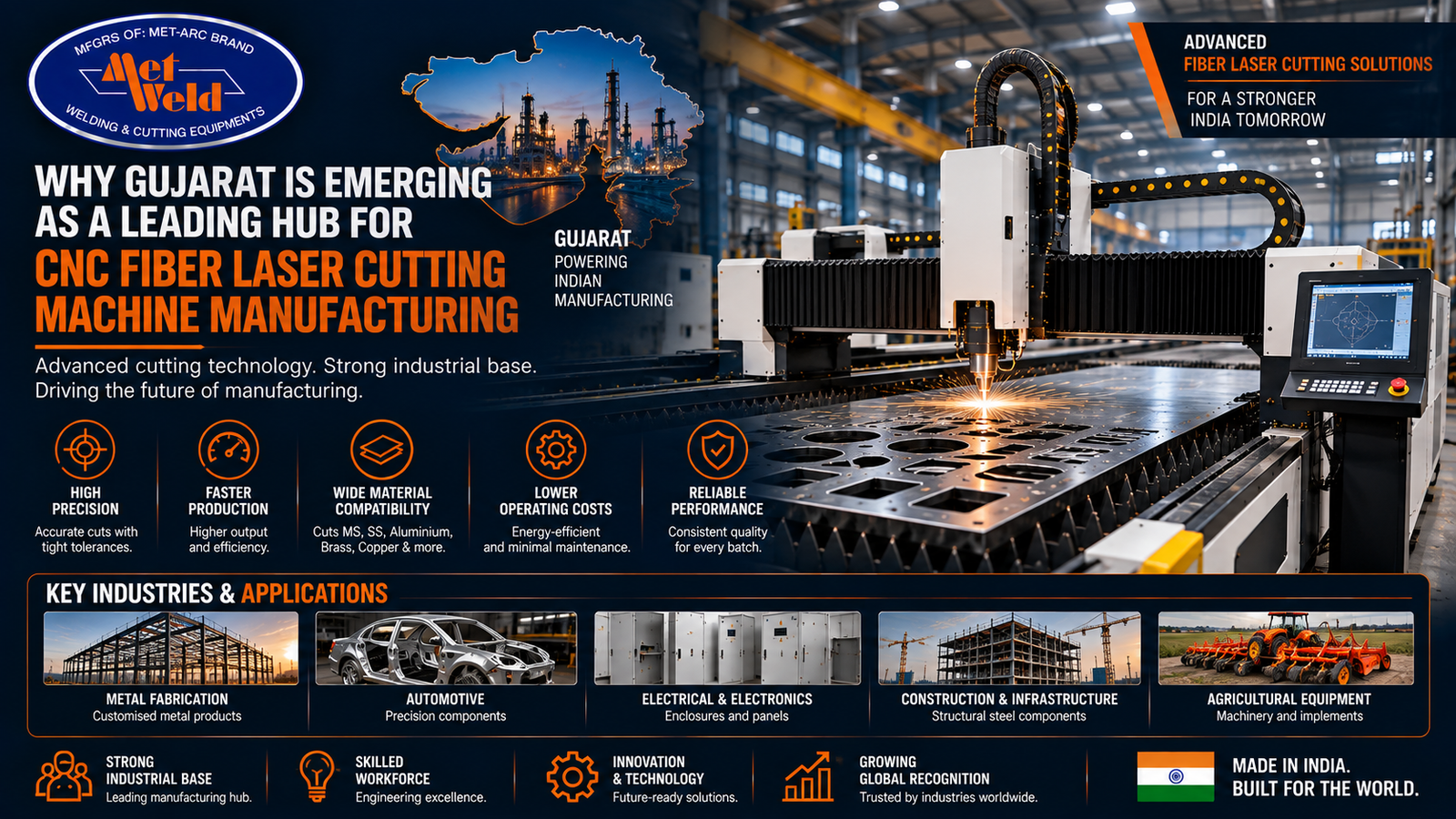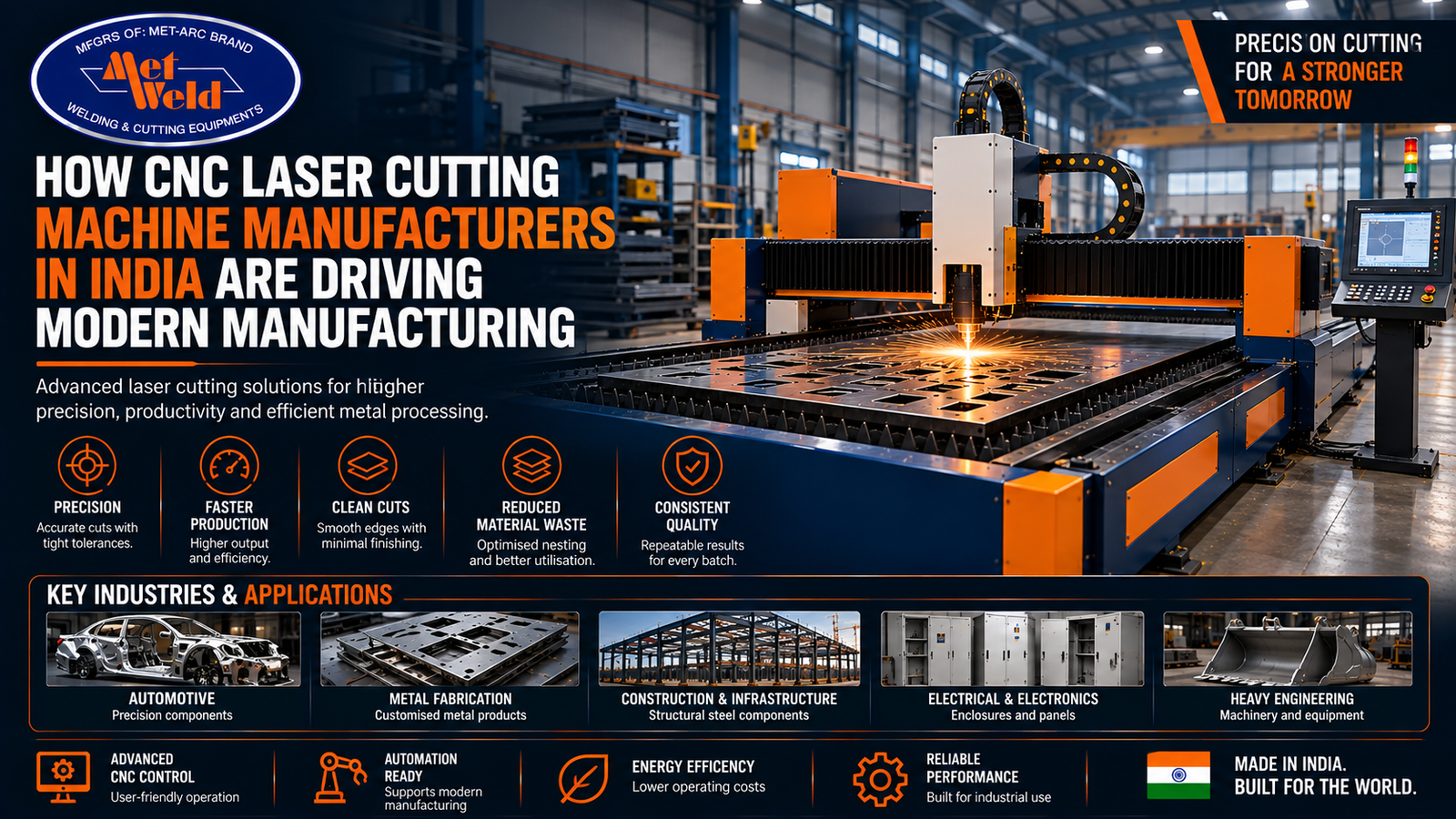
Heavy fabrication, structural steel work, construction, engineering, infrastructure and industrial equipment manufacturing often require thick metal plates to be converted into accurate components before welding, forming or assembly. Cutting these materials consistently requires suitable process control, stable torch movement and parameters matched to the material.
A CNC plasma cutting machine for thick metal provides a controlled, automated method in which digital drawings are translated into programmed torch paths. Metweld CNC plasma cutting solutions.
can be evaluated according to plate dimensions, material, thickness, production volume and cutting requirements. CNC operation reduces dependence on manual marking and helps manufacturers repeat established profiles across production batches.
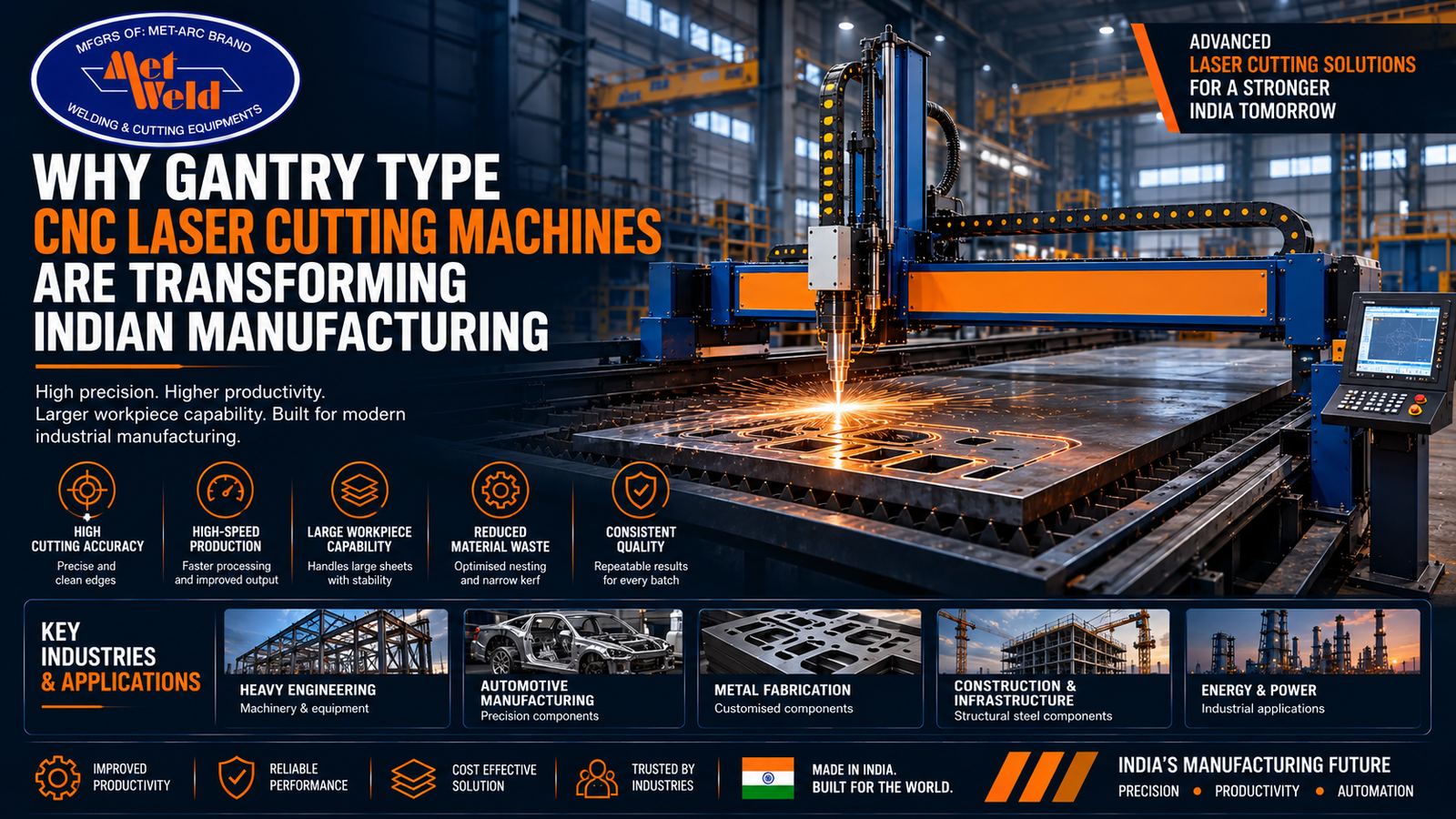
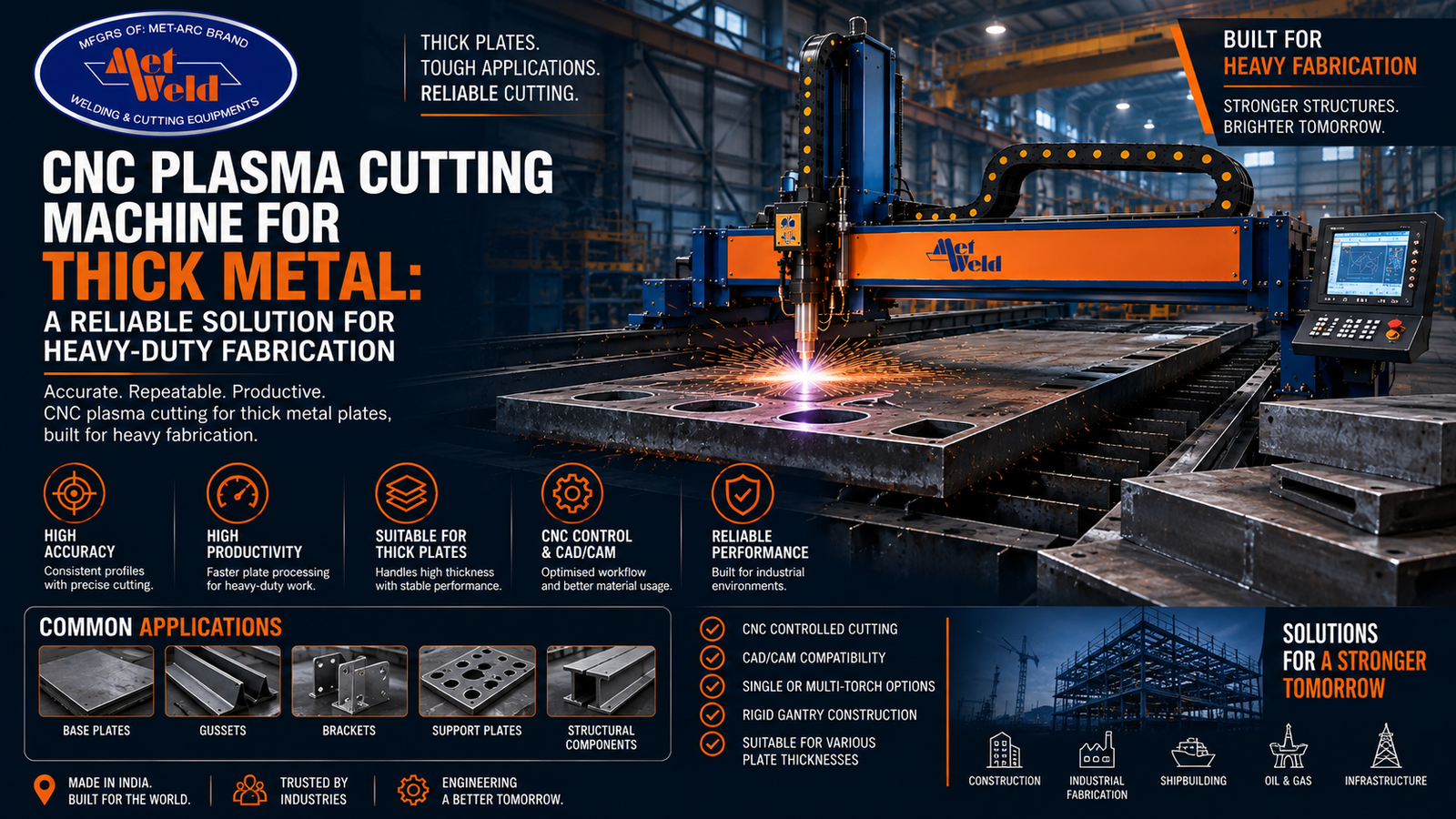
A CNC plasma cutting machine combines a plasma torch with computer numerical control. The controller interprets programmed geometry and directs the torch along defined coordinates. The plasma arc melts and removes electrically conductive metal, creating the required profile from a plate or suitable workpiece.
Plasma cutting can be applied to mild steel, stainless steel and other electrically conductive metals when the selected process and equipment are appropriate. The machine should always be matched to the actual material and thickness range being processed.
CNC-controlled movement follows programmed paths instead of relying on manual torch guidance. This can help reproduce component profiles consistently and simplify downstream welding, assembly and fabrication. Accuracy also depends on machine rigidity, torch setup, programming and process conditions.
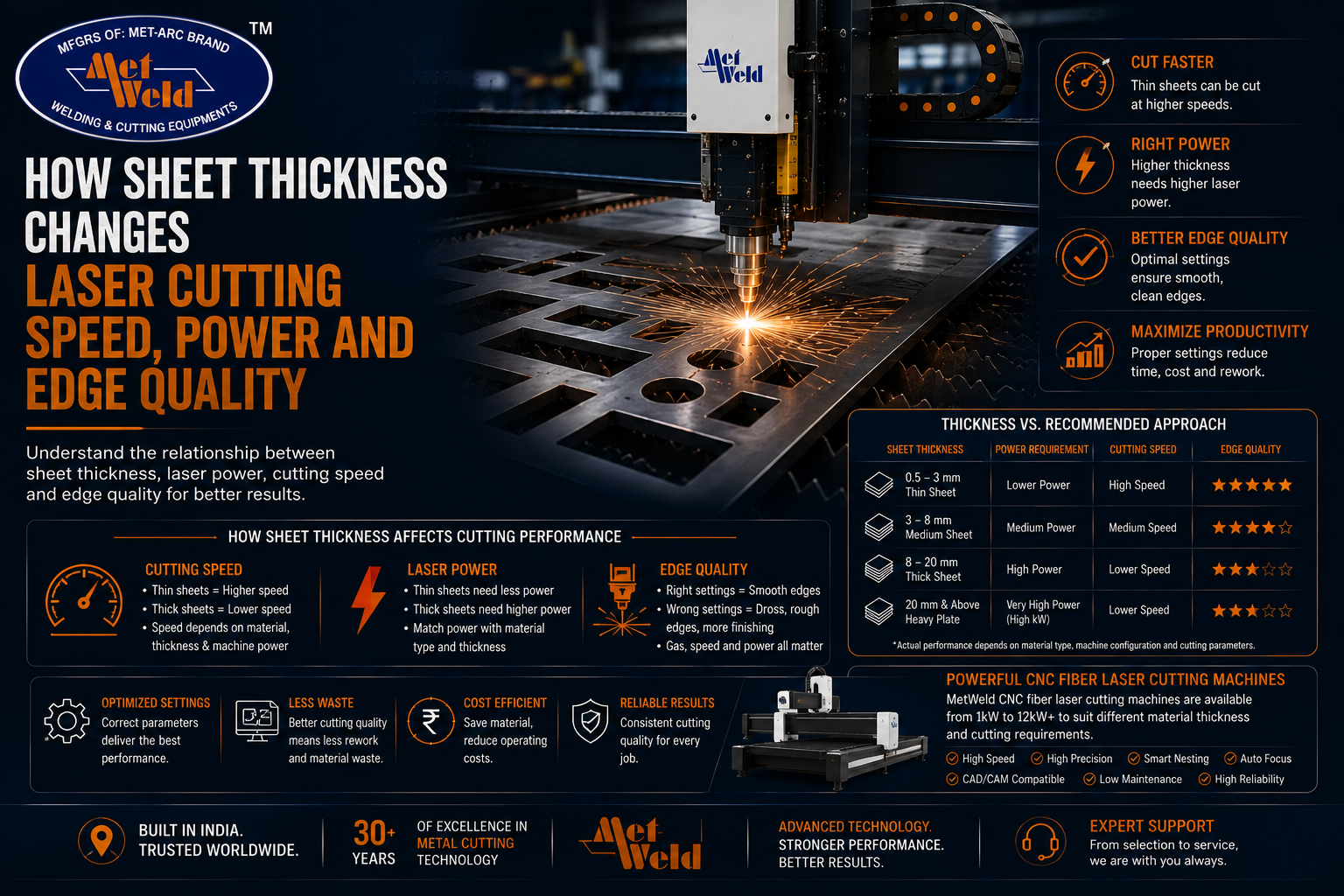
Plasma technology can be useful for thick plate cutting when the power source, consumables and process parameters are appropriate for the material. Thickness, material type, torch condition and cutting settings all affect performance, so equipment should be selected around the actual production range.
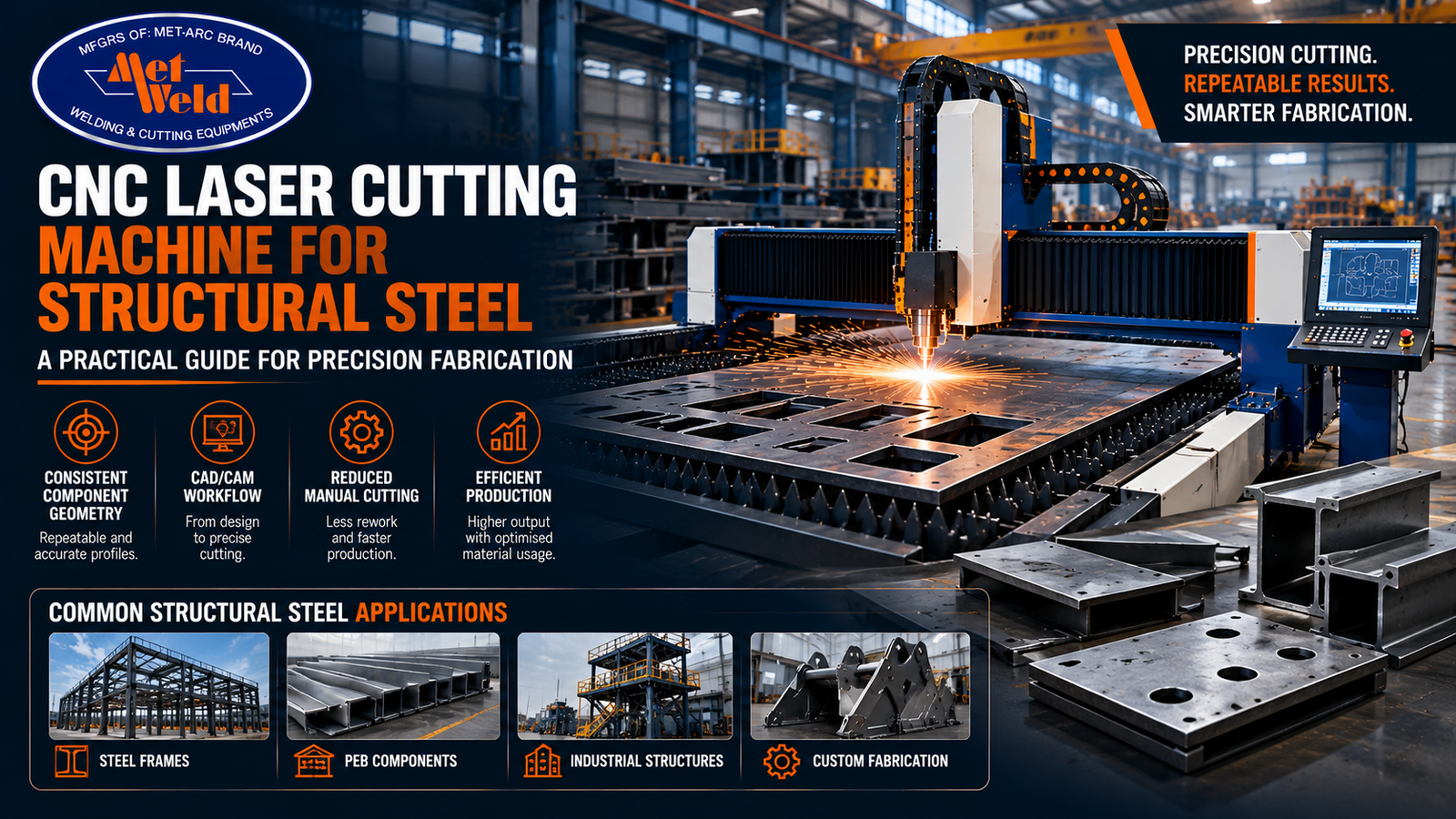
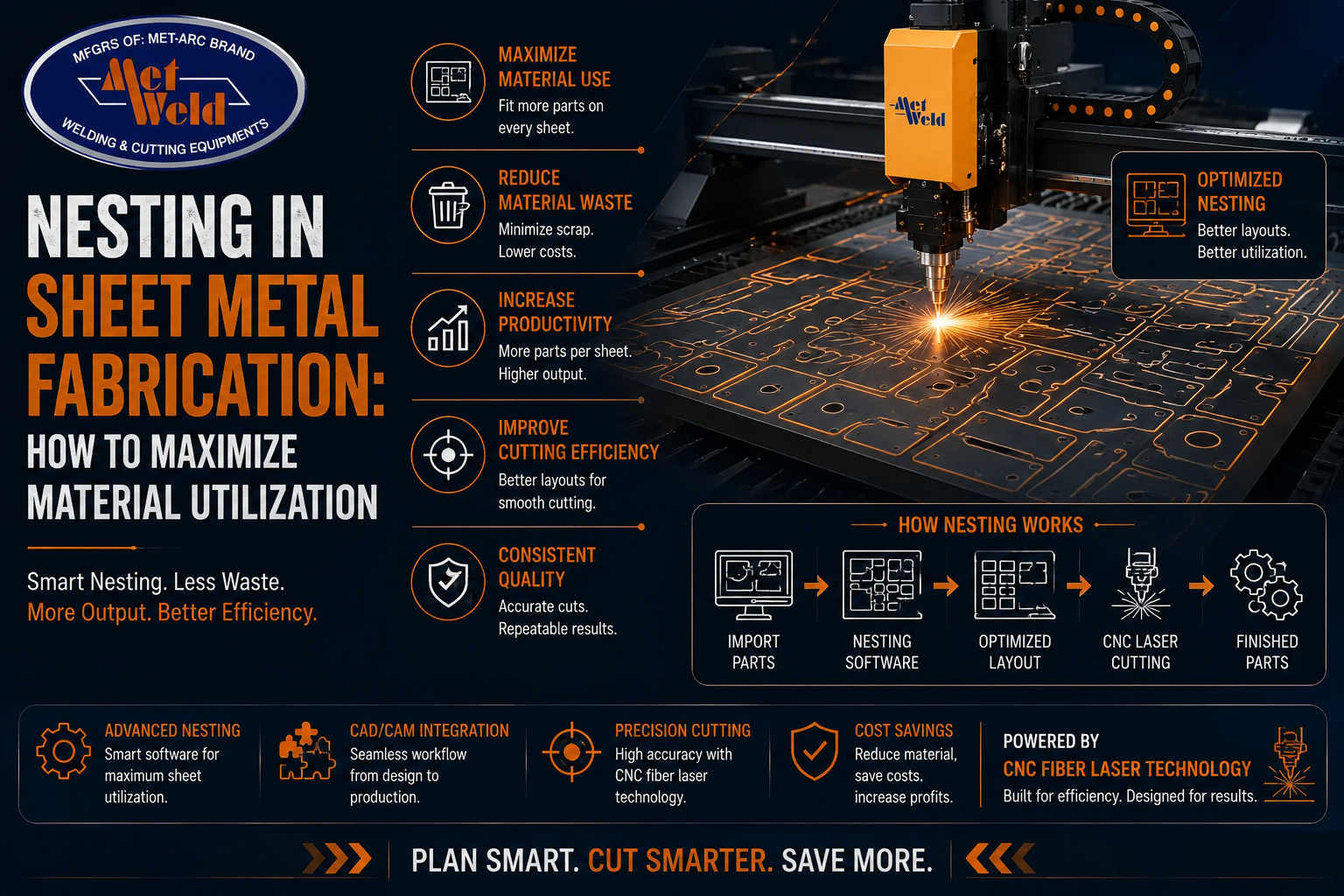
CAD/CAM programming reduces manual marking and provides reusable digital files for recurring jobs. Nesting can arrange several profiles on a plate before cutting, helping improve material utilization and reduce avoidable scrap. Automated torch movement creates a more systematic design-to-cutting workflow.
CNC automation supports repetitive cutting by maintaining programmed paths across production batches. For higher-volume work, multiple-torch configurations may also be considered where simultaneous cutting suits the component mix. Productivity should be judged across setup, handling, cutting and downstream operations.
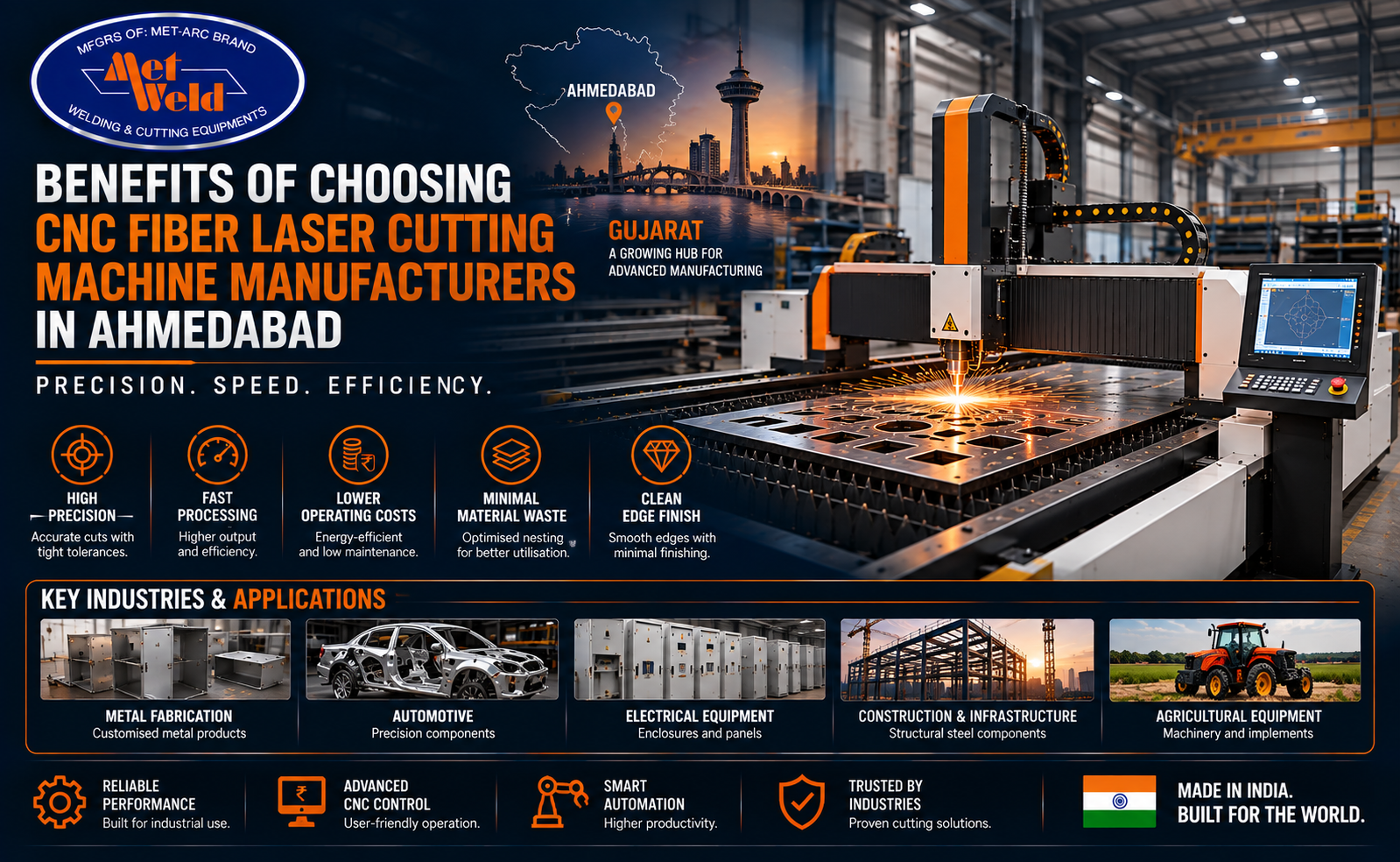
Thick-metal plasma cutting is relevant to fabrication operations that convert steel plate into structural and industrial components. Structural steel manufacturers may use programmed cutting for base plates, gussets, brackets, support plates and other members before welding. Heavy equipment and industrial machinery manufacturers can similarly produce machine frames and fabricated assemblies from prepared profiles.
The technology also supports construction, infrastructure, agricultural equipment, engineering fabrication, automotive and heavy-vehicle components, energy projects and other metal-intensive applications. industrial plasma cutting equipment should be assessed against the component mix, plate dimensions and production requirements rather than treated as a one-size-fits-all solution.
Begin with the thickness range the business cuts regularly. Select equipment around routine plate thicknesses, component geometry and desired edge quality. Maximum advertised capacity alone does not describe how efficiently a system will perform across everyday jobs.
Material affects the cutting process because different metals respond differently to plasma conditions. Mild steel and stainless steel are common conductive materials, but compatibility should be confirmed for the specific machine and process. Define the material mix before comparing configurations.
Plasma power, material thickness, cutting speed, torch height, consumable condition and process settings work together. A suitable system should provide the process range required for the materials being cut. Operators should use manufacturer-recommended parameters rather than generic settings.
CNC controls, CAD/CAM compatibility and nesting should form an integrated digital workflow. Easy program transfer, reusable job files and organized nesting can reduce preparation effort and support repeatability across batches.
Low-volume fabrication with varied components may favor a flexible configuration, while higher-volume production can justify features such as multi-torch cutting. The choice depends on workload, component mix, plate size, required throughput and handling capacity.
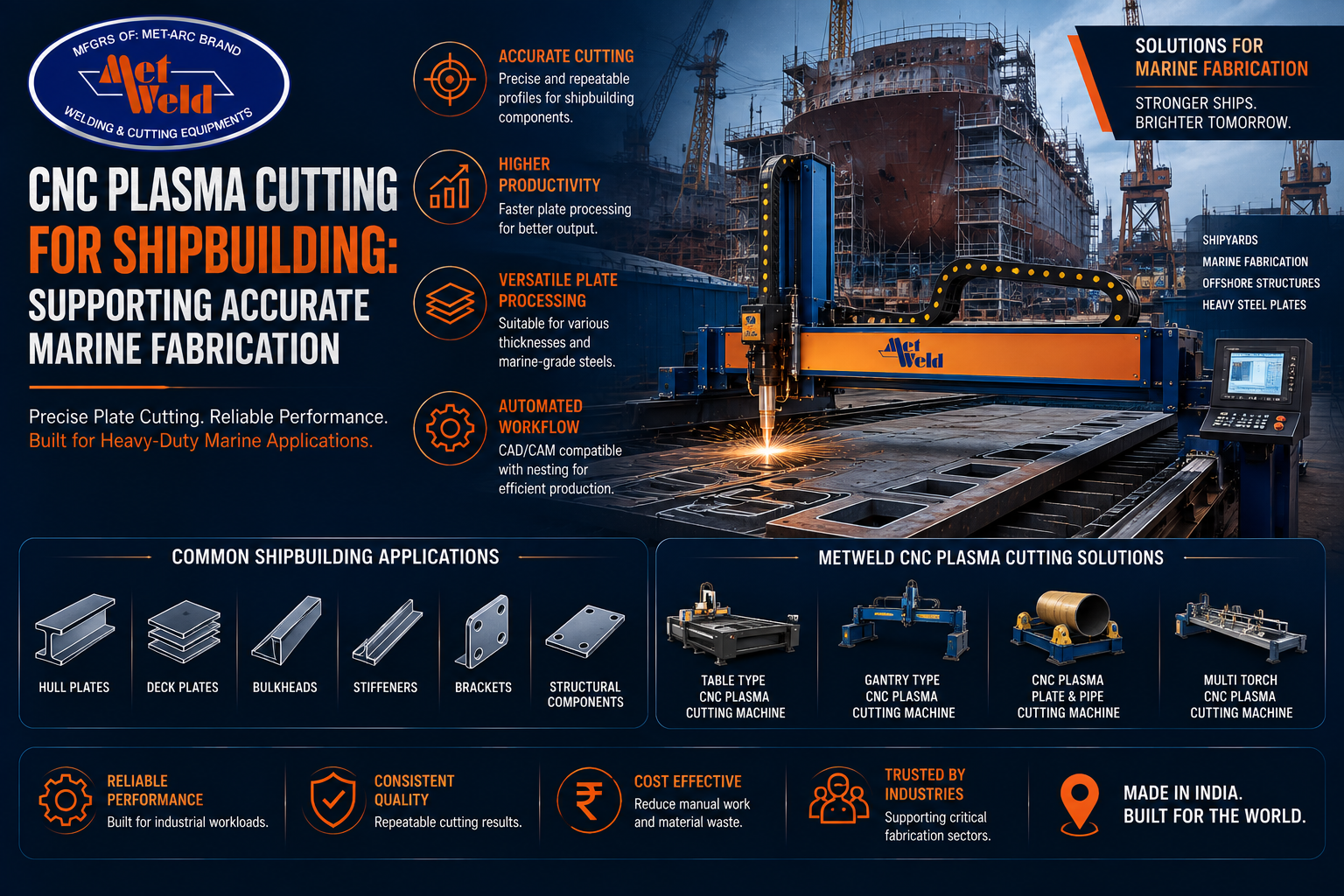
Metweld manufactures CNC cutting equipment for industrial applications and offers configurations for plate-processing requirements. Relevant systems include table-type CNC plasma cutting machines, gantry-type configurations, plate-and-pipe CNC plasma cutting systems and multi-torch CNC cutting machines. Manufacturers can review CNC plasma machine configurations.
These configurations can be evaluated according to plate dimensions, material, thickness, production volume and cutting method. A plate-and-pipe system may suit operations processing both flat plate and pipe, while multi-torch configurations can be considered where simultaneous cutting fits the workflow.
A reliable workflow begins before the torch starts. Plates should be prepared and positioned appropriately, while CAD/CAM programs should be checked for correct dimensions and cutting paths. Nesting can organize components efficiently before the cutting job is released.
Metweld combines manufacturing experience with CNC plasma cutting, laser cutting and welding automation for industrial fabrication applications. Its CNC cutting portfolio includes different machine configurations, allowing manufacturers to assess equipment according to material, plate size, thickness and production requirements.
For a business considering a thick plate cutting machine, evaluation should focus on how the equipment fits the complete workflow. Metweld’s range provides a basis for comparing configurations while considering cutting process, automation, production volume and component requirements.
A CNC plasma cutting machine for thick metal can provide a controlled and repeatable approach to thick plate fabrication when the equipment is matched correctly to the application. CNC plasma cutting solutions can combine programmed movement with suitable process conditions to support accurate profiles, organized production and efficient material use.
The right machine should be selected by reviewing material type, required thickness range, plate dimensions, working area, production volume, CNC controls, nesting and torch configuration together. For manufacturers evaluating industrial cutting technology, a workflow-based approach can help identify a system that supports consistent thick-metal fabrication and practical production efficiency.