Industrial manufacturers often need to cut large quantities of metal plates into specific shapes and dimensions. Industries involved in structural steel production, heavy machinery, construction equipment, and large-scale metal processing may handle multiple cutting jobs every day.
When production volumes increase, completing every cutting operation individually can create bottlenecks. Manufacturers may need equipment that can handle repetitive cutting tasks more efficiently while maintaining the required component dimensions.
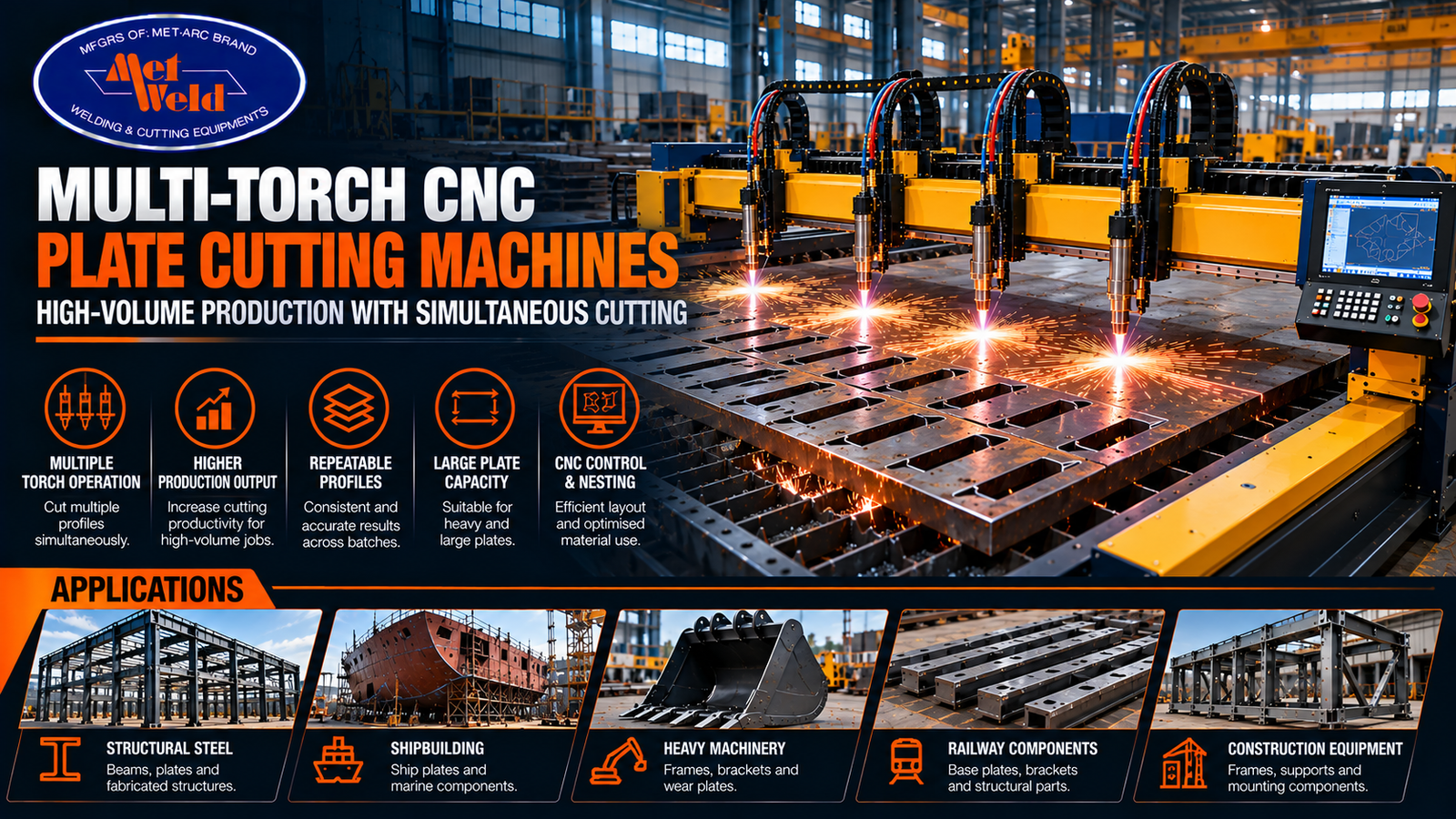
Multi-torch CNC plate cutting machines are designed to support cutting operations using multiple torches within a configured machine system. Depending on the machine design and cutting process, multiple torches can help increase output by processing several profiles or cutting paths during the same operating cycle.
For businesses with suitable production requirements, this technology can help improve cutting throughput and organise plate-processing operations more effectively.
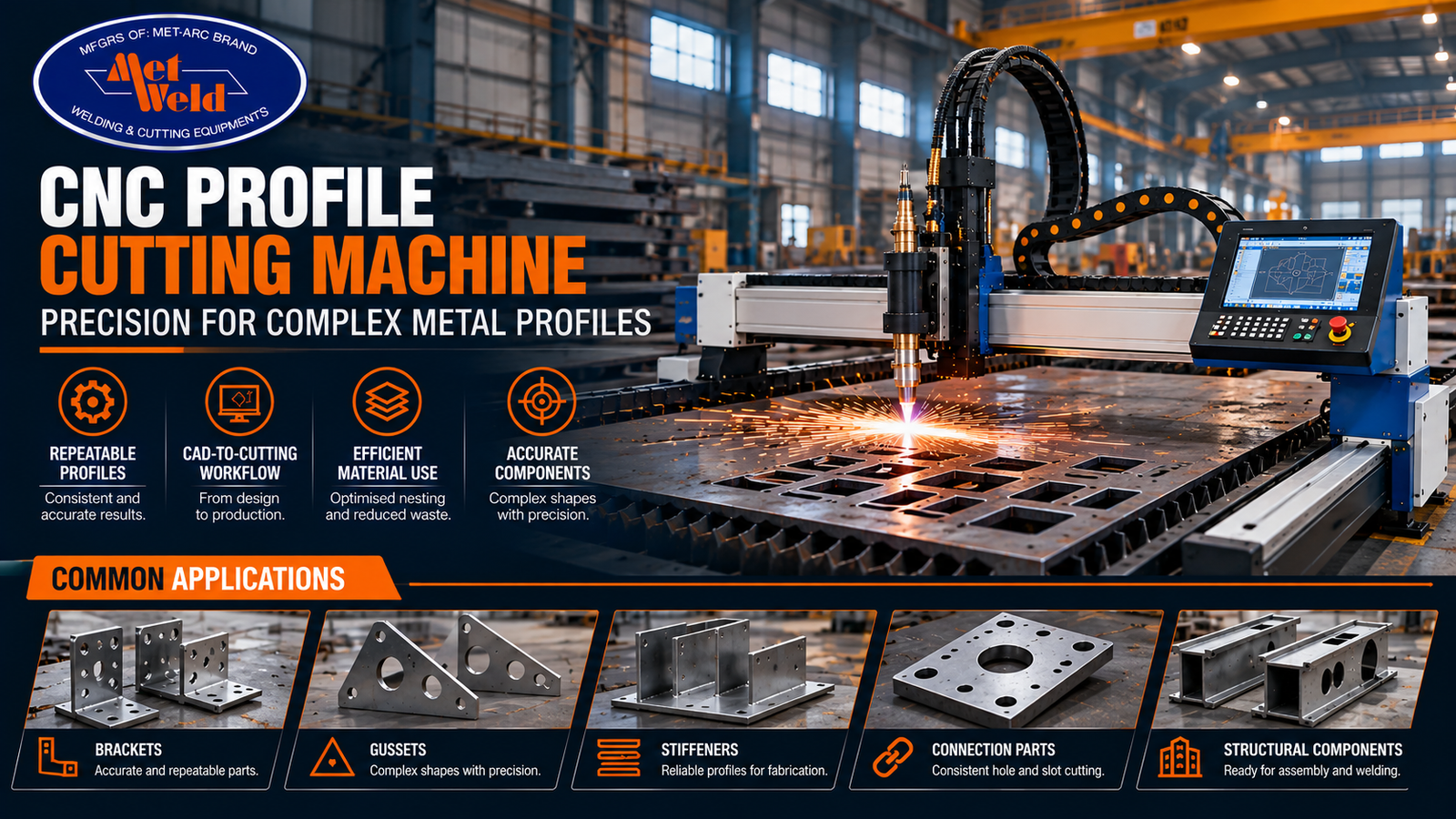
A multi-torch CNC plate cutting machine is an industrial cutting system equipped with multiple cutting torches controlled through a CNC-based arrangement.
The CNC system manages programmed cutting paths, while the machine structure positions the torches over the material. Depending on the configuration, the torches may cut repeated profiles or separate components from the same plate.
The actual operating arrangement varies by machine. Torch movement, independent control, cutting processes, and the number of simultaneously operating torches depend on the equipment specification.
A suitable industrial CNC plate cutting machine can help manufacturers process repeated component designs while reducing the time required for selected high-volume cutting jobs.
Manufacturers that regularly produce identical or similar components may benefit from multiple cutting torches.
When the machine configuration allows several cutting operations to take place simultaneously, it can reduce the overall time needed to complete suitable jobs compared with performing each operation separately.
The productivity improvement depends on the cutting layout, component geometry, material thickness, torch configuration, and machine operating parameters.
Large metal plates may contain numerous component profiles. Planning the cutting layout carefully helps manufacturers organise the sequence of operations and use the available material efficiently.
Multi-torch equipment can support suitable layouts where multiple cutting paths can be executed without torch interference or other operational conflicts.
Effective planning is important because not every component arrangement can be processed simultaneously. The plate layout must match the machine’s capabilities and the required cutting sequence.
Repeated production jobs often involve similar cutting parameters and component arrangements. A CNC-based system allows manufacturers to prepare and reuse verified cutting programs where appropriate.
This can reduce repetitive programming and setup effort for recurring jobs.
Operators still need to verify the cutting program, check the material placement, select suitable process settings, and monitor machine operation.
Using programmed cutting operations makes it easier to organise production according to component quantities, plate dimensions, and delivery schedules.
Manufacturers can group suitable repeat jobs and plan machine utilisation around their production requirements.
A properly managed multi-torch CNC cutting system can support a more predictable workflow when combined with suitable nesting, material handling, and quality-control practices.
Multi-torch plate cutting equipment can be useful in industries that regularly process large quantities of metal components. The suitability of the machine depends on the material, thickness, cutting process, and component geometry.
Structural steel manufacturers produce plates and profiles for industrial buildings, supporting structures, and infrastructure-related applications.
Where designs include repeated components, multi-torch cutting may help increase output and improve the consistency of production operations.
Manufacturers of heavy construction equipment may process metal plates for frames, supports, mounting components, and other structural parts.
A suitable multi-torch system can help prepare repeated profiles when the cutting layout and machine configuration support simultaneous operations.
Heavy machinery manufacturing often involves plate components with defined dimensions and repeated shapes. CNC plate cutting helps prepare these parts according to engineering drawings.
Multi-torch configurations may be appropriate for higher-volume jobs involving multiple similar components.
Large metal structures may require the cutting of numerous plate components. Multi-torch equipment can support selected production layouts where the required cutting paths and plate dimensions are compatible with the system.
Industrial fabrication businesses may handle customer orders that involve repeated plates, brackets, and other profiles. Multi-torch cutting can be considered when the volume and geometry justify using several torches.
Multi-torch CNC plate cutting systems may use different cutting processes depending on their design and intended application.
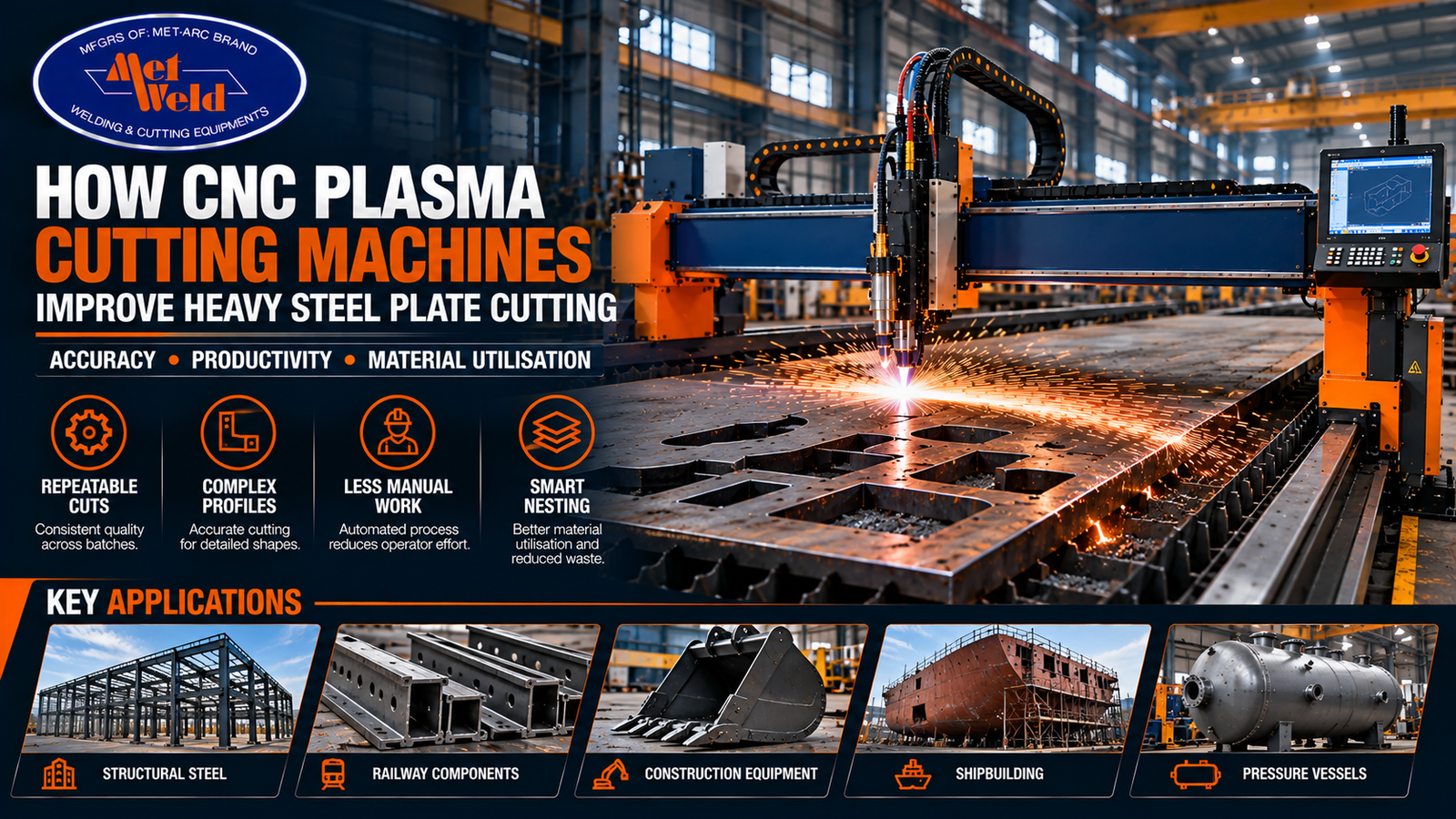
Plasma cutting uses a plasma arc to melt electrically conductive metal, while a gas stream removes the molten material from the cut.
Multi-torch plasma systems can be suitable for selected plate-cutting applications where the material, thickness, and required edge quality match the equipment’s capabilities.
Oxy-fuel cutting uses a fuel gas and oxygen to cut suitable metals, commonly carbon steel. It is often considered for thicker steel plate applications, subject to the machine configuration and material requirements.
The appropriate process depends on material grade, thickness, required cutting quality, production volume, and operating costs.
Manufacturers should confirm the exact process supported by the selected multi-torch CNC plate cutting machine rather than assuming every model includes both cutting technologies.
Running several torches does not automatically guarantee better material utilisation. A carefully designed plate layout is essential for achieving efficient production.
Nesting software helps arrange component profiles on a plate while considering spacing, cutting kerf, plate boundaries, and the number of parts required.
For multi-torch applications, the layout must also account for torch spacing, cutting sequence, machine movement, and possible interference between cutting paths.
An effective layout can help manufacturers:
The best layout balances material savings, cutting time, component quality, and safe machine operation.
Choosing industrial cutting equipment requires an assessment of current production needs and future capacity requirements.
Confirm the number of torches available and how they operate. Check whether torch movement and cutting paths can be configured for the intended production layout.
The working area should accommodate the plate sizes used in regular production. Consider both the machine’s effective cutting area and the practical arrangements for loading and unloading material.
Check the machine’s supported material grades, thickness range, and cutting process. Ensure that these specifications align with the components being manufactured.
Estimate the quantity of components required per shift or production cycle. Multi-torch technology is most useful when the workload and cutting layout justify its capabilities.
Review the programming system, supported design files, nesting options, and process-control features available with the machine.
Multiple cutting torches require suitable operating procedures, ventilation, fire prevention, inspection, and maintenance. Confirm the availability of operator training, technical assistance, and replacement parts.
A detailed evaluation helps businesses select equipment that suits their actual workflow rather than focusing only on the number of torches.
Metweld lists multi-torch CNC plate cutting machines within its industrial CNC cutting equipment range.
Businesses evaluating this type of machinery should identify their typical plate dimensions, material thickness, component designs, production quantities, and preferred cutting process before selecting a configuration.
It is also important to confirm the available torch arrangements, control system, supported processes, machine capacity, and service requirements directly with the manufacturer.
Explore Metweld’s CNC plate cutting machine range to assess the available equipment for your production needs.
Multi-torch CNC plate cutting machines can help manufacturers increase output for suitable high-volume cutting jobs by enabling multiple cutting operations within a configured machine system.
Their effectiveness depends on the torch arrangement, cutting process, component geometry, material thickness, nesting strategy, and production requirements.
By carefully evaluating these factors, manufacturers can determine whether multi-torch equipment is a practical investment for improving plate-cutting productivity and organising repetitive manufacturing operations.