For manufacturers evaluating bevel laser cutting solutions, the important consideration is how the machine’s cutting head, motion system, software and laser configuration work together for the intended material and component requirements.
the important consideration is how the machine’s cutting head, motion system, software and laser configuration work together for the intended material and component requirements.
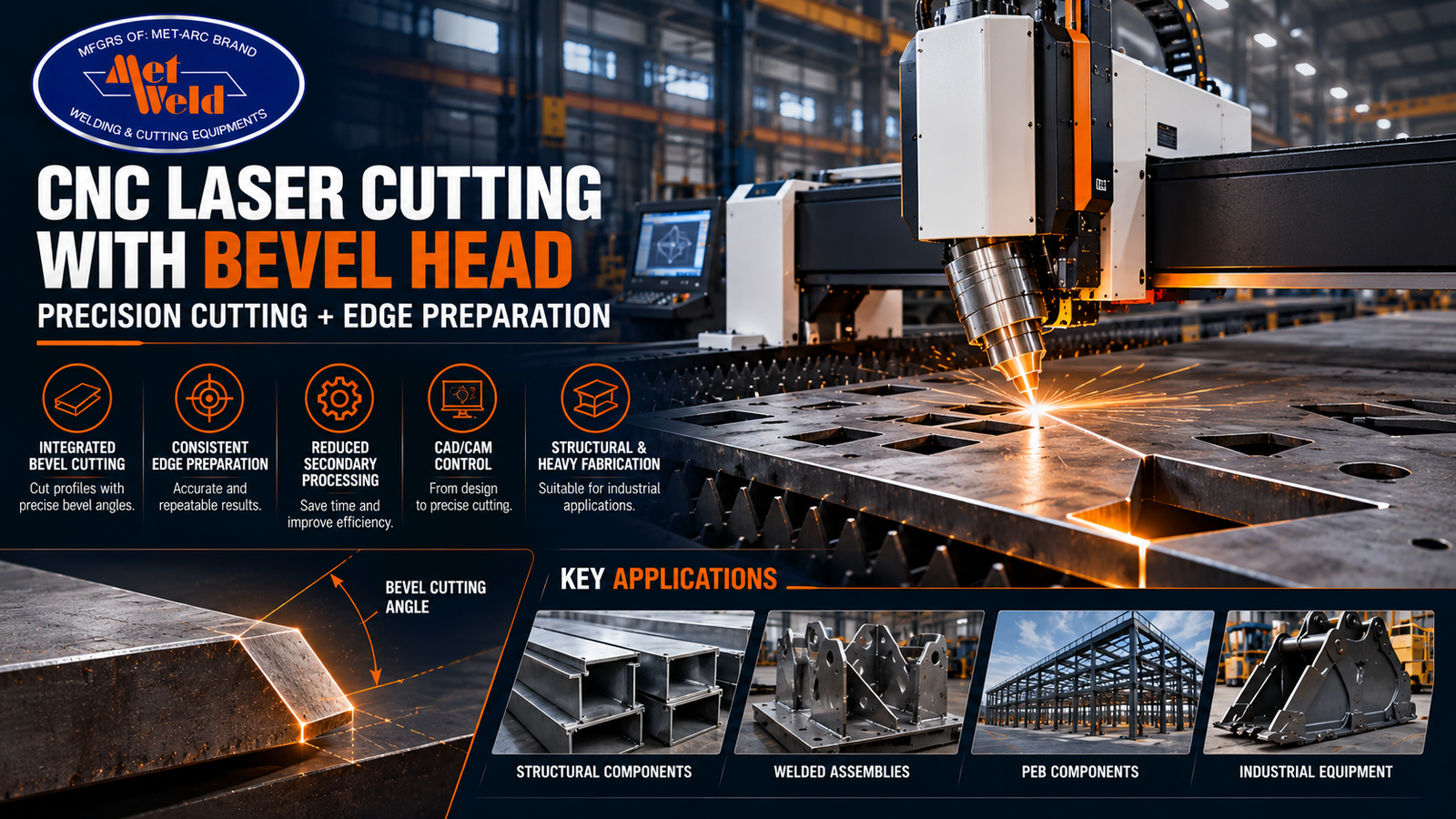
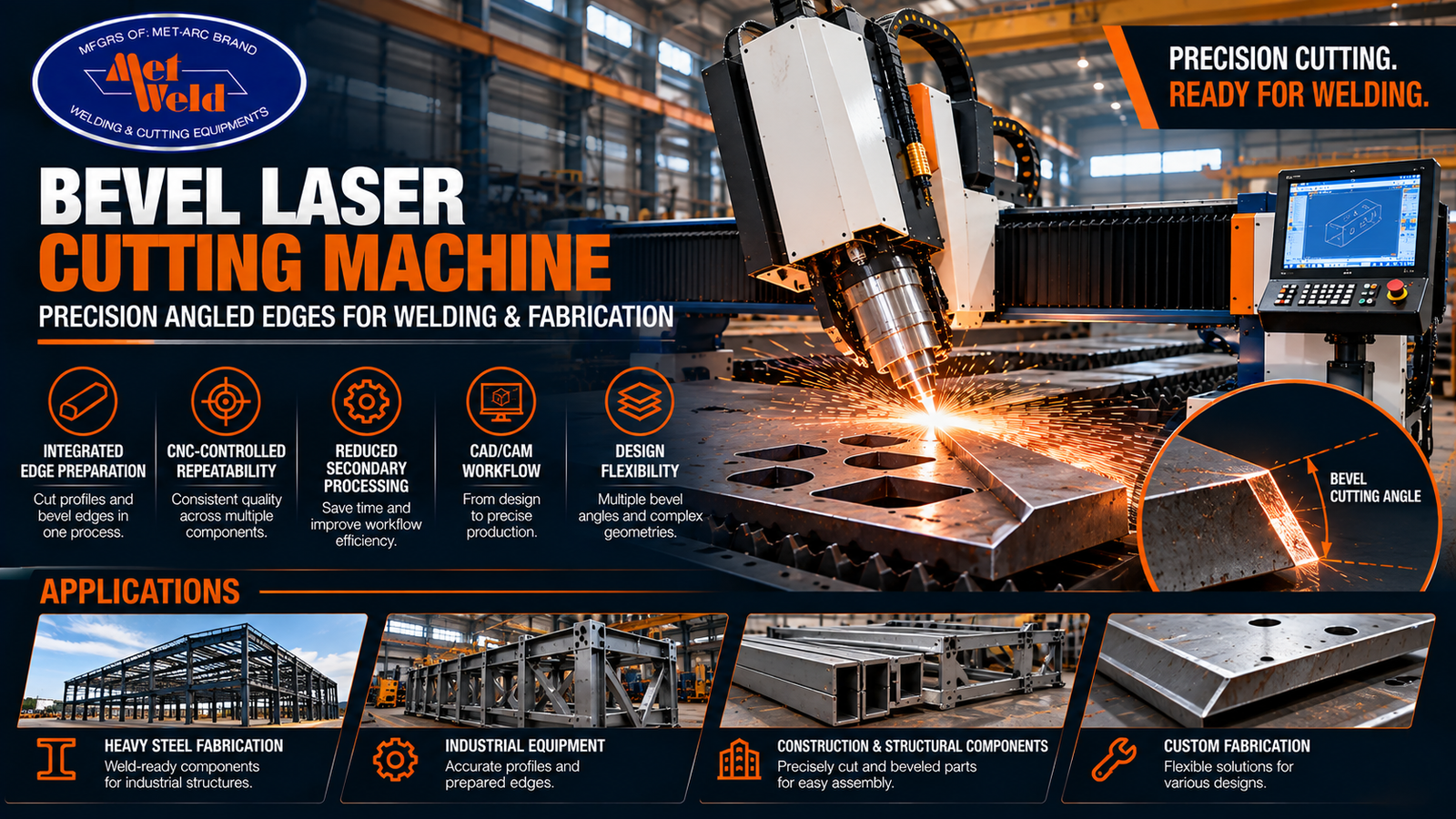
A bevel laser cutting machine is a CNC-controlled laser cutting system capable of producing angled edges on compatible metal components. A conventional laser cut typically produces a profile that is approximately perpendicular to the material surface. A bevel-capable system adds controlled angular movement so the cutting path can create a specified edge orientation.
This capability is particularly relevant when a component will later be welded. Instead of producing only the external profile, the cutting process can incorporate an angled edge where the design requires one.
The objective is not simply to make an angled cut. It is to produce that geometry in a controlled and repeatable way as part of a broader fabrication workflow.
Bevel preparation is commonly associated with welded joints where edge geometry needs to provide suitable access and space for weld deposition. The required preparation depends on the joint design, material thickness, welding method and engineering specifications.
Traditionally, a component may be cut first and then moved to another workstation for grinding, milling or mechanical bevel preparation. For suitable production requirements, integrated laser bevel cutting can bring these stages closer together. This can reduce handling and create a more digitally controlled sequence.
Once the geometry and process have been validated, the CNC program can be reused to maintain consistency across batches.
A single-sided bevel removes material from one side of an edge to create an angled surface. It can be used where the component design specifies a particular welding or joining geometry.
Double-sided preparation involves controlled angled geometry on both sides of an edge. This type of application requires careful coordination between programmed geometry, material thickness and cutting-head movement.
Heavy fabrication projects can involve thick steel components that later become part of welded structures, machinery or industrial assemblies. Where engineering drawings specify angled edge preparation, a bevel-capable laser system can integrate cutting and preparation within one programmed process.
Machine bases, supports, structural plates and fabricated equipment components may require specific joint geometries. Bevel laser cutting can be considered where accurate profiles and prepared edges are both part of the production requirement.
Structural and construction fabrication often involves components that must be assembled accurately before welding. Producing the required profile and bevel geometry under CNC control can help make the preparation stage more repeatable.
Job shops regularly handle different drawings, materials and component designs. A flexible bevel cutting system can be valuable when manufacturers need varied edge geometries without adding a separate preparation step for every suitable part.
The primary advantage is the ability to combine profile cutting with certain edge-preparation requirements. Where the application is suitable, this can reduce the number of separate operations between raw material and a weld-ready component.
Because the geometry is programmed, repeated components can be produced using the same digital instructions. This can help reduce variation associated with manually marking or preparing every edge individually.
A bevel-capable system can expand the range of edge geometries available to designers and fabricators. This can be useful when components require specific welding preparation or joining features.
Bevel quality depends on more than the cutting head alone. Material grade, thickness, laser power, assist gas, cutting speed, focal conditions, nozzle selection and machine motion can all influence the final edge.
The cutting head must maintain the programmed orientation accurately through the geometry. For complex parts, software and CNC interpolation are important because multiple axes must be coordinated.
Thermal effects should also be considered. Laser cutting introduces localized heat, and process parameters need to be appropriate for the material and thickness. Consistent results generally require validated cutting parameters rather than relying on a single generic setting.
For this reason, manufacturers should assess sample components and real production requirements when evaluating a laser cutting machine with bevel head rather than making a decision from laser power or maximum angle specifications alone.
Start by defining the actual bevel applications. Identify the materials, thickness range, component dimensions, required angles, edge lengths and expected production quantities.
Next, examine the complete motion and cutting system. The laser source, cutting head, CNC controller, machine structure and software should work together to support the required bevel geometry. Programming should also be practical for the engineering team and operators who will prepare production jobs.
Material handling is also important for large plates and heavy components. The working area and loading arrangement should fit the manufacturer’s production environment.
Finally, evaluate installation, training, maintenance and technical support, because consistent performance also depends on appropriate operating knowledge and service support.
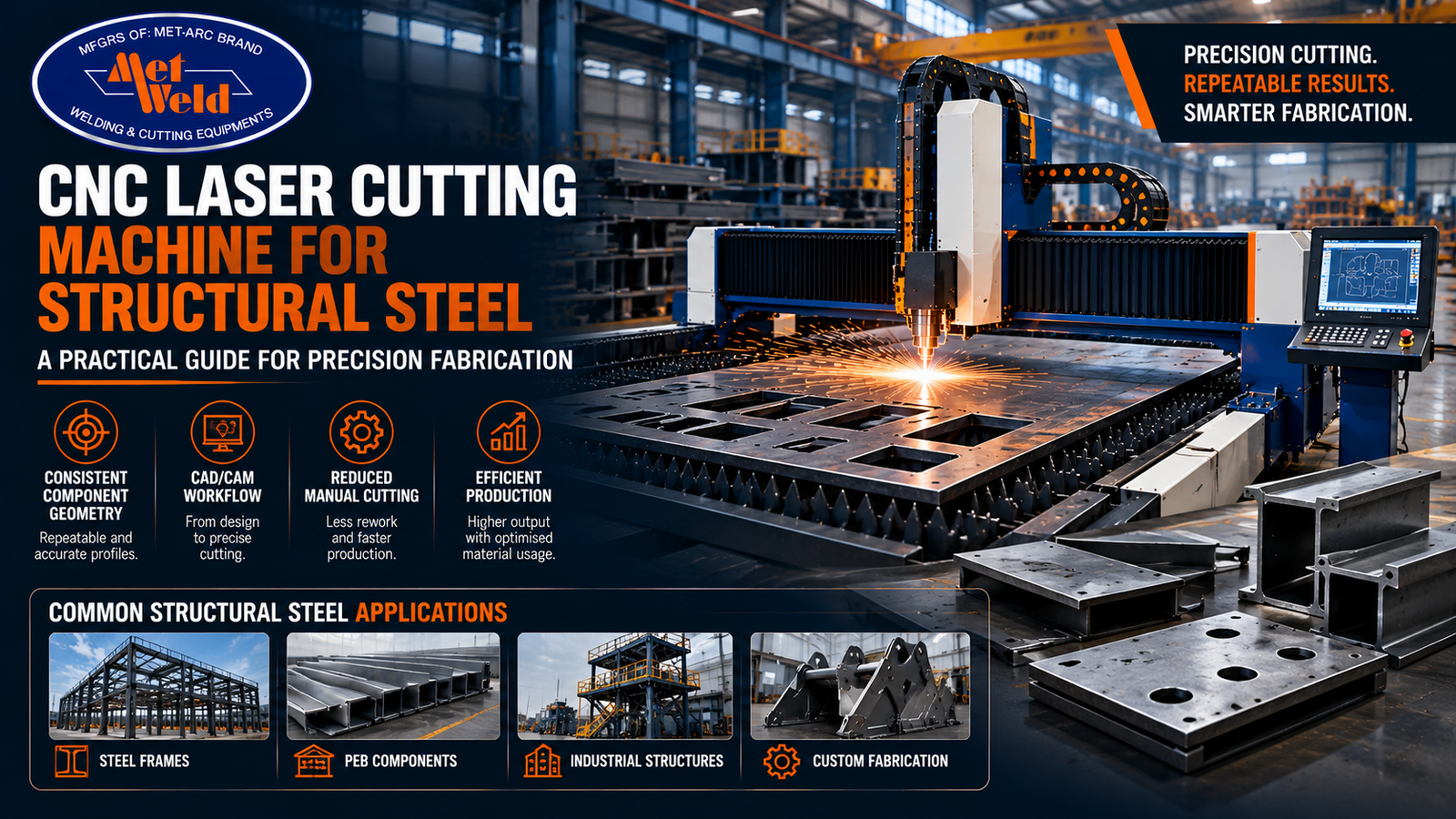
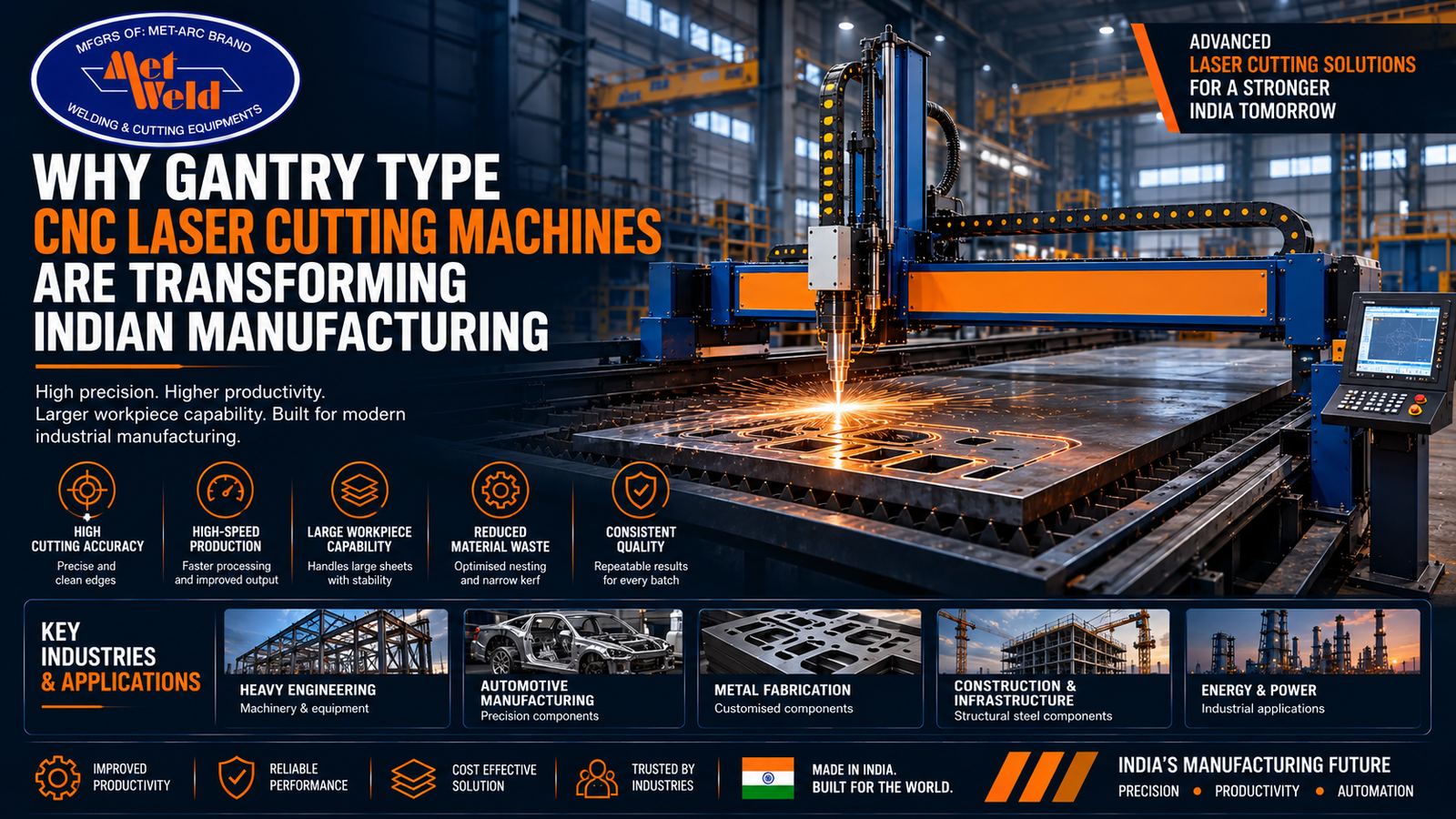
MetWeld is an Indian manufacturer of CNC cutting and welding equipment, with its manufacturing history dating back to 1982. Under the MET ARC brand, the company offers CNC laser cutting machines, CNC plasma cutting systems, welding automation and related industrial solutions. Material thickness, bevel geometry, component size, production volume and downstream welding requirements should all be considered together. MetWeld’s CNC laser cutting technology can be evaluated as part of a broader assessment of the cutting and fabrication workflow.
Material thickness, bevel geometry, component size, production volume and downstream welding requirements should all be considered together. MetWeld’s can be evaluated as part of a broader assessment of the cutting and fabrication workflow.
can be evaluated as part of a broader assessment of the cutting and fabrication workflow.
A bevel laser cutting machine can bring a valuable capability to metal fabrication by combining accurate profile cutting with controlled angled-edge preparation. For suitable components, this approach can reduce secondary processing, improve repeatability and create a more connected workflow from digital design to fabrication.
However, bevel cutting performance depends on the complete machine and process configuration. Material, thickness, angle, geometry, software, cutting parameters and material handling all influence the result. Manufacturers should therefore evaluate actual production components rather than relying on a single machine specification.
For businesses planning to adopt industrial bevel cutting technology, a detailed application review can help determine the appropriate configuration. The goal should be a system that delivers the required edge geometry consistently while fitting naturally into the company’s existing cutting, welding and fabrication workflow.
a detailed application review can help determine the appropriate configuration. The goal should be a system that delivers the required edge geometry consistently while fitting naturally into the company’s existing cutting, welding and fabrication workflow.