Shipbuilding depends on accurate cutting of steel plates and profiles before they move into forming, fit-up, welding and assembly. Hull sections, decks, bulkheads, stiffeners, brackets and other fabricated components often require repeated shapes and controlled dimensions. A reliable cutting process therefore plays an important role in keeping downstream fabrication organized. Metweld CNC plasma cutting solutions
CNC plasma cutting provides a computer-controlled method for converting digital drawings into programmed cutting paths. For shipyards and marine fabricators, this can reduce dependence on manual marking while supporting repeatable plate processing. The machine configuration can be selected according to plate dimensions, material, thickness, production volume and the type of components being manufactured.
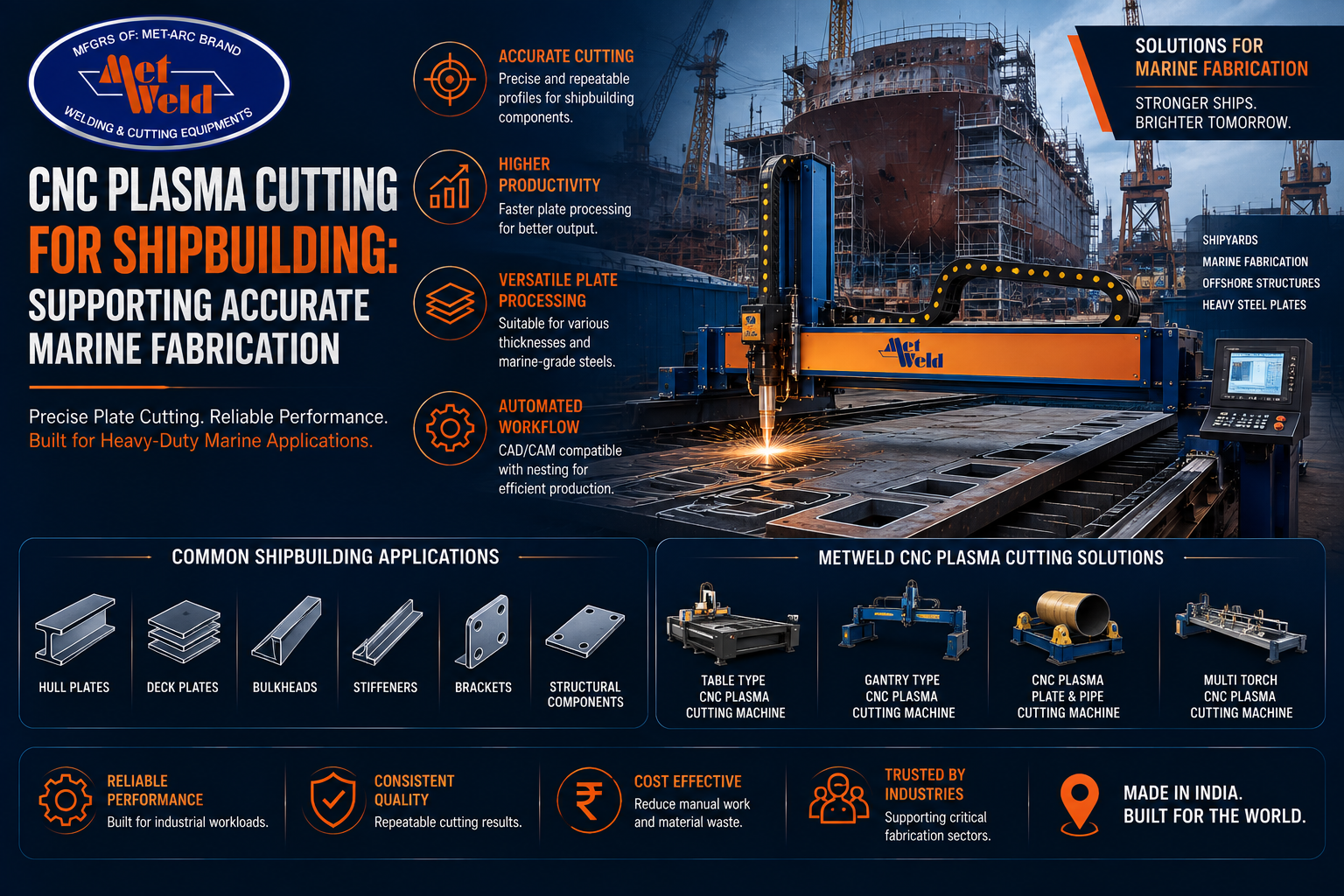
Metweld manufactures CNC cutting equipment for industrial applications, including table-type, gantry-type, plate-and-pipe and multi-torch CNC cutting systems. These configurations can be evaluated for shipbuilding work according to the required cutting process and production workflow.
CNC plasma cutting for shipbuilding uses computer numerical control to guide a plasma torch along programmed coordinates and produce component profiles from electrically conductive metal. Digital drawings can be converted into cutting paths through CAD/CAM software, allowing controlled torch movement.
This approach suits shipyards producing many steel parts with repeatable shapes.
For production-oriented shipbuilding, the value of CNC cutting comes from integrating design data, nesting, plate processing and repeat jobs into a systematic workflow.
CNC-controlled torch movement follows programmed geometry, helping reproduce the same component profile across repeated parts. Consistent cutting can make subsequent fit-up, welding and assembly activities easier to organize, particularly when large numbers of similar components are required.
Plasma technology can be useful for processing conductive steel plates across a range of fabrication requirements. Appropriate plasma power, consumables and cutting parameters should be matched to the material and thickness to support practical cut quality and stable operation.
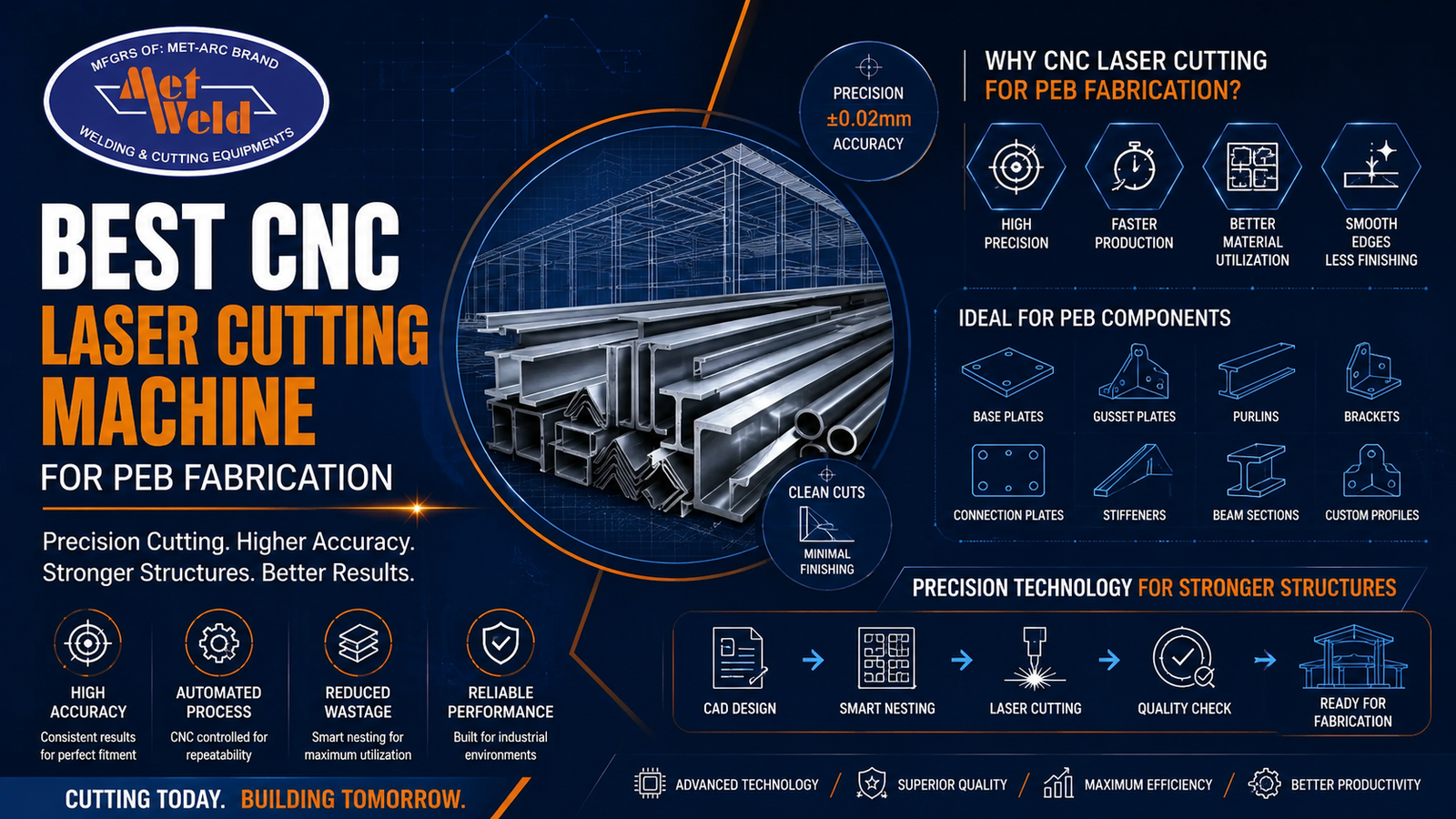
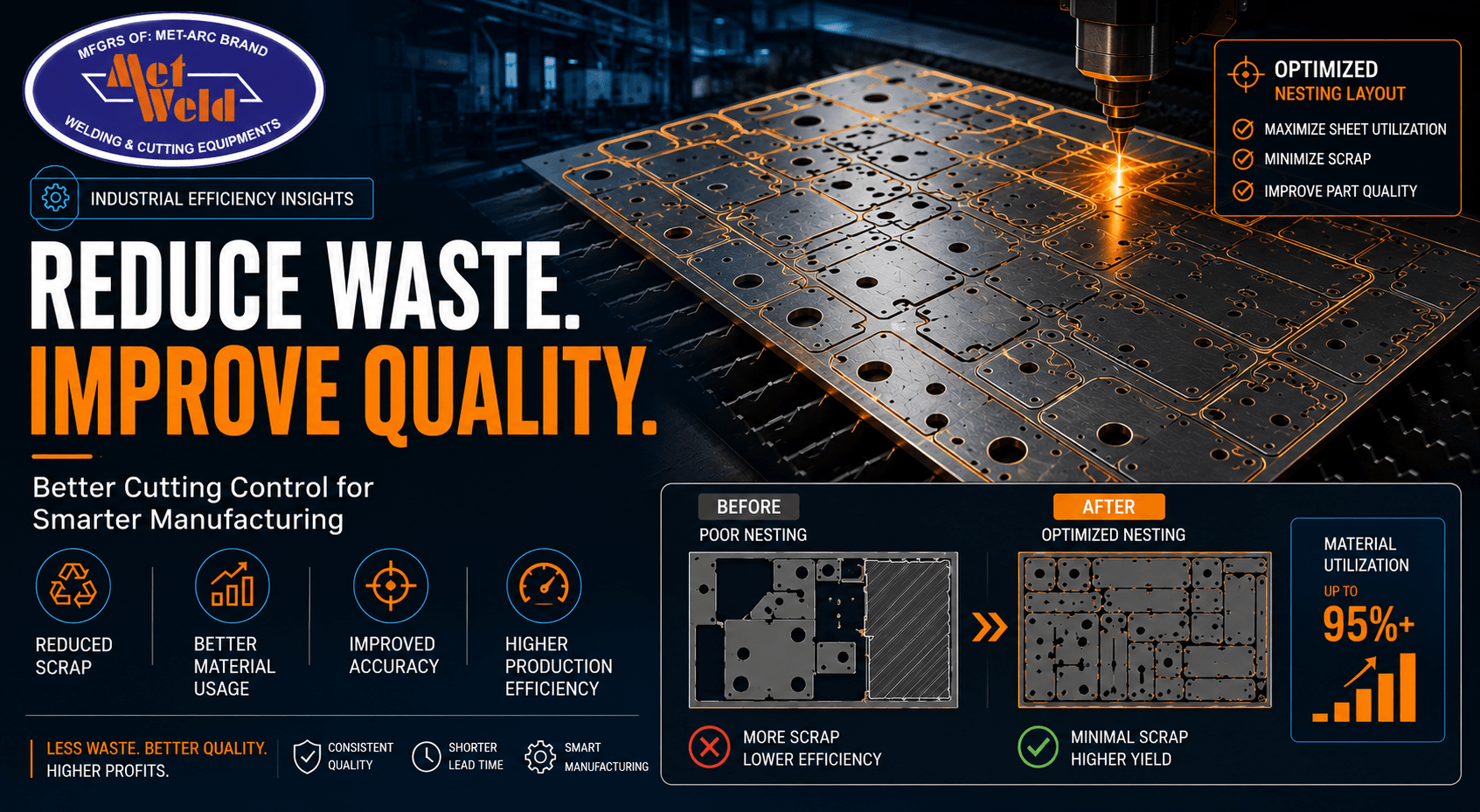
CAD/CAM programming allows cutting files to be prepared from digital designs and reused for recurring jobs. Nesting can arrange multiple profiles on a plate before cutting, while automated torch movement reduces the need for repeated manual marking and layout work.
Shipbuilding involves many recurring components and structural profiles. CNC automation supports production-oriented cutting by reducing repetitive manual movement and providing a consistent method for programmed parts. Multi-torch configurations can be considered where production requirements justify simultaneous cutting.
CNC plasma cutting can support several shipbuilding and marine fabrication operations where steel plates and profiles must be converted into accurately defined components. Typical applications include hull plate preparation, deck and bulkhead components, stiffeners, brackets, gussets, supports and other structural parts.
The process can also support marine equipment fabrication, ship repair and engineering components produced within a shipyard. Nesting and CNC programming can organize cutting when multiple related parts are required.
For larger production environments, machine configuration can be selected according to plate size, cutting requirements and production volume. Multi-torch systems may be considered where simultaneous cutting supports the workflow.
Begin with the plate sizes commonly processed. The table should accommodate required dimensions and allow practical loading and unloading. Evaluate capacity against the normal material range, not only maximum capability.
Shipbuilding commonly involves conductive metals such as mild steel and other suitable plate materials. Review material, thickness and required cutting process together before selecting the plasma system.
Plasma power, consumables, thickness and cutting parameters influence cut performance. Select a practical combination for the plate range instead of focusing on power alone.
CAD/CAM compatibility, nesting and straightforward program management are important when many components are produced from digital drawings. Practical controls help operators manage recurring jobs.
Varied fabrication may require a flexible single-torch arrangement, while repetitive workloads may justify multiple torches. Base the decision on production volume, component mix and cutting sequence.
Metweld provides industrial CNC plasma cutting equipment for industrial fabrication applications. Its portfolio includes table-type CNC plasma cutting machines, gantry-type systems, plate-and-pipe configurations and multi-torch CNC cutting systems.
For shipbuilding, machine selection can be considered according to plate dimensions, material, thickness, production volume and cutting requirements. A table-type arrangement may suit particular fabrication workflows, while gantry and multi-torch configurations can be evaluated where larger plates or higher-volume cutting operations are involved.
A CNC plasma cutting machine should be evaluated as part of the complete shipbuilding workflow rather than only by maximum cutting capacity. Plate storage, loading, nesting, programming, cutting, part identification and movement to the next stage all affect production.
Before implementation, review component sizes, plate utilization, job frequency and handling requirements. For shipyards evaluating CNC plasma cutting systems for shipyards, consistent programming practices and operator training can help maintain an organized cutting process as production schedules change.
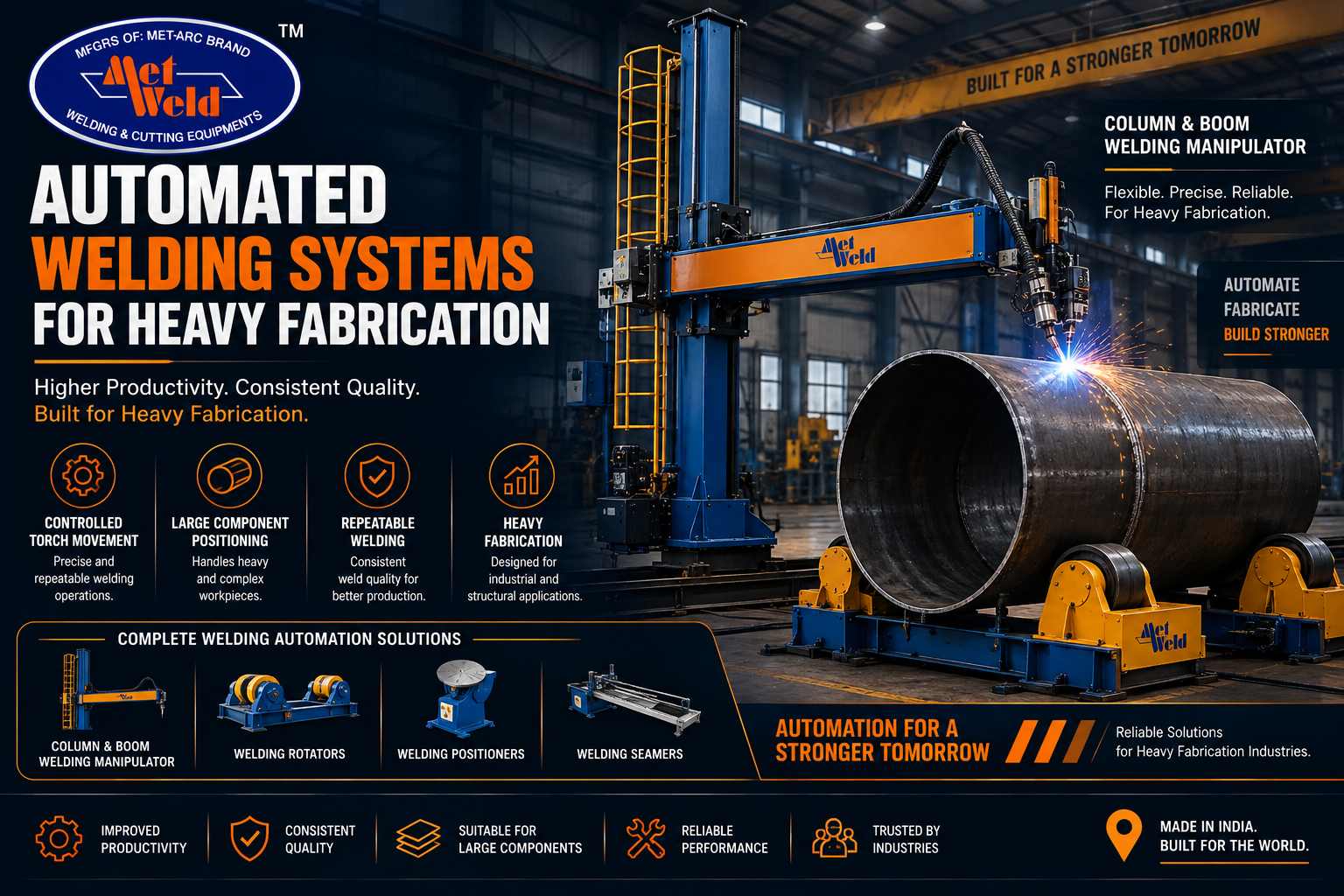
Metweld was established in 1982 as a welding and cutting equipment manufacturing unit in Ahmedabad and began manufacturing CNC plasma cutting machines in 2011. Its portfolio covers CNC plasma cutting, laser cutting and welding automation applications for industrial sectors.
This combination is relevant to marine and heavy fabrication environments where cutting and welding are closely connected. For shipbuilding, equipment can be evaluated according to material, plate dimensions, production volume and workflow.
CNC plasma cutting can provide shipbuilding operations with a controlled method for processing steel plates and profiles used in vessel construction and marine fabrication. CNC programming, nesting and automated torch movement can support repeatable component production while reducing manual marking and layout work.
The right system should match plate dimensions, material, thickness, production volume and software requirements. A workflow assessment helps ensure the machine supports downstream forming, fit-up, welding and assembly. Shipyards looking for CNC plasma cutting solutions for shipbuilding.