In metal fabrication, sheet thickness plays an important role in determining how a laser cutting machine should be configured and operated. Cutting thin sheet metal and processing thicker industrial plates require different levels of laser power, cutting speeds and machine settings.
The relationship between thickness, power and speed also affects the quality of the finished edge. If the cutting parameters are not appropriately matched to the material, manufacturers may experience slower production, inconsistent results or increased finishing requirements.
Modern CNC fiber laser cutting machines are designed to handle different material thicknesses by offering multiple power configurations and automated cutting controls. MetWeld states that its fiber laser machines are available from 1kW to 12kW+ depending on material thickness and cutting requirements.
Understanding this relationship can help manufacturers select the right machine and make better decisions about production requirements.
The thickness of a metal sheet directly influences how much energy is required to cut through the material.
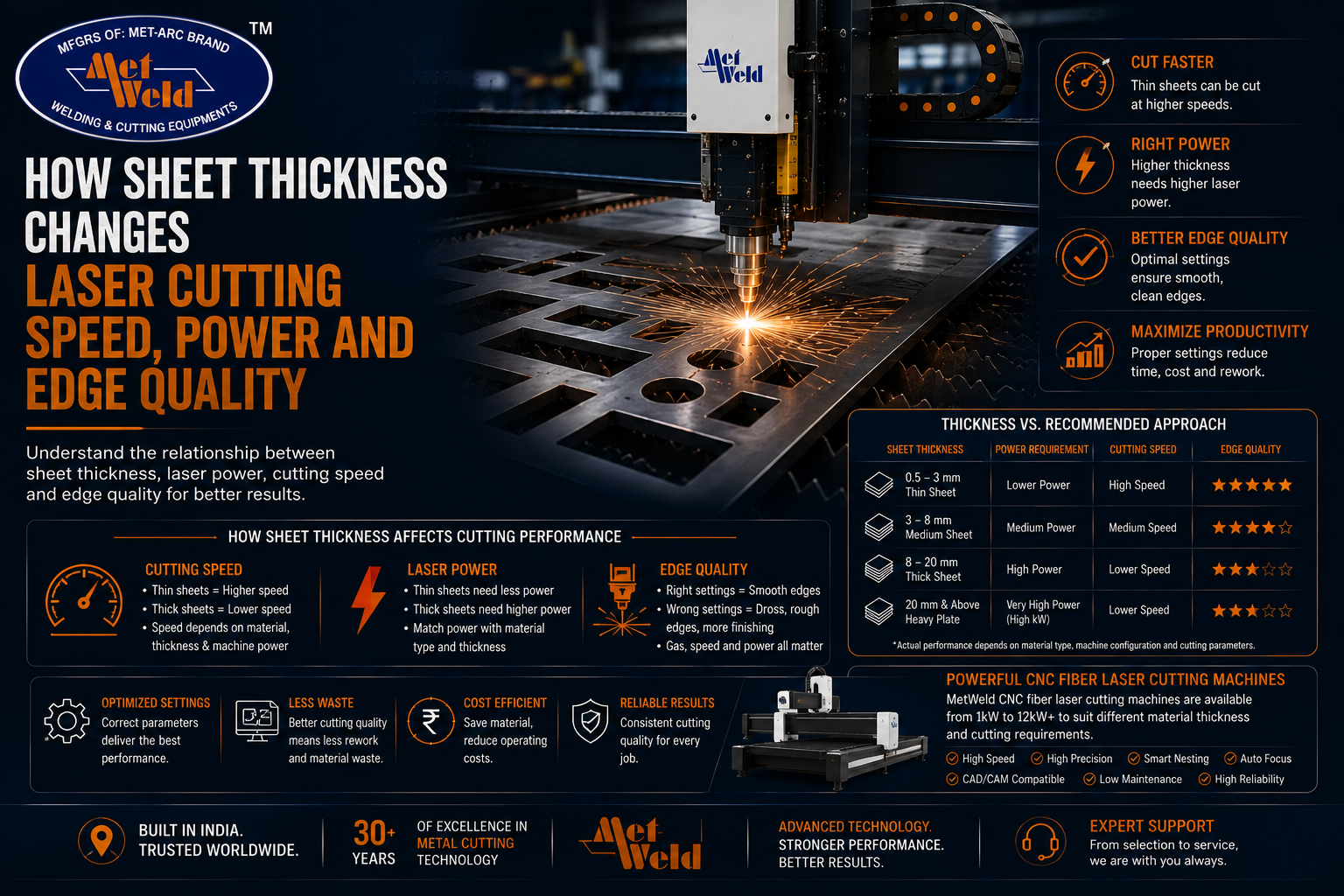
A thin sheet generally requires less energy and can be processed at higher speeds. As thickness increases, more laser energy is required to maintain effective cutting, and the cutting speed may need to be reduced.
Sheet thickness can influence:
These factors work together. Increasing power does not simply mean that every material can be cut at maximum speed. The material type, thickness and required cutting quality must all be considered.
Laser cutting speed refers to how quickly the cutting head moves along the programmed cutting path while maintaining an effective cut.
Fiber laser technology is particularly well suited to thin and medium-thickness sheet metals. MetWeld describes its CNC fiber laser machines as providing high-speed cutting across sheets with varying thicknesses.
Thin materials generally require less energy to penetrate, allowing the cutting process to operate at higher speeds when the machine is correctly configured.
As sheet thickness increases, the laser must deliver sufficient energy to penetrate the material throughout its depth.
This can require lower cutting speeds compared with thinner sheets. The exact speed depends on the laser power, material type, thickness and machine configuration.
MetWeld’s published machine information specifies maximum movement speeds of up to 140 m/min for its table-type CNC laser cutting machines, while actual cutting speed varies according to the material and cutting conditions.
Laser power is another major factor when selecting a machine for different sheet thicknesses.
Thicker materials generally require greater laser power to achieve effective penetration and maintain cutting performance.
MetWeld offers fiber laser machines with power configurations ranging from 1kW to 12kW+, depending on the material thickness and cutting requirement.
This range allows manufacturers to select equipment according to their production requirements rather than using the same power configuration for every application.
Thickness alone does not determine the required power.
The type of metal also matters. MetWeld’s fiber laser machines are designed to process materials including stainless steel, mild steel, carbon steel, aluminium, brass, copper and titanium.
Therefore, manufacturers should evaluate both material type and sheet thickness when determining the appropriate laser power.
Edge quality is an important consideration in precision metal fabrication. A clean and consistent edge can reduce the need for additional finishing and improve the fit of fabricated components.
Fiber laser cutting is particularly suitable for applications where precision and detailed cutting are important. MetWeld highlights high precision, smooth edges and burr-free cutting among the features of its fiber laser systems.
Thin sheet materials can therefore benefit from the precise cutting characteristics of fiber laser technology.
As material becomes thicker, maintaining consistent edge quality requires appropriate machine power and cutting parameters.
Simply increasing laser power is not enough. The machine must be configured correctly for the material and thickness to achieve the desired cutting result.
Speed, power and edge quality are closely connected.
If cutting speed is too high for the material and available power, the laser may not provide sufficient energy throughout the cut. This can affect cut consistency and edge quality.
Higher power can support thicker material cutting, but machine power should still be matched to the specific application.
The goal is not simply to maximise speed or power. The objective is to achieve an appropriate balance between:
This balance is particularly important for manufacturers handling different materials and thicknesses within the same production environment.
Material selection is another important part of determining laser cutting performance.
Fiber laser technology can be used for precision cutting of stainless steel components and sheet metal.
These materials are widely used in fabrication and industrial manufacturing. The required laser configuration depends on their thickness and application.
Aluminium requires suitable cutting parameters because of its material characteristics. MetWeld lists aluminium among the materials supported by its fiber laser systems.
MetWeld also lists brass and copper among the materials its fiber laser machines can process.
Titanium is another material listed for MetWeld’s fiber laser cutting systems, expanding the range of applications supported by the technology.
Selecting the correct machine starts with understanding your actual production requirements.
Determine which metals you regularly process, including stainless steel, mild steel, aluminium, brass, copper or titanium.
Identify the minimum and maximum sheet thicknesses your production requires.
MetWeld states that its machines can accommodate thicknesses from approximately 0.5 mm to 30 mm or more depending on the power source and configuration.
Choose a power configuration capable of handling your typical material thickness while supporting the required production speed and quality.
High-volume production may benefit from faster cutting speeds, automated nesting and CNC control. MetWeld highlights high-speed cutting, reduced material waste and repeatable production as advantages of its fiber laser technology.
Modern laser cutting is not only about the laser source. CNC control plays an important role in coordinating movement, cutting paths and production consistency.
MetWeld’s systems incorporate CNC control features including auto-focus, nesting and motion control.
Nesting software can optimise the arrangement of components on a sheet, helping manufacturers improve material utilisation and reduce waste.
CNC-controlled cutting allows programmed designs to be reproduced consistently, which is particularly valuable for manufacturers producing multiple identical components.
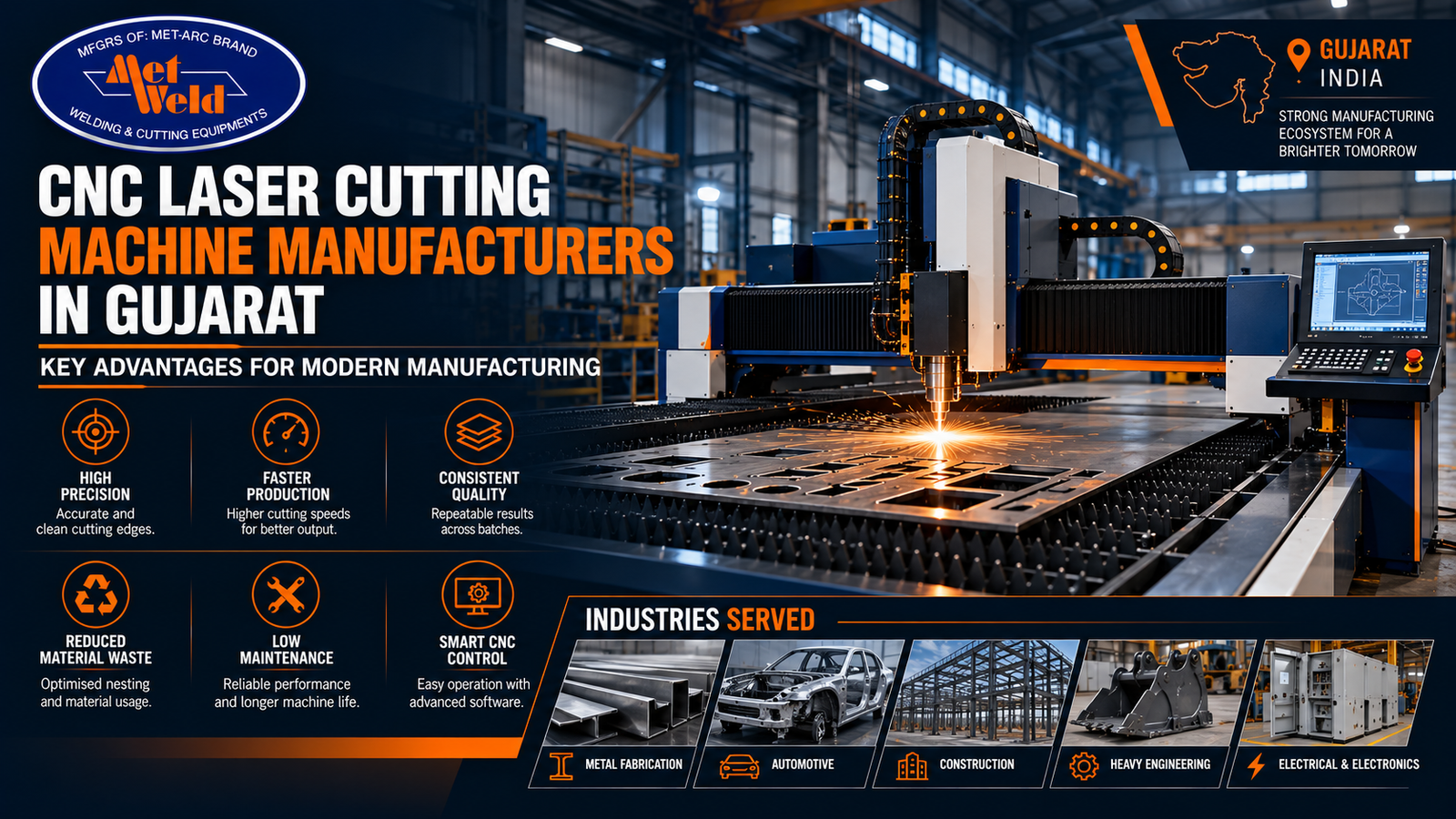
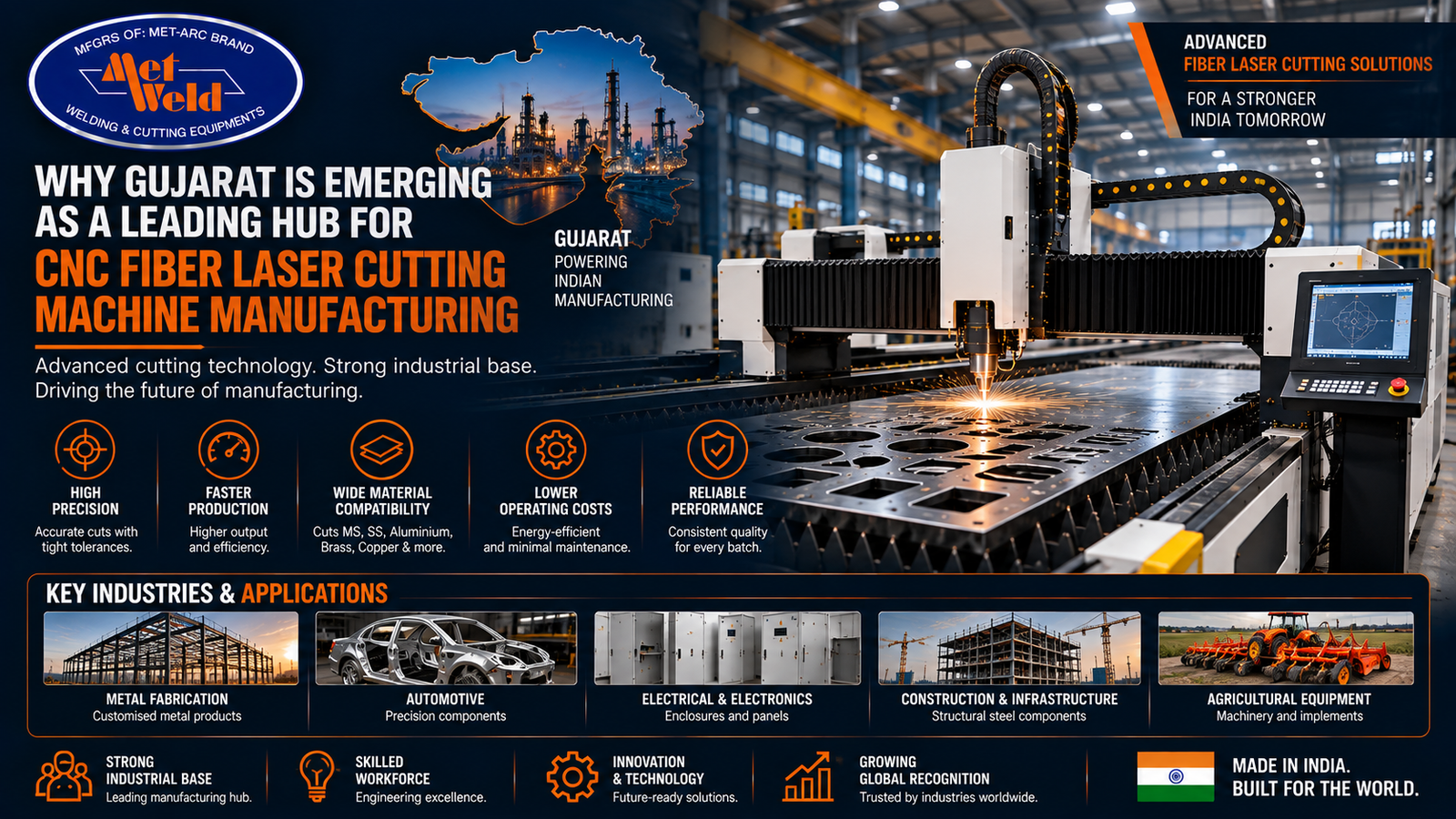
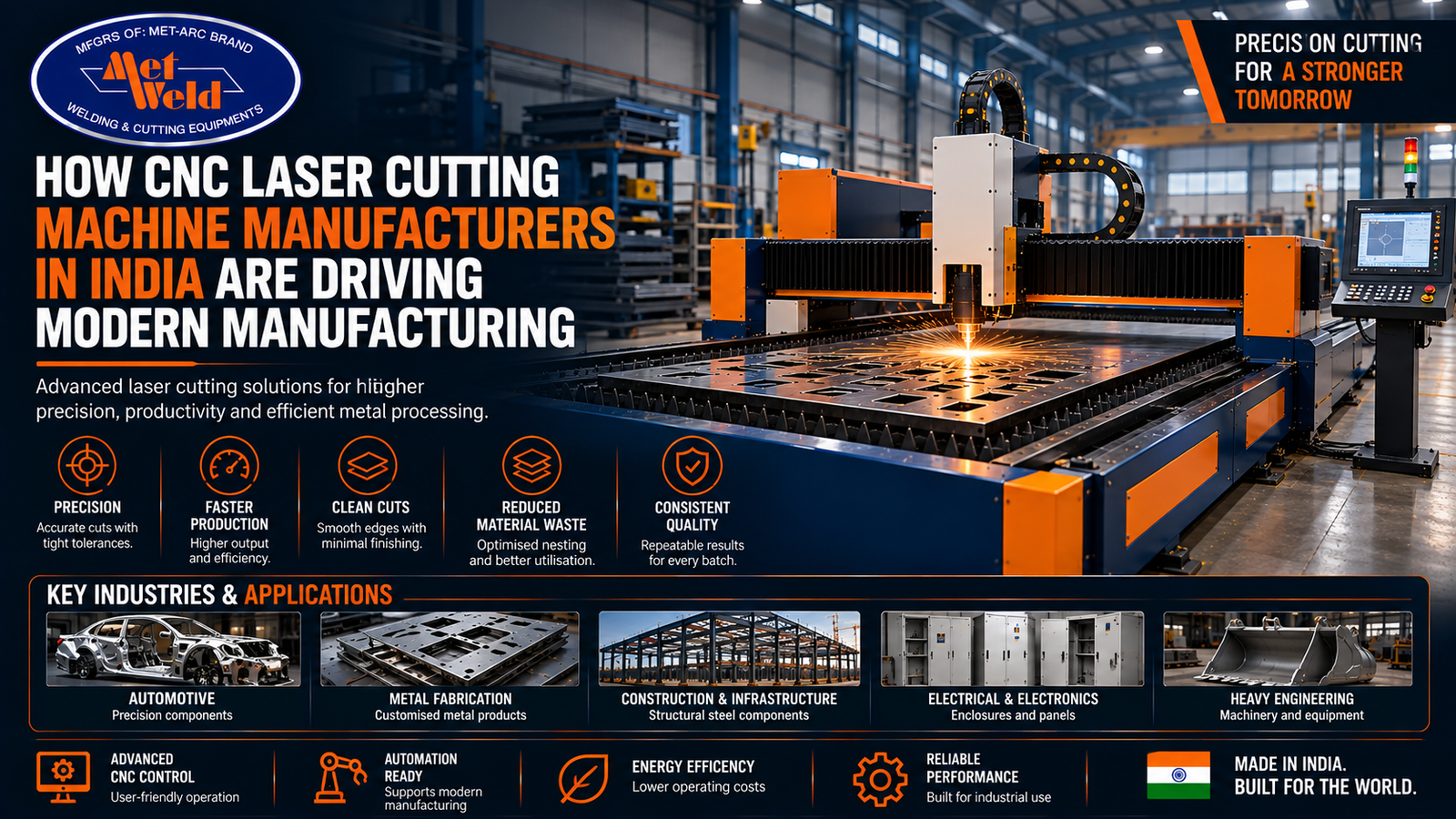
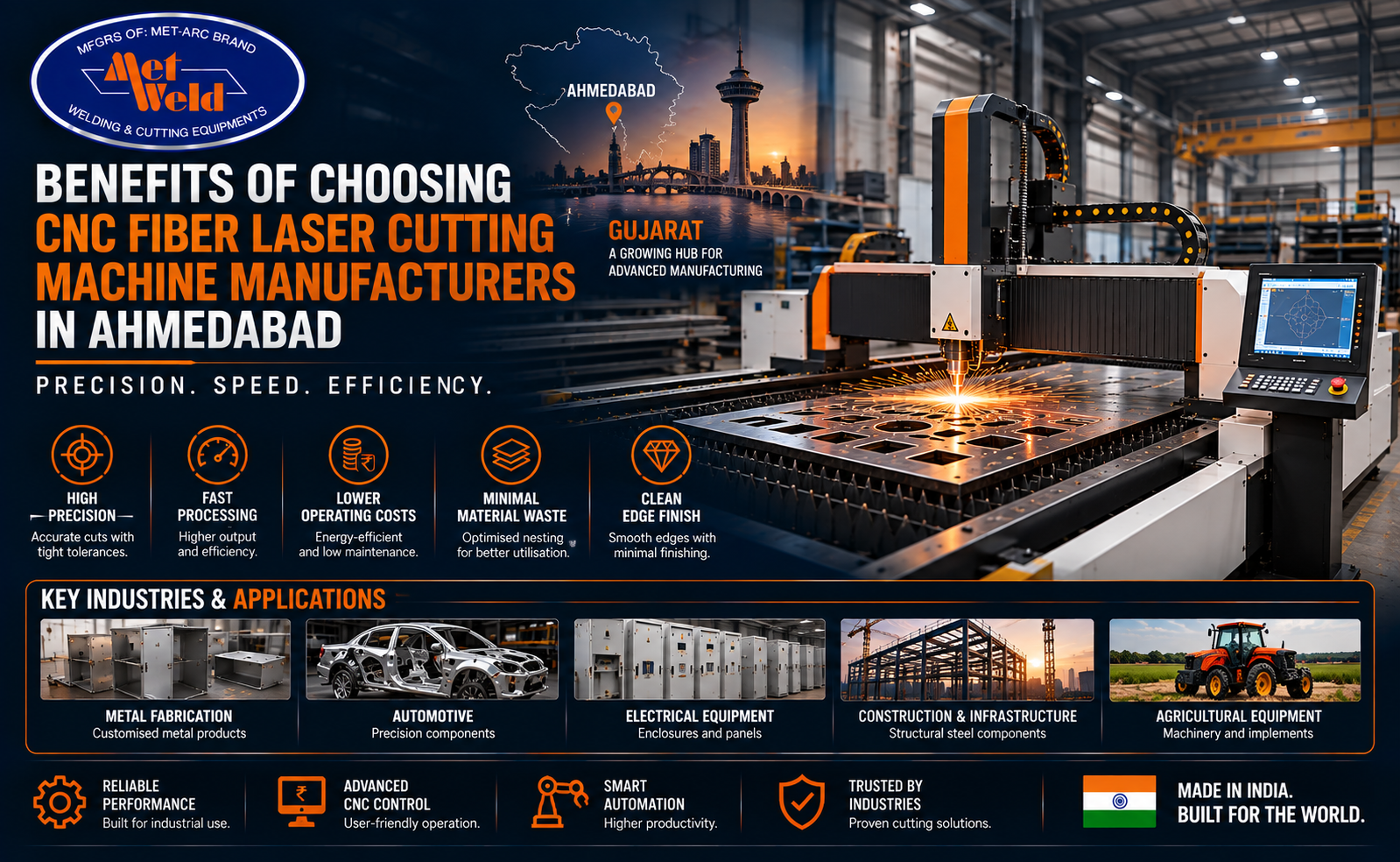
MetWeld is a Gujarat-based manufacturer of CNC fiber laser cutting machines, CNC plasma systems and related industrial cutting solutions. Its fiber laser machines are designed around precision, speed, material flexibility and production efficiency.
For manufacturers searching for laser cutting machine manufacturers, MetWeld offers multiple power configurations, including machines from 1kW to 12kW+, along with installation, operator training, maintenance and spare-parts support.
Its machines are positioned for industries including fabrication, automotive, construction, electrical manufacturing, furniture, renewable energy and other industrial applications.
Sheet thickness has a direct influence on laser cutting speed, power requirements and edge quality. Thin sheets can generally be processed at higher speeds with lower power requirements, while thicker materials require greater energy and carefully matched cutting parameters.
However, thickness should never be considered in isolation. Material type, laser power, machine configuration, cutting speed and required edge quality all work together to determine the final result.
For manufacturers working with different sheet thicknesses, choosing a suitable fiber laser cutting machine with the right power configuration can support efficient production and consistent cutting quality.
By evaluating material range, thickness, production volume and required precision before investing in a machine, manufacturers can select a CNC fiber laser solution that matches their actual fabrication requirements.